
Unlocking Efficiency: How Kitting Services Streamline Your Supply Chain
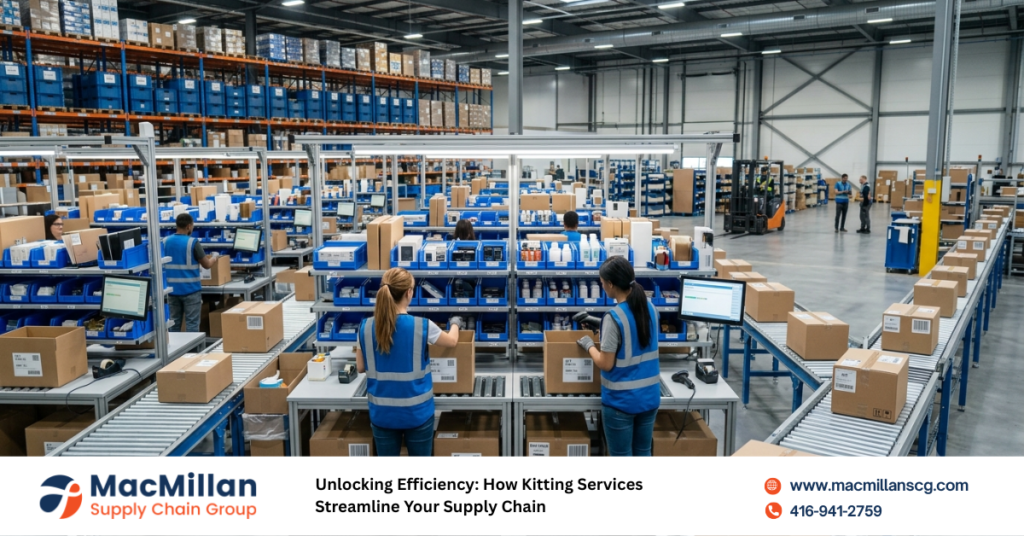
A Quick Summary and Overview Kitting services are a powerful tool in modern supply chain management, offering businesses a way to streamline operations, reduce costs, and improve customer satisfaction. By pre-assembling individual items into ready-to-ship kits, companies can significantly speed up order fulfillment and reduce packaging waste. MacMillan Supply Chain Group specializes in providing comprehensive kitting solutions tailored to meet the unique needs of various industries. This article explores the benefits of kitting, its implementation process, and how partnering with MacMillan can transform your supply chain operations, ultimately leading to increased efficiency and a stronger competitive edge in today’s fast-paced market. An Introduction In today’s competitive business landscape, efficiency is key to success. One strategy that’s gaining traction in supply chain management is kitting – the process of grouping, packaging, and shipping related items together as one unit. This approach offers numerous benefits, from streamlined inventory management to faster order fulfillment and enhanced customer experience. As businesses strive to optimize their operations, understanding and implementing kitting services can be a game-changer. MacMillan Supply Chain Group, with its extensive expertise and state-of-the-art facilities, is at the forefront of providing innovative kitting solutions. In this article, we’ll delve into the world of kitting, exploring its advantages, implementation strategies, and how MacMillan’s services can revolutionize your supply chain operations. Whether you’re a small business owner or a large corporation, discover how kitting can propel your business towards greater efficiency and success. Understanding Kitting and Its Benefits Kitting is the process of assembling individual items into a single package or “kit” for distribution. This strategy offers numerous advantages for businesses across various industries. Firstly, kitting significantly improves inventory management. By pre-assembling frequently ordered combinations of products, companies can reduce storage space requirements and simplify stock tracking. This leads to lower warehouse costs and decreased risk of stockouts or overstock situations. Secondly, kitting enhances order fulfillment efficiency. Instead of picking and packing individual items for each order, workers can simply grab pre-assembled kits, dramatically reducing processing time and labor costs. This efficiency translates to faster shipping times, a crucial factor in meeting customer expectations in today’s fast-paced e-commerce environment. Moreover, kitting can lead to substantial cost savings in packaging and shipping. By consolidating multiple items into a single package, businesses can reduce packaging material usage and optimize shipping space, potentially lowering transportation costs. Lastly, kitting improves the customer experience. Receiving a neatly packaged kit with all necessary components not only creates a positive unboxing experience but also reduces the likelihood of missing or incorrect items, thereby enhancing customer satisfaction and reducing return rates. MacMillan Supply Chain Group’s expertise in kitting services helps businesses harness these benefits, offering tailored solutions to optimize supply chain operations and drive growth. Implementing Kitting in Your Supply Chain Implementing kitting in your supply chain requires careful planning and execution. The first step is to analyze your product range and order patterns to identify which items are frequently ordered together or could benefit from being bundled. This data-driven approach ensures that your kitting strategy aligns with customer demand and operational efficiency. Next, consider the logistics of your kitting operation. This includes designing an efficient workspace for kit assembly, establishing quality control measures, and training staff on new procedures. It’s crucial to balance the cost of implementing kitting against the potential savings and benefits. Inventory management systems play a vital role in successful kitting implementation. Your system should be able to track both individual components and completed kits, ensuring accurate stock levels and seamless order fulfillment. MacMillan Supply Chain Group offers comprehensive support throughout the implementation process. Our team of experts can help you: Analyze your product range and order data Design efficient kitting workflows Set up inventory management systems Train your staff on best practices By partnering with MacMillan, you can leverage our years of experience and cutting-edge technology to seamlessly integrate kitting into your supply chain. Our solutions are scalable, allowing you to start small and expand your kitting operations as you see results, ensuring a smooth transition and maximizing the benefits for your business. Maximizing Efficiency with Advanced Kitting Techniques To truly unlock the potential of kitting, businesses must go beyond basic implementation and explore advanced techniques. One such approach is dynamic kitting, where kits are assembled in real-time based on current orders rather than pre-assembled. This method offers greater flexibility and can be particularly beneficial for businesses with a wide range of products or frequent changes in demand. Another advanced technique is modular kitting, where base kits can be customized with additional components to meet specific customer requirements. This approach balances the efficiency of standardized kits with the flexibility of customization, catering to diverse customer needs without sacrificing operational efficiency. MacMillan Supply Chain Group stays at the forefront of these advanced kitting techniques. Our state-of-the-art facilities are equipped with the latest technology, including automated kitting systems and advanced inventory management software. These tools enable us to offer: High-speed, accurate kit assembly Real-time inventory tracking and replenishment Customizable kitting solutions to meet unique business needs Scalable operations to handle fluctuating demand By leveraging these advanced techniques and technologies, MacMillan helps businesses push the boundaries of what’s possible with kitting. Whether you’re looking to implement basic kitting or explore cutting-edge solutions, our team can design a strategy that maximizes efficiency and drives your business forward. Measuring the Impact of Kitting on Your Business To ensure the success of your kitting strategy, it’s crucial to measure its impact on your business. Key performance indicators (KPIs) can help you quantify the benefits and identify areas for improvement. Some important metrics to track include: Order fulfillment time: Compare the time taken to process orders before and after implementing kitting. Labor costs: Measure the reduction in labor hours required for order processing. Shipping costs: Analyze changes in packaging and transportation expenses. Inventory turnover rate: Monitor how kitting affects your inventory management efficiency. Customer satisfaction: Track changes in customer feedback and return rates. MacMillan Supply Chain Group provides comprehensive reporting and analytics services to help you monitor these KPIs effectively. Our advanced
Mastering Amazon Seller Fulfilled Prime: Boost Sales with MacMillan Supply Chain

A Quick Overview of Seller Fulfilled Prime Amazon Seller Fulfilled Prime (SFP) is a program that allows qualified sellers to list their products with the Prime badge while fulfilling orders from their own warehouses or through a third-party logistics (3PL) provider. This innovative approach combines the visibility and sales potential of Prime with the flexibility of self-fulfillment. SFP offers sellers greater control over inventory, branding, and customer service while adhering to Amazon’s strict performance standards. By partnering with a reliable 3PL like MacMillan Supply Chain, sellers can navigate the complexities of SFP, meet Prime shipping promises, and ultimately drive business growth on the Amazon marketplace. Introduction In the competitive world of e-commerce, Amazon’s Seller Fulfilled Prime program presents a unique opportunity for sellers to enhance their visibility and boost sales. By offering Prime shipping benefits directly from their own warehouses or through a trusted 3PL partner, sellers can tap into the coveted Prime customer base while maintaining control over their fulfillment processes. However, with great opportunity comes great responsibility – SFP demands strict adherence to Amazon’s high-performance metrics and shipping standards. This comprehensive guide will explore the ins and outs of Amazon Seller Fulfilled Prime, from its benefits and requirements to strategies for success. We’ll delve into common challenges faced by SFP sellers and how MacMillan Supply Chain’s expertise can help overcome these hurdles. Whether you’re considering enrolling in SFP or looking to optimize your current SFP operations, this article will provide valuable insights to help you maximize your potential on the Amazon marketplace. Understanding Amazon Seller Fulfilled Prime Amazon Seller Fulfilled Prime is a program that enables qualified sellers to display the Prime badge on their products while managing fulfillment themselves or through a 3PL partner. This innovative approach allows sellers to leverage the power of Prime without relying on Amazon’s Fulfillment by Amazon (FBA) service. Key features of SFP include: Prime badge visibility: Products gain the coveted Prime logo, increasing their appeal to Prime members. Self-fulfillment: Sellers maintain control over inventory and shipping processes. Flexibility: SFP works well for products with special handling requirements or those unsuitable for FBA. Expanded reach: Access to Prime customers can significantly boost sales potential. To participate in SFP, sellers must meet stringent performance criteria, including: – Maintaining a 99% on-time shipping rate – Offering premium shipping options – Using Amazon Buy Shipping Services for at least 99% of orders – Delivering orders on weekends – Meeting specific cancellation and return metrics While these requirements may seem daunting, partnering with an experienced 3PL like MacMillan Supply Chain can help sellers navigate these challenges and maintain compliance with Amazon’s standards. By leveraging our expertise in logistics and fulfillment, sellers can focus on growing their business while we ensure their SFP operations run smoothly and efficiently. Benefits of Seller Fulfilled Prime Enrolling in Amazon Seller Fulfilled Prime offers numerous advantages for sellers looking to expand their reach and boost sales. Some key benefits include: Increased visibility: The Prime badge makes products more attractive to Prime members, potentially leading to higher conversion rates. Greater control: Unlike FBA, SFP allows sellers to manage their inventory and fulfillment processes, providing more flexibility in handling and shipping. Cost savings: By avoiding FBA fees, sellers can potentially reduce fulfillment costs, especially for larger or slower-moving items. Improved Buy Box performance: Prime-eligible products have a higher chance of winning the Buy Box, driving more sales. Brand control: SFP enables sellers to maintain their brand identity through customized packaging and inserts. Direct customer relationship: Handling fulfillment allows for direct communication with customers, fostering brand loyalty. Flexibility for seasonal products: SFP is ideal for managing inventory of seasonal or trend-driven items. Reduced storage fees: Unlike FBA, there are no long-term storage fees associated with SFP. By partnering with MacMillan Supply Chain, sellers can maximize these benefits while ensuring compliance with Amazon’s strict performance metrics. Our expertise in e-commerce logistics and fulfillment enables sellers to focus on product development and marketing while we handle the complexities of SFP operations, ultimately driving growth and success on the Amazon marketplace. Challenges of Seller Fulfilled Prime While Seller Fulfilled Prime offers significant benefits, it also presents several challenges that sellers must navigate: Stringent performance metrics: Maintaining the required 99% on-time shipping rate and other performance standards can be demanding. Nationwide free shipping: Offering free shipping across the country can impact profit margins, especially for bulky or heavy items. Weekend deliveries: Fulfilling orders on weekends may require operational changes and increased staffing. Inventory management: Balancing stock levels across multiple sales channels while ensuring Prime-level availability can be complex. Technology integration: Implementing systems to manage SFP orders efficiently and maintain compliance with Amazon’s requirements can be technically challenging. Scaling operations: As sales grow, scaling fulfillment operations to meet increased demand while maintaining performance standards can be difficult. Customer service demands: Handling Prime customer expectations for quick resolution of issues and returns can be resource-intensive. Geographical constraints: Meeting Prime shipping speeds across diverse locations may require strategic warehouse placement or multiple fulfillment centers. Addressing these challenges requires expertise in logistics, technology, and e-commerce operations. MacMillan Supply Chain specializes in helping sellers overcome these hurdles by providing comprehensive 3PL services tailored to SFP requirements. Our solutions enable sellers to maintain compliance, scale operations efficiently, and focus on core business activities while we handle the complexities of Prime-level fulfillment. Strategies for Success in Seller Fulfilled Prime To thrive in the Seller Fulfilled Prime program, sellers should implement the following strategies: Optimize inventory management: Use advanced forecasting tools to maintain optimal stock levels and prevent stockouts. Streamline order processing: Implement efficient pick, pack, and ship processes to meet Prime shipping deadlines consistently. Leverage technology: Invest in or partner with a 3PL that offers robust warehouse management systems (WMS) and order management systems (OMS) to automate and streamline operations. Strategic warehouse locations: Consider multiple fulfillment centers or partner with a 3PL with a nationwide network to reduce shipping times and costs. Efficient returns management: Implement a smooth returns process to maintain customer satisfaction and meet Amazon’s requirements. Monitor performance metrics: Regularly review and analyze
Optimizing Auto Parts Logistics: Top 3PL Providers for Maximum Efficiency
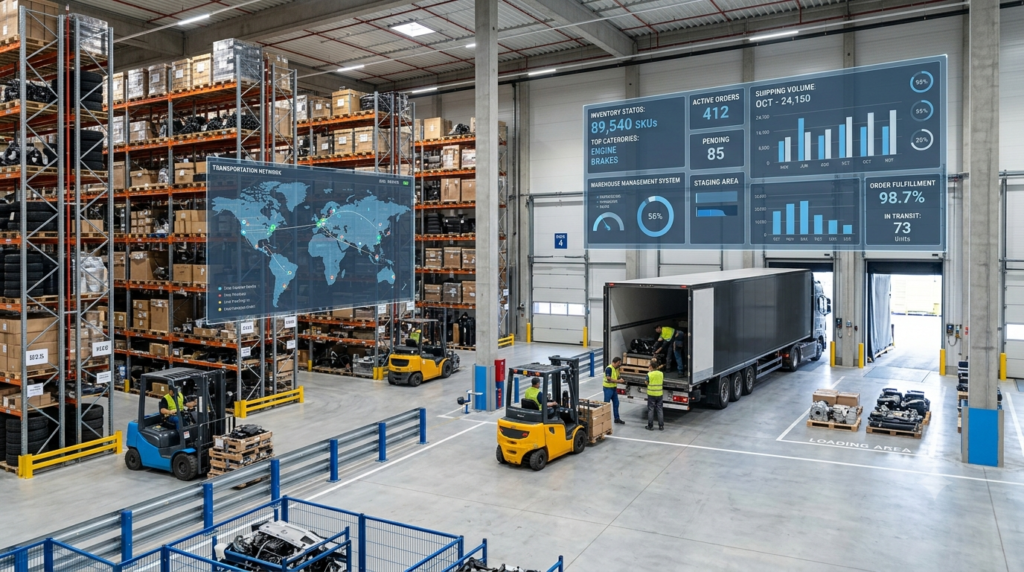
Quick Summary and Overview In the fast-evolving automotive industry, optimizing logistics is key to meeting market demands and maintaining a competitive edge. Third-party logistics (3PL) providers play an essential role in this process, offering expertise in warehousing, order fulfillment, and transportation. By outsourcing logistics, automotive businesses can focus on core competencies and enjoy cost savings, improved efficiency, and enriched customer satisfaction. Introduction As the automotive industry becomes more globally interconnected, the need for efficient, reliable logistics services is critical. Third-party logistics (3PL) providers specialize in handling and distributing auto parts with precision, ensuring a seamless supply chain from manufacturer to customer. With the globalization trends, manufacturers are keen to focus on core competencies and hence look towards 3PL partners for seamless logistics solutions. This article explores the role and benefits of automotive 3PL providers and offers insights on selecting the right partner to ace your supply chain operations. Understanding Automotive 3PL Definition and Role Overview An automotive 3PL provider specializes in managing the complexities of the auto parts supply chain. They handle key logistics functions such as warehousing, inventory management, and transportation. With expertise in the automotive sector, these providers ensure the timely and precise delivery of parts, even managing oversized shipments, which are a common challenge in the industry. Their services enable car manufacturers and retailers to streamline operations, reduce logistics costs, and ultimately, enhance customer satisfaction. Benefits of Partnering with a 3PL Cost Savings: By leveraging the vast network and partnerships of a 3PL provider, businesses can access significant shipping discounts and more efficient logistics operations. Focus on Core Competencies: Outsourcing logistics allows businesses to direct their resources and attention towards product development, sales, and other core areas. Improved Efficiency and Precision: 3PLs offer advanced technology and a team of experts to ensure high efficiency and accuracy in the delivery process. This results in better inventory management and real-time visibility. Market Analysis The automotive 3PL market continues to grow, driven by globalization, the rise of eCommerce in auto parts retail, and manufacturers’ increasing preference for outsourcing logistics. This enables businesses to remain competitive and agile in today’s fast-paced market. As supply chains become more complex, there is an increasing demand for providers who can offer innovative solutions tailored to the automotive sector. Choosing the Right 3PL Provider When searching for a 3PL provider in the automotive industry, consider several critical factors: Industry Experience: Providers with deep expertise in automotive logistics can better understand the specific challenges such as handling oversized parts and maintaining quality control. Technology Integration: Look for providers that utilize advanced logistics technologies for real-time tracking and management, ensuring a smooth, data-driven supply chain. Global Reach and Compliance: Ensure the provider has a robust network and a solid understanding of international shipping regulations to facilitate smooth global operations. Customer Support and Scalability: The ability to offer excellent support and scale operations as needed is crucial as your business grows. Common Problems in Automotive Logistics and Our Solutions Challenges Faced by the Industry – Complex Logistics Networks: The global nature of the automotive industry creates intricate logistics networks, leading to potential delays and inefficiencies. – High Costs and Risks: Managing logistics in-house can be cost-prohibitive and risky due to volatile fuel prices and regulatory changes. – Handling and Quality Control: Oversized parts require special handling and storage, adding another layer of complexity. Our Solutions at MacMillan Supply Chain At MacMillan Supply Chain, we specialize in offering comprehensive, tailored 3PL solutions for the automotive industry. Our services encompass: Integrated Logistics Solutions: We provide end-to-end logistics solutions that cover warehousing, order processing, transportation, and reverse logistics. Cost-Effectiveness: By leveraging partnerships and volume discounts, we offer cost savings on shipping and logistics operations. Advanced Technology: Our cutting-edge logistics software ensures real-time tracking, data analytics, and seamless integrations with your existing systems for improved supply chain management. Expertise and Support: With our industry-specific knowledge and robust support team, we navigate the complexities of the automotive supply chain, ensuring timely, quality delivery. How Readers Can Avoid Problems and Implement Solutions Working with a skilled 3PL like MacMillan Supply Chain can eliminate many logistics headaches and enhance business efficiency. By choosing a partner with proven expertise, robust technology solutions, and strong industry relationships, businesses can ensure smooth, cost-effective operations. To take your logistics operations to the next level, consider partnering with MacMillan Supply Chain. We offer customized solutions tailored to your needs, ensuring precision and efficiency in every phase of your logistics process. Contact us today to learn more about how we can optimize your supply chain. FAQS What is an automotive 3PL? An automotive 3PL is a logistics provider that specializes in handling the supply chain needs specific to the automotive industry, ensuring efficient distribution of auto parts. How do 3PL providers enhance cost-efficiency in logistics? 3PL providers improve cost-efficiency by optimizing transportation routes, consolidating shipments, reducing warehousing costs, and leveraging advanced logistics technologies. Their expertise and established carrier networks help businesses lower operational expenses while maintaining high service levels. Why is technology important in automotive 3PL services? Technology plays a critical role in automotive 3PL services by enabling real-time inventory tracking, shipment visibility, automated reporting, and data-driven decision-making. Advanced systems such as Warehouse Management Systems (WMS) and Transportation Management Systems (TMS) help improve accuracy, efficiency, and customer satisfaction. Can 3PL providers manage international logistics for auto parts? Yes, many automotive 3PL providers specialize in international logistics. They handle customs documentation, regulatory compliance, freight forwarding, and cross-border transportation, ensuring that auto parts move efficiently and securely across global supply chains while minimizing delays and disruptions. What makes MacMillan Supply Chain stand out in automotive 3PL? MacMillan Supply Chain stands out through its industry expertise, technology-driven solutions, and customer-focused approach. The company offers scalable warehousing, transportation, inventory management, and fulfillment services tailored to the unique needs of automotive businesses. With a commitment to reliability, visibility, and operational excellence, MacMillan helps clients optimize their supply chains and improve overall performance.
3PL Services for Food & Beverage | Maximize Efficiency
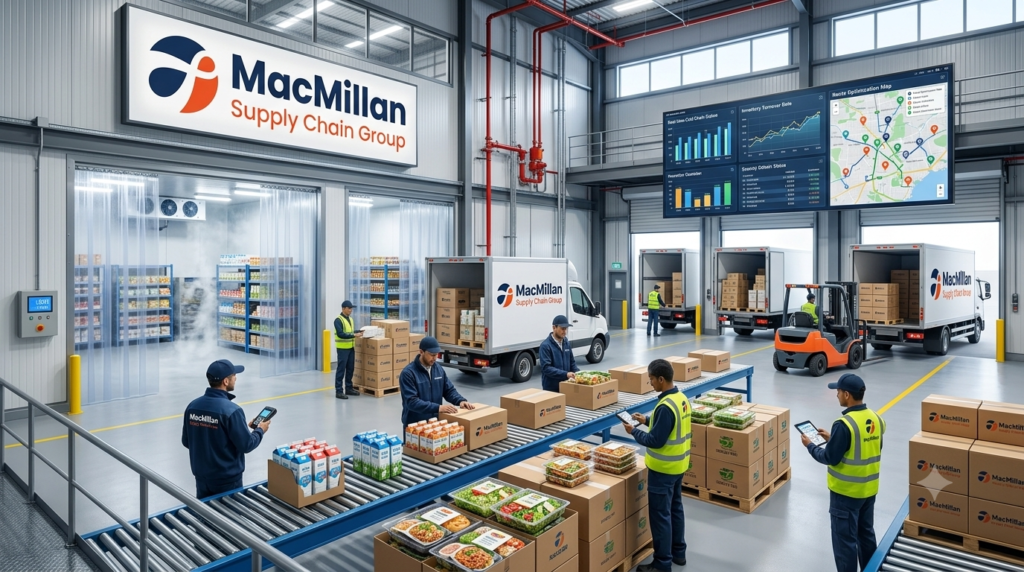
A Quick Summary and Overview Third-party logistics (3PL) services are revolutionizing the food and beverage industry’s supply chain management. They offer strategic packaging solutions, optimize transportation routes with real-time data, and ensure compliance with stringent safety regulations. By leveraging these services, businesses can enhance customer satisfaction and successfully navigate the challenges of demand fluctuations. MacMillan Supply Chain Group stands at the forefront of this revolution, providing tailored 3PL solutions that address the unique needs of the food and beverage sector. From preserving product integrity to streamlining distribution networks, MacMillan’s comprehensive approach drives efficiency and growth in this dynamic industry. An Introduction The food and beverage sector is an oscillating hub of activity, where demand rises and falls with startling speed, quality control is paramount, and compliance can make or break a business. For companies aiming to not only survive but thrive in this competitive landscape, third-party logistics (3PL) services are vital. Offering tailored solutions that address the unique complexities of the industry, providers like MacMillan Supply Chain deliver enhanced efficiency and customer satisfaction while ensuring regulatory compliance. In this comprehensive guide, we’ll explore how 3PL services are transforming the food and beverage supply chain. We’ll delve into strategic packaging solutions that preserve product integrity, examine demand management techniques that keep businesses ahead of market fluctuations, and investigate the role of efficient transportation in optimizing operations. Moreover, we’ll highlight how MacMillan Supply Chain Group’s expertise in these areas can propel your business to new heights of success in the ever-evolving food and beverage industry. Strategic Packaging: Protect What Matters Most Effective strategic packaging in the food and beverage supply chain goes beyond mere aesthetics. It is about safeguarding the quality and integrity of products from the point of manufacture to the end consumer. Through advanced protective packing protocols, including refrigerated delivery systems, 3PL providers ensure that perishable items maintain their quality. Companies like MacMillan Supply Chain employ sophisticated packaging strategies tailored to meet the specific needs of each product, thereby minimizing waste, and preventing spoilage—a crucial aspect in preserving customer trust and loyalty. In the food and beverage industry, where freshness is paramount, strategic packaging plays a pivotal role in extending shelf life and maintaining product quality. MacMillan Supply Chain utilizes cutting-edge technologies such as modified atmosphere packaging (MAP) and active packaging systems to control the internal environment of packaged goods. This approach not only preserves taste and texture but also reduces the need for artificial preservatives, aligning with the growing consumer demand for natural, fresh products. Furthermore, MacMillan’s packaging solutions are designed with sustainability in mind. By optimizing package sizes and using eco-friendly materials, we help our clients reduce their environmental footprint while simultaneously cutting down on transportation costs. This holistic approach to packaging not only protects products but also enhances brand reputation and consumer appeal in an increasingly environmentally conscious market. Demand Management and Forecasting: Stay Ahead of the Curve Navigating the ebbs and flows of market demand requires precision. 3PL providers utilize deep analysis of historical sales data to forecast and manage inventory levels effectively. This approach not only prevents costly overstocking and potential stockouts but also aligns supply with the unpredictable demands of the food and beverage market. MacMillan Supply Chain employs state-of-the-art predictive analytics to assist businesses in maintaining a balanced inventory, ensuring that they can meet consumer needs without risking surplus stock. Our advanced demand forecasting tools incorporate multiple variables, including seasonal trends, promotional activities, and even weather patterns, to provide accurate predictions of future demand. This level of insight allows food and beverage companies to plan production schedules more efficiently, reduce waste, and improve cash flow by optimizing inventory levels. Moreover, MacMillan’s demand management solutions extend beyond mere forecasting. We offer real-time inventory visibility across the entire supply chain, enabling our clients to make informed decisions rapidly. This transparency allows for agile responses to sudden demand spikes or unexpected shortfalls. By leveraging our expertise in demand management, food and beverage companies can significantly reduce the risk of lost sales due to stockouts while minimizing the costs associated with excess inventory, ultimately leading to improved profitability and customer satisfaction. Efficient Transportation and Route Optimization: On Time, Every Time Transportation efficiency is critical to the smooth operation of a food and beverage supply chain. By harnessing real-time data, 3PL providers craft optimized transportation routes that minimize transit times and reduce fuel consumption, making logistics operations more sustainable and cost-effective. Providers like MacMillan Supply Chain take route optimization a step further, offering enhanced tracking capabilities that provide customers with up-to-the-minute shipment updates. This added transparency not only bolsters customer confidence but also reinforces the reliability of the service provided. MacMillan utilizes advanced algorithms and machine learning to continuously refine transportation routes, taking into account factors such as traffic patterns, weather conditions, and delivery time windows. This dynamic approach to route planning ensures that deliveries are made on time, even in the face of unexpected challenges. For temperature-sensitive food and beverage products, our cold chain logistics solutions incorporate real-time temperature monitoring and automated alerts, guaranteeing that products remain within safe temperature ranges throughout transit. Furthermore, our multi-modal transportation strategies allow for seamless integration of various transport methods, including road, rail, and air freight. This flexibility enables us to select the most efficient and cost-effective shipping method for each consignment, balancing speed, cost, and environmental impact. By optimizing transportation and routes, MacMillan helps food and beverage companies reduce logistics costs while improving delivery performance and customer satisfaction. Regulatory Compliance: Meeting Standards, Elevating Quality In an industry fraught with regulatory challenges, compliance is a cornerstone of operational integrity. Adhering to standards set by the Federal Food, Drug, and Cosmetic Act and the Food Safety Modernization Act is non-negotiable. 3PL providers ensure that every stage of the logistics process meets these stringent requirements through rigorous documentation and quality control measures. MacMillan Supply Chain not only ensures compliance but also enhances product safety and quality, fostering trust and protecting brand reputation. Our comprehensive compliance management system covers all aspects of food and
Optimize Your Supply Chain: Top 3PL Strategies for E-commerce Success
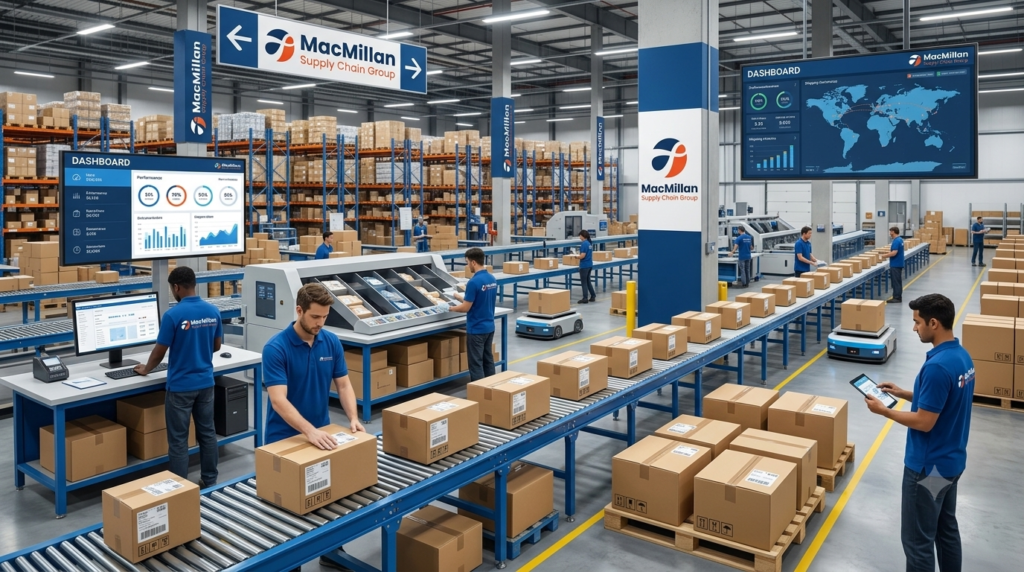
A Quick Summary and Overview In today’s fast-paced e-commerce landscape, efficient supply chain management is crucial for success. This comprehensive guide explores how third-party logistics (3PL) providers like MacMillan Supply Chain Group can revolutionize your e-commerce operations. We’ll delve into key strategies for optimizing inventory management, fulfillment processes, and distribution networks. Learn how partnering with a 3PL can reduce costs, improve customer satisfaction, and accelerate growth. Whether you’re a small business owner or an established e-commerce brand, this article will provide valuable insights to help you navigate the complexities of modern logistics and stay ahead of the competition. An Introduction The e-commerce boom has transformed the way businesses operate, creating both opportunities and challenges in supply chain management. As consumer expectations for fast, reliable shipping continue to rise, companies must adapt their logistics strategies to remain competitive. This is where third-party logistics (3PL) providers come into play, offering specialized expertise and resources to optimize every aspect of the supply chain. In this article, we’ll explore how MacMillan Supply Chain Group’s 3PL services can help e-commerce businesses streamline their operations, reduce costs, and enhance customer satisfaction. We’ll cover key strategies for inventory management, order fulfillment, and distribution network optimization. Additionally, we’ll discuss common challenges faced by e-commerce businesses and how MacMillan’s tailored solutions can address these issues. Whether you’re looking to scale your operations, improve efficiency, or simply stay ahead of the curve, this guide will provide valuable insights to help you make informed decisions about your logistics strategy. Leveraging 3PL Expertise for Inventory Management Effective inventory management is the backbone of any successful e-commerce operation. By partnering with a 3PL provider like MacMillan Supply Chain Group, you can tap into advanced inventory management systems and expertise that can significantly improve your operations. One key strategy is implementing demand forecasting tools. These sophisticated algorithms analyze historical data, market trends, and seasonal fluctuations to predict future inventory needs accurately. This helps prevent stockouts and overstock situations, optimizing your working capital and storage costs. Another crucial aspect is real-time inventory tracking. MacMillan’s state-of-the-art warehouse management systems provide up-to-the-minute visibility into your stock levels across multiple locations. This enables you to make informed decisions about replenishment, allocation, and order fulfillment. Cycle counting is another valuable technique offered by 3PLs. Instead of conducting time-consuming annual inventories, regular cycle counts ensure ongoing accuracy and help identify discrepancies early. This approach minimizes disruptions to your operations and improves overall inventory accuracy. Lastly, 3PLs can help implement efficient kitting and bundling strategies. By pre-assembling product combinations or creating custom packages, you can streamline order fulfillment and potentially increase sales through attractive bundled offerings. By leveraging these inventory management strategies through a 3PL partnership, you can significantly enhance your operational efficiency and maintain a competitive edge in the e-commerce marketplace. Streamlining Order Fulfillment Processes Efficient order fulfillment is crucial for customer satisfaction and retention in e-commerce. MacMillan Supply Chain Group offers several strategies to optimize this critical process. First, implementing advanced order management systems (OMS) can automate and streamline the entire fulfillment process. These systems integrate with your e-commerce platform, automatically routing orders to the most appropriate fulfillment center based on inventory availability and shipping destination. This reduces processing times and minimizes errors. Next, warehouse optimization techniques such as strategic layout design and pick-and-pack automation can significantly speed up the fulfillment process. MacMillan employs cutting-edge technologies like robotic picking systems and conveyor belts to maximize efficiency and accuracy. Another key strategy is multi-channel fulfillment. As an experienced 3PL, MacMillan can help you seamlessly manage orders from various sales channels, including your website, marketplaces, and brick-and-mortar stores. This unified approach ensures consistent service levels across all channels. Returns management is also a critical component of order fulfillment. MacMillan offers streamlined reverse logistics solutions, including automated return processing and refurbishment services. This not only improves customer satisfaction but also helps recapture value from returned items. By implementing these fulfillment strategies, you can significantly reduce processing times, minimize errors, and enhance the overall customer experience, leading to increased loyalty and repeat business. Optimizing Distribution Networks for Faster Delivery In today’s fast-paced e-commerce environment, optimizing your distribution network is essential for meeting customer expectations for quick delivery. MacMillan Supply Chain Group employs several strategies to help businesses achieve this goal. One key approach is strategic warehouse placement. By analyzing your customer base and order patterns, MacMillan can help you establish a network of fulfillment centers in optimal locations. This reduces shipping distances and times, enabling faster and more cost-effective delivery. Implementing a hub-and-spoke distribution model is another effective strategy. This involves using central hubs for inventory storage and regional spokes for last-mile delivery. This model balances the benefits of centralized inventory management with the speed of local distribution. Cross-docking is another technique that can significantly reduce transit times. By bypassing storage and moving products directly from inbound to outbound transportation, you can expedite delivery and reduce handling costs. Leveraging parcel consolidation services is also crucial for optimizing distribution. By combining multiple orders into a single shipment, you can reduce shipping costs and improve efficiency, especially for international orders. Lastly, MacMillan can help you implement dynamic routing algorithms that optimize delivery routes based on real-time factors such as traffic and weather conditions. This ensures the most efficient path for each delivery, further reducing transit times and costs. By employing these distribution network optimization strategies, you can significantly enhance your delivery speed and reliability, giving you a competitive edge in the e-commerce marketplace. Harnessing Data Analytics for Continuous Improvement In the digital age, data is a powerful tool for optimizing supply chain operations. MacMillan Supply Chain Group leverages advanced analytics to drive continuous improvement in your logistics processes. One key strategy is implementing predictive analytics. By analyzing historical data and market trends, MacMillan can forecast future demand patterns, enabling proactive inventory management and more efficient resource allocation. Performance metrics tracking is another crucial aspect. MacMillan provides comprehensive dashboards that monitor key performance indicators (KPIs) such as order accuracy, fulfillment speed, and shipping costs. This
Streamline Your Logistics: Unleash the Power of 3PL Services with MacMillan

A quick summary and overview Third-party logistics (3PL) providers are revolutionizing how businesses manage their supply chains. MacMillan Supply Chain Group offers comprehensive 3PL services designed to streamline operations, reduce costs, and improve customer satisfaction. From warehouse management to transportation coordination, our solutions are tailored to meet the unique needs of each client. By leveraging our expertise and resources, businesses can focus on core competencies while we handle the complexities of logistics. This article explores the benefits of 3PL services, common challenges, and how MacMillan’s innovative solutions can transform your supply chain operations for enhanced efficiency and competitive advantage. An introduction In today’s fast-paced business environment, efficient logistics management is crucial for success. As supply chains become increasingly complex, many companies are turning to third-party logistics (3PL) providers to streamline their operations and stay competitive. MacMillan Supply Chain Group stands at the forefront of this revolution, offering cutting-edge 3PL services that empower businesses to optimize their logistics processes, reduce costs, and enhance customer satisfaction. This comprehensive guide will delve into the world of 3PL services, exploring their benefits, addressing common challenges, and showcasing how MacMillan’s tailored solutions can transform your supply chain operations. Whether you’re a small business looking to scale or a large corporation seeking to improve efficiency, understanding the power of 3PL services is essential for navigating the modern logistics landscape. Understanding 3PL Services and Their Benefits Third-party logistics (3PL) services involve outsourcing various elements of your supply chain operations to a specialized provider. These services can include warehouse management, inventory control, order fulfillment, transportation coordination, and more. By partnering with a 3PL provider like MacMillan Supply Chain Group, businesses can access expertise, technology, and resources that might otherwise be out of reach. The benefits of 3PL services are numerous: Cost Reduction: 3PL providers can leverage economies of scale, reducing overall logistics costs. Scalability: Easily adapt to market fluctuations without significant capital investments. Focus on Core Competencies: Outsourcing logistics allows businesses to concentrate on their primary strengths. Improved Efficiency: Specialized expertise and advanced technologies optimize operations. Enhanced Customer Satisfaction: Faster, more accurate order fulfillment leads to happier customers. Global Reach: 3PL providers often have international networks, facilitating expansion. Risk Mitigation: Shared responsibility for compliance and safety regulations. Access to Advanced Technology: Benefit from cutting-edge logistics software and systems. By understanding these advantages, businesses can make informed decisions about integrating 3PL services into their operations, potentially unlocking new levels of efficiency and growth. Key Components of Effective 3PL Services To truly harness the power of 3PL services, it’s essential to understand their key components. MacMillan Supply Chain Group offers a comprehensive suite of services designed to cover all aspects of your logistics needs: Warehouse Management: Inventory storage and organization Pick, pack, and ship operations Cross-docking and transloading Transportation Management: Carrier selection and rate negotiation Route optimization Freight consolidation Inventory Management: Real-time inventory tracking Demand forecasting Stock level optimization Order Fulfillment: Order processing Kitting and assembly Returns management Technology Integration: Warehouse Management Systems (WMS) Transportation Management Systems (TMS) API integrations with e-commerce platforms Value-Added Services: Custom packaging Product labeling Quality control inspections Reporting and Analytics: Performance metrics tracking Data-driven insights Continuous improvement strategies By offering this comprehensive range of services, MacMillan ensures that every aspect of your supply chain is optimized for maximum efficiency and cost-effectiveness. Choosing the Right 3PL Partner Selecting the ideal 3PL partner is crucial for the success of your logistics operations. When evaluating potential providers, consider the following factors: Industry Experience: Look for a 3PL with expertise in your specific industry or product type. Scalability: Ensure the provider can accommodate your growth plans and handle volume fluctuations. Technology Capabilities: Advanced systems for inventory management, order tracking, and reporting are essential. Geographic Coverage: Choose a 3PL with a network that aligns with your distribution needs. Service Range: Opt for a provider offering a comprehensive suite of services to meet all your logistics requirements. Customization: Seek a partner willing to tailor their solutions to your unique needs. Financial Stability: Verify the 3PL’s financial health to ensure long-term reliability. Compliance and Certifications: Confirm adherence to industry standards and relevant certifications. Cultural Fit: Look for a provider whose values and communication style align with your company culture. References and Case Studies: Request examples of successful partnerships with similar businesses. MacMillan Supply Chain Group excels in these areas, offering industry-leading expertise, cutting-edge technology, and a commitment to customized solutions. By carefully evaluating potential partners against these criteria, you can ensure a successful and beneficial 3PL relationship. Implementing 3PL Services: Best Practices Successfully implementing 3PL services requires careful planning and execution. Follow these best practices to ensure a smooth transition and maximize the benefits of your partnership with MacMillan Supply Chain Group: Define Clear Objectives: Establish specific goals for your 3PL partnership, such as cost reduction targets or service level improvements. Conduct a Thorough Needs Assessment: Analyze your current logistics processes to identify areas for improvement and potential challenges. Develop a Detailed Implementation Plan: Create a timeline with milestones for each phase of the transition. Communicate Effectively: Keep all stakeholders informed throughout the implementation process. Integrate Systems Seamlessly: Work closely with your 3PL to ensure smooth data exchange between your systems. Train Your Team: Educate your staff on new processes and how to work effectively with the 3PL provider. Start with a Pilot Program: Consider implementing services in phases, starting with a smaller-scale pilot to identify and address any issues. Establish Key Performance Indicators (KPIs): Define metrics to measure the success of your 3PL partnership. Continuously Monitor and Optimize: Regularly review performance and work with your 3PL to implement improvements. Foster a Collaborative Relationship: Treat your 3PL as a strategic partner, encouraging open communication and shared problem-solving. By following these best practices, you can ensure a successful implementation of 3PL services and set the foundation for a long-term, mutually beneficial partnership with MacMillan Supply Chain Group. Common problems with the topic Our solutions While 3PL services offer numerous benefits, businesses may encounter some common challenges during implementation and ongoing operations. MacMillan Supply Chain Group is well-equipped to address these issues with innovative solutions: Integration Difficulties: Problem: Many companies struggle to integrate their existing systems with 3PL
Section 321: Unlock Duty-Free Shipping and Optimize Your Ecommerce Strategy
A Quick Summary and Overview Section 321 of the Tariff Act of 1930 allows ecommerce businesses to import low-value shipments (up to $800) into the United States duty-free. This provision reduces import costs, streamlines cross-border shipping, and supports scalable business growth. Leveraging fulfillment centers in close proximity, like Canada and Mexico, can enhance compliance and logistical efficiency, ensuring your ecommerce operations remain competitive in the US market. MacMillan Supply Chain offers expert solutions to navigate Section 321 complexities, providing businesses with cost-effective strategies to optimize their supply chain and maximize the benefits of duty-free shipping. Introduction In today’s fiercely competitive ecommerce landscape, businesses are constantly seeking innovative ways to reduce costs and enhance operational efficiency. Enter Section 321 of the Tariff Act of 1930 – a game-changing provision that allows for duty-free importation of low-value shipments into the United States. This powerful tool has become increasingly crucial for ecommerce businesses looking to optimize their supply chain and maintain a competitive edge in the global market. As we delve into the intricacies of Section 321, we’ll explore its benefits, challenges, and how partnering with a seasoned logistics provider like MacMillan Supply Chain can help you navigate this complex terrain. From understanding the basics to implementing strategic solutions, this comprehensive guide will equip you with the knowledge needed to leverage Section 321 effectively, reduce import costs, and scale your ecommerce business cost-effectively. Let’s unlock the potential of duty-free shipping and transform your logistics strategy. Understanding Section 321: The Key to Duty-Free Ecommerce Shipping Section 321, also known as the de minimis provision, allows for the duty-free entry of shipments valued at $800 or less into the United States. This regulation has become a cornerstone for ecommerce businesses looking to reduce import costs and streamline their cross-border shipping processes. Key features of Section 321 include: Value Limit: Shipments must not exceed $800 in retail value. Frequency: Limited to one shipment per person, per day. Exclusions: Certain products like alcohol and tobacco are ineligible. For ecommerce businesses, Section 321 offers significant advantages: – Cost Savings: Elimination of duties and taxes on eligible shipments. – Faster Clearance: Simplified customs procedures for quicker processing. – Competitive Pricing: Ability to offer more attractive prices to US customers. However, leveraging Section 321 effectively requires careful planning and execution. Businesses must ensure accurate valuation of goods, maintain proper documentation, and adhere to all regulatory requirements. This is where partnering with an experienced logistics provider like MacMillan Supply Chain becomes invaluable. By understanding and properly implementing Section 321 strategies, ecommerce businesses can significantly reduce their import costs, improve cash flow, and gain a competitive advantage in the US market. The key lies in balancing compliance with optimization to maximize the benefits of this powerful provision. Maximizing the Benefits of Section 321 for Your Ecommerce Business To fully capitalize on Section 321, ecommerce businesses need to adopt strategic approaches that align with their operational goals. Here are key strategies to maximize the benefits: Optimize Order Fulfillment: Break larger orders into multiple shipments under $800. Utilize distributed inventory across multiple fulfillment centers. Leverage Nearby Fulfillment Centers: Set up operations in Canada or Mexico for quick, low-cost shipping to the US. Reduce transit times and improve customer satisfaction. Implement Advanced Inventory Management: Use real-time tracking to ensure compliance with the one-shipment-per-day rule. Employ predictive analytics for efficient stock allocation. Streamline Documentation Processes: Develop standardized procedures for accurate valuation and declaration. Utilize automated systems for consistent and compliant documentation. Educate Your Team: Train staff on Section 321 regulations and best practices. Stay updated on policy changes and adjust strategies accordingly. By implementing these strategies, ecommerce businesses can: – Reduce overall shipping costs – Improve delivery times – Enhance customer experience – Gain a competitive edge in pricing MacMillan Supply Chain specializes in helping businesses implement these strategies effectively, ensuring you maximize the benefits of Section 321 while maintaining full compliance with all regulations. Navigating Compliance and Avoiding Pitfalls in Section 321 Implementation While Section 321 offers significant benefits, it also comes with compliance challenges that ecommerce businesses must navigate carefully: Accurate Valuation: Ensure correct declaration of retail value, not wholesale cost. Be prepared to provide supporting documentation if requested. Frequency Limitations: Adhere strictly to the one-shipment-per-person, per-day rule. Implement systems to track and manage shipment frequency. Product Eligibility: Stay informed about excluded products and changing regulations. Develop clear processes for identifying and handling non-eligible items. Documentation Requirements: Maintain detailed records of all Section 321 shipments. Ensure all required information is accurately provided on customs forms. Customs Scrutiny: Be prepared for potential increased scrutiny from customs officials. Maintain transparency and be ready to provide additional information if required. Common pitfalls to avoid: – Undervaluing goods to fit within the $800 limit – Splitting single orders into multiple shipments to circumvent regulations – Neglecting to update procedures when regulations change Successfully navigating these compliance challenges requires expertise and diligence. MacMillan Supply Chain offers comprehensive solutions to ensure your Section 321 strategy remains compliant and effective, minimizing risks and maximizing benefits for your ecommerce business. The Role of Technology in Optimizing Section 321 Strategies In the digital age, leveraging technology is crucial for effectively implementing and managing Section 321 strategies. Here’s how technology can enhance your approach: Automated Customs Documentation: Use software that automatically generates accurate customs forms. Reduce human error and ensure consistency in declarations. Real-Time Tracking and Monitoring: Implement systems that provide visibility into shipment status and customs clearance. Quickly address any issues that arise during the import process. Intelligent Order Routing: Utilize AI-driven systems to optimize order fulfillment across multiple warehouses. Ensure compliance with Section 321 rules while minimizing shipping costs. Data Analytics for Compliance: Use advanced analytics to identify patterns and potential compliance risks. Make data-driven decisions to refine your Section 321 strategy. Integration with Ecommerce Platforms: Seamlessly connect your ecommerce platform with logistics systems. Ensure accurate information flow from order placement to fulfillment. By embracing these technological solutions, ecommerce businesses can: – Improve operational efficiency – Enhance compliance accuracy – Gain valuable insights for
Streamline Your Etsy Business with MacMillan Supply Chain’s 3PL Solutions
A quick summary and overview MacMillan Supply Chain offers comprehensive 3PL solutions tailored for Etsy sellers looking to streamline their operations. Our services encompass order fulfillment, inventory management, cost-effective shipping, and dedicated customer support. By partnering with us, Etsy entrepreneurs can focus on product creation and marketing while we handle the logistics. This article explores how MacMillan’s 3PL services can optimize your Etsy business, overcome common fulfillment challenges, and propel your shop towards sustainable growth. Discover how our expertise in e-commerce logistics can transform your Etsy venture and enhance customer satisfaction. An introduction As an Etsy seller, you’re passionate about creating unique products and building your brand. However, as your business grows, managing logistics can become increasingly complex and time-consuming. This is where MacMillan Supply Chain’s 3PL services come into play. We specialize in providing tailored logistics solutions for e-commerce businesses, including Etsy shops of all sizes. By leveraging our expertise, you can streamline your operations, reduce costs, and improve customer satisfaction. Our comprehensive suite of services is designed to address the unique challenges faced by Etsy sellers, from inventory management to order fulfillment and shipping. In this article, we’ll explore how MacMillan Supply Chain can help you optimize your Etsy business, overcome common hurdles, and set the stage for sustainable growth. Let’s dive into the world of 3PL and discover how it can revolutionize your Etsy shop. Understanding 3PL for Etsy Sellers Third-party logistics (3PL) providers like MacMillan Supply Chain offer a range of services that can significantly benefit Etsy sellers. At its core, 3PL involves outsourcing various aspects of your logistics operations to a specialized company. For Etsy businesses, this typically includes order fulfillment, inventory management, and shipping. When you partner with MacMillan Supply Chain, we take care of storing your inventory in our strategically located warehouses. As orders come in through your Etsy shop, our advanced systems automatically process them. We pick, pack, and ship your products directly to your customers, ensuring timely and accurate deliveries. One of the key advantages of using a 3PL for your Etsy business is scalability. During peak seasons or sudden surges in demand, you don’t have to worry about hiring additional staff or securing more storage space. We can easily adjust our resources to accommodate your needs, allowing your business to grow without logistical constraints. Moreover, by leveraging our established relationships with carriers, we can offer you cost-effective shipping rates that might be difficult to obtain on your own. This can lead to significant savings, which you can either pass on to your customers or reinvest in your business. Streamlining Inventory Management Effective inventory management is crucial for Etsy sellers, and this is where MacMillan Supply Chain’s expertise truly shines. Our state-of-the-art inventory management system provides real-time visibility into your stock levels, ensuring you always know exactly what you have on hand. We employ advanced forecasting tools that analyze historical sales data and market trends to help you make informed decisions about restocking. This proactive approach minimizes the risk of stockouts, which can lead to lost sales and disappointed customers. Conversely, it also helps prevent overstocking, which ties up your capital and increases storage costs. Our system integrates seamlessly with your Etsy shop, automatically updating inventory levels as orders are processed and shipped. This eliminates the need for manual stock updates, reducing the likelihood of errors and saving you valuable time. For Etsy sellers with multiple product variations or customizable items, our kitting and assembly services can be a game-changer. We can pre-assemble product bundles or prepare custom orders according to your specifications, streamlining the fulfillment process for complex products. By entrusting your inventory management to MacMillan Supply Chain, you can focus on creating new products and growing your Etsy business, confident that your stock levels are optimized and your orders will be fulfilled accurately and efficiently. Optimizing Order Fulfillment and Shipping At MacMillan Supply Chain, we understand that efficient order fulfillment and shipping are critical to the success of your Etsy shop. Our advanced fulfillment centers are equipped with cutting-edge technology to ensure fast, accurate processing of your orders. When an order comes in through your Etsy shop, our system automatically generates pick lists for our warehouse staff. Using barcode scanning and quality control checks, we ensure that the correct items are picked and packed for each order. This attention to detail significantly reduces the likelihood of shipping errors, leading to higher customer satisfaction and fewer returns. We offer a range of packaging options to suit your brand and product needs. Whether you require standard packaging or custom-branded solutions, we can accommodate your preferences while ensuring that your products are protected during transit. Our strategic partnerships with major carriers allow us to offer you competitive shipping rates. We can help you choose the most cost-effective shipping methods based on factors such as package size, weight, destination, and delivery speed requirements. This can lead to substantial savings on shipping costs, which you can either use to boost your profit margins or pass on to your customers to increase competitiveness. Furthermore, we provide real-time tracking information for all shipments, which you can easily share with your customers through your Etsy shop. This transparency helps build trust and reduces customer inquiries about order status. Enhancing Customer Service and Returns Management Exceptional customer service is a cornerstone of success on Etsy, and MacMillan Supply Chain is committed to helping you deliver an outstanding experience to your customers. Our dedicated customer service team acts as an extension of your business, handling inquiries related to order status, shipping, and returns. We offer multi-channel support, including email and phone, ensuring that your customers can reach us through their preferred method of communication. Our team is trained to handle a wide range of customer queries professionally and efficiently, freeing up your time to focus on other aspects of your business. Returns management can be a challenging aspect of e-commerce, but with MacMillan Supply Chain, it becomes a smooth, hassle-free process. We handle the entire returns process, from
Revolutionizing Supply Chain Management: The Power of Warehouse Management Systems (WMS)
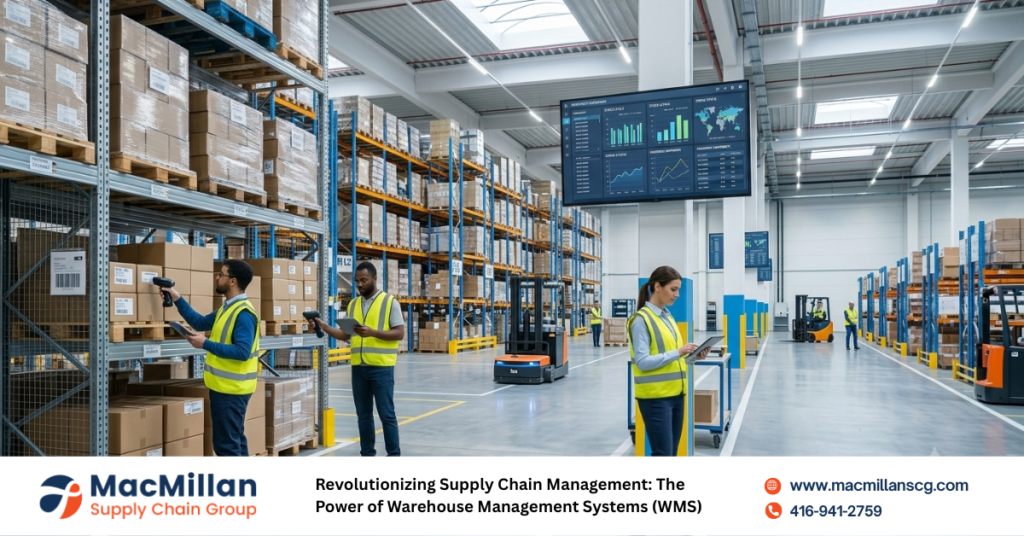
A Quick Summary Warehouse Management Systems (WMS) are revolutionizing supply chain operations by streamlining processes, enhancing inventory accuracy, and improving order fulfillment. This comprehensive guide explores the key features and benefits of WMS, implementation strategies, and how partnering with MacMillan Supply Chain Group can elevate your logistics game. Discover how WMS can transform your warehouse operations and drive business growth. An Introduction In today’s fast-paced business environment, efficient warehouse management is crucial for staying competitive. Enter the Warehouse Management System (WMS) – a powerful tool that’s reshaping the logistics landscape. At MacMillan Supply Chain Group, we’ve seen firsthand how WMS can transform operations, boost productivity, and enhance customer satisfaction. This article delves into the world of WMS, exploring its features, benefits, and implementation strategies to help you make informed decisions for your supply chain success. What is a Warehouse Management System (WMS)? A Warehouse Management System (WMS) is a software solution designed to optimize and streamline warehouse operations. It acts as the central nervous system of your warehouse, coordinating and managing various activities from inventory tracking to order fulfillment. Unlike traditional manual methods, a WMS provides real-time visibility into your warehouse operations, allowing for more accurate decision-making and improved efficiency. Key features of a WMS typically include: – Real-time inventory tracking – Order management and fulfillment – Labor management and task allocation – Reporting and analytics – Integration with other supply chain systems By automating many warehouse processes, a WMS reduces human error, increases accuracy, and allows for more strategic use of resources. It’s not just about storing products; it’s about optimizing every aspect of warehouse operations to meet the demands of modern commerce. Benefits of Implementing a Warehouse Management System Implementing a WMS can bring transformative benefits to your supply chain operations. Here are some key advantages: Improved Inventory Accuracy: WMS provides real-time tracking, reducing discrepancies and stock-outs. Enhanced Productivity: Automated processes and optimized picking routes increase operational efficiency. Better Space Utilization: WMS can suggest optimal storage locations, maximizing warehouse space. Reduced Labor Costs: By streamlining operations, WMS can help reduce labor requirements and associated costs. Increased Customer Satisfaction: Faster, more accurate order fulfillment leads to happier customers. Data-Driven Decision Making: Robust reporting and analytics features provide insights for continuous improvement. Scalability: WMS can grow with your business, accommodating increased volumes and complexity. These benefits collectively contribute to a more efficient, cost-effective, and competitive supply chain operation. At MacMillan Supply Chain Group, we’ve seen clients achieve significant ROI through strategic WMS implementation. Key Features to Look for in a WMS When selecting a WMS, it’s crucial to choose one that aligns with your specific business needs. Here are some essential features to consider: Inventory Management: Look for systems offering real-time tracking, cycle counting, and ABC analysis capabilities. Order Fulfillment: Ensure the WMS can handle various order types and support multiple picking methods. Receiving and Putaway: Seek features like barcode scanning, cross-docking, and automated storage location assignment. Reporting and Analytics: Robust reporting tools are crucial for performance monitoring and optimization. Mobile Accessibility: A mobile-friendly WMS allows for greater flexibility and real-time updates on the warehouse floor. Integration Capabilities: The WMS should easily integrate with your existing ERP, TMS, and other supply chain systems. Customization Options: Look for a WMS that can be tailored to your unique workflows and processes. Scalability: Ensure the system can grow with your business and handle increased complexity over time. At MacMillan Supply Chain Group, we work closely with clients to identify the most suitable WMS features for their specific needs, ensuring a solution that drives tangible results. Implementing a WMS: Best Practices and Considerations Implementing a WMS is a significant undertaking that requires careful planning and execution. Here are some best practices to ensure a successful implementation: Define Clear Objectives: Establish specific goals for your WMS implementation, such as improving inventory accuracy or reducing order fulfillment times. Involve Key Stakeholders: Engage warehouse staff, IT teams, and management throughout the process to ensure buy-in and address concerns. Choose the Right Partner: Select a WMS provider with experience in your industry and a track record of successful implementations. Plan for Data Migration: Ensure your existing data is clean and properly formatted before migrating to the new system. Provide Comprehensive Training: Invest in thorough training for all users to maximize the system’s benefits. Start with a Pilot: Consider implementing the WMS in phases, starting with a pilot program to identify and address issues early. Monitor and Optimize: Continuously track KPIs and gather feedback to optimize the system post-implementation. By following these best practices, you can minimize disruptions and maximize the benefits of your WMS implementation. Common Problems with Warehouse Management Systems While WMS can bring significant benefits, there are potential challenges to be aware of: High Initial Costs: The upfront investment for WMS implementation can be substantial. Resistance to Change: Employees may resist adopting new technologies and processes. Integration Issues: Difficulties in integrating WMS with existing systems can cause operational disruptions. Complexity: Some WMS solutions may be overly complex for smaller operations. Data Accuracy: The system is only as good as the data it receives, making data integrity crucial. Customization Limitations: Off-the-shelf solutions may not fully meet unique business needs. Our Solutions At MacMillan Supply Chain Group, we address these challenges head-on: Cost-Effective Solutions:We offer scalable WMS options to fit various budgets and provide ROI analysis to justify the investment. Change Management Support: Our team provides comprehensive training and support to ensure smooth adoption. Seamless Integration: We specialize in integrating WMS with existing systems, minimizing disruptions. Tailored Complexity: We match the WMS complexity to your operational needs, avoiding unnecessary features. Data Management: We implement robust data validation processes to ensure accuracy. Customization Services: Our team can customize WMS solutions to meet your specific requirements. Moreover, we offer ongoing support and optimization services to ensure your WMS continues to deliver value long after implementation. Our expertise in supply chain management allows us to provide holistic solutions that address not just technology needs but also process improvements and strategic planning. How Can Readers Avoid Problems or Implement Solutions To avoid common WMS pitfalls and ensure successful implementation, consider the following steps: Conduct a thorough needs assessment to identify your specific requirements. Research
Warehouse Optimization: Boost Efficiency and Cut Costs with MacMillan Supply Chain
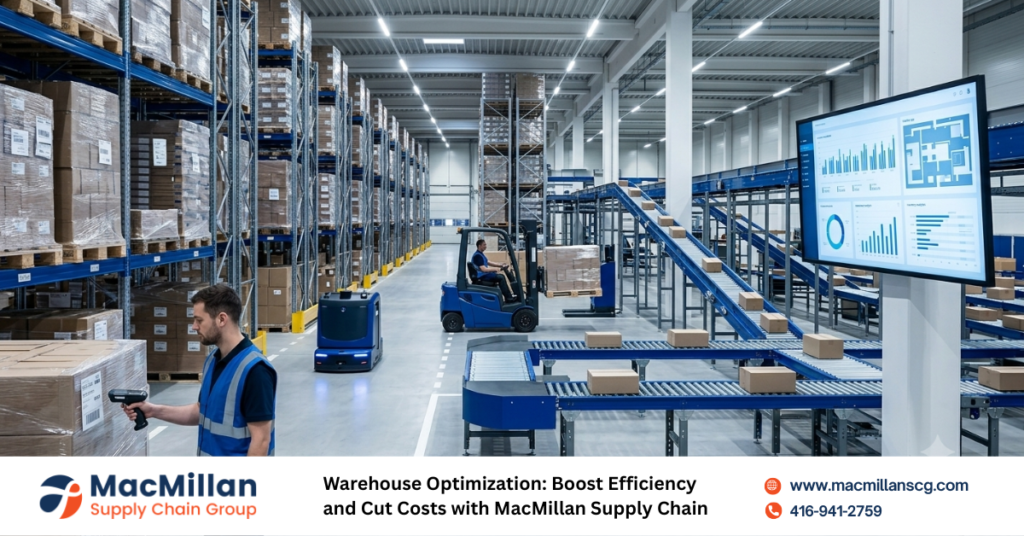
A quick summary and overview Warehouse optimization is crucial for businesses looking to improve their supply chain efficiency and reduce operational costs. This comprehensive guide explores various strategies and technologies that can transform your warehouse operations. From layout redesign to implementing cutting-edge automation systems, we’ll cover practical solutions to common warehouse challenges. Learn how MacMillan Supply Chain Group’s expertise can help you streamline processes, enhance inventory management, and boost overall productivity. Whether you’re managing a small distribution center or overseeing a large-scale fulfillment operation, this article provides valuable insights to take your warehouse performance to the next level. An introduction In today’s fast-paced business environment, efficient warehouse management is more critical than ever. As the backbone of the supply chain, warehouses play a pivotal role in ensuring timely deliveries, maintaining inventory accuracy, and controlling operational costs. However, many businesses struggle with suboptimal warehouse layouts, inefficient processes, and outdated technologies that hinder their growth and profitability. This article delves into the world of warehouse optimization, offering practical strategies and innovative solutions to transform your storage and distribution operations. We’ll explore how to leverage advanced technologies, redesign warehouse layouts, and implement best practices in inventory management. By the end of this guide, you’ll have a clear understanding of how to enhance your warehouse efficiency, reduce costs, and gain a competitive edge in the market with the help of MacMillan Supply Chain Group’s expertise. Effective warehouse layout and space utilization are fundamental to optimizing operations and improving efficiency. A well-designed warehouse layout can significantly reduce travel time, minimize errors, and increase overall productivity. Here are key strategies to consider: Conduct a thorough analysis of your current layout and identify bottlenecks. Implement a logical flow for receiving, storage, picking, and shipping processes. Utilize vertical space with high-bay racking systems and mezzanines. Create dedicated zones for different product categories or functions. Optimize aisle widths to balance accessibility and storage capacity. Use ABC analysis to position fast-moving items in easily accessible locations. Implement cross-docking for applicable products to reduce handling and storage time. When redesigning your warehouse layout, consider factors such as product characteristics, order profiles, and seasonal fluctuations. Flexibility is crucial, so design a layout that can adapt to changing business needs. Additionally, incorporate ergonomic principles to ensure worker safety and comfort, which can lead to increased productivity and reduced workplace injuries. MacMillan Supply Chain Group can assist in analyzing your current layout and proposing optimized solutions tailored to your specific requirements. Our experts use advanced simulation tools to test different configurations and ensure the most efficient use of your warehouse space. Implementing Warehouse Management Systems (WMS) and Automation Integrating a robust Warehouse Management System (WMS) and automation technologies can dramatically improve warehouse efficiency and accuracy. A WMS provides real-time visibility into inventory levels, order status, and workforce productivity. Here’s how these technologies can benefit your operations: Real-time inventory tracking and management Optimized picking routes and methods (e.g., wave picking, batch picking) Automated data collection and reporting Integration with other business systems (ERP, TMS) Enhanced labor management and performance tracking Automation technologies further amplify these benefits: Automated Storage and Retrieval Systems (AS/RS) for high-density storage Conveyor systems and sortation equipment for efficient material handling Automated Guided Vehicles (AGVs) for product movement Pick-to-light or voice-picking systems for improved accuracy Robotic palletizing and depalletizing When implementing these systems, it’s crucial to choose solutions that align with your specific business needs and can scale with your growth. MacMillan Supply Chain Group offers expertise in selecting, implementing, and optimizing WMS and automation technologies. We can help you navigate the complex landscape of warehouse technology and ensure a smooth integration with your existing systems and processes. Enhancing Inventory Management and Control Effective inventory management is critical for maintaining optimal stock levels, reducing carrying costs, and ensuring timely order fulfillment. Here are key strategies to enhance your inventory control: Implement cycle counting for ongoing inventory accuracy Use data analytics to forecast demand and optimize stock levels Adopt Just-in-Time (JIT) inventory practices where applicable Utilize RFID technology for real-time tracking and improved visibility Implement slotting optimization to reduce picking times and improve accuracy Use Vendor-Managed Inventory (VMI) for select products or suppliers Implement Kanban systems for lean inventory management Advanced inventory management techniques like ABC analysis and Economic Order Quantity (EOQ) calculations can help you prioritize stock and determine optimal order quantities. Additionally, consider implementing a First-In-First-Out (FIFO) or Last-In-First-Out (LIFO) system based on your product characteristics and industry requirements. MacMillan Supply Chain Group can assist in developing a comprehensive inventory management strategy tailored to your business needs. Our experts can help you implement best practices, select appropriate technologies, and establish key performance indicators (KPIs) to monitor and improve your inventory control processes continuously. Streamlining Picking and Packing Processes Efficient picking and packing processes are essential for rapid order fulfillment and customer satisfaction. Optimizing these processes can significantly reduce labor costs and improve accuracy. Consider the following strategies: Implement zone picking for improved efficiency in large warehouses Use batch picking for consolidating multiple orders Adopt pick-to-light or voice-directed picking technologies Implement a slotting strategy to minimize travel time and improve ergonomics Use automated packaging systems for standardized items Implement quality control checks at key points in the packing process Utilize mobile workstations to reduce unnecessary movement When streamlining picking and packing processes, it’s crucial to balance speed with accuracy. Implement regular training programs to ensure your staff is up-to-date with the latest procedures and technologies. Additionally, consider using ergonomic equipment and designs to reduce worker fatigue and increase productivity. MacMillan Supply Chain Group can help you analyze your current picking and packing processes, identify bottlenecks, and implement optimized workflows. Our team can also assist in selecting and integrating appropriate technologies to enhance these processes, such as pick-to-light systems or automated packaging solutions. Common problems with the topic Our solutions While warehouse optimization offers numerous benefits, many businesses face common challenges when implementing improvements: Resistance to change: Employees may be hesitant to adopt new technologies or processes.Solution: MacMillan Supply Chain Group emphasizes change management strategies,