
Hybrid Logistics Model Canada: 5 Key Benefits
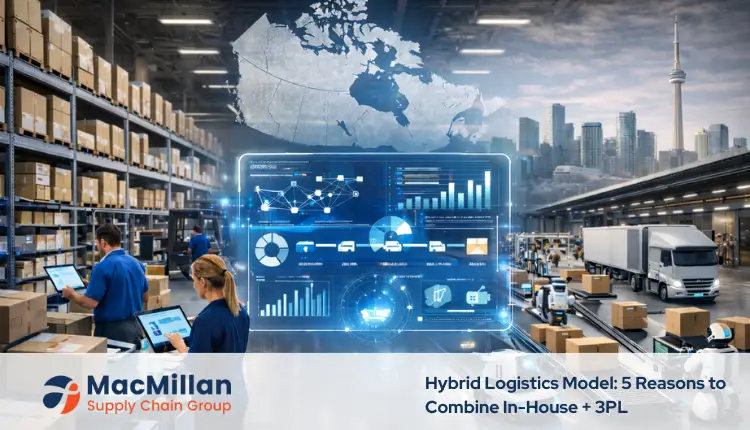
Introduction In today’s evolving logistics landscape, businesses must choose between working with a third-party logistics (3PL) provider or keeping operations fully in-house. But increasingly, the smart move is adopting a hybrid logistics model—a strategy that combines the strengths of both. But what if neither/or isn’t the best option? A powerful trend that combines the capabilities of internal teams with the know-how and technology of a third-party logistics provider is emerging at Macmillan Supply Chain Group. This hybrid logistics approach is a long-term strategic choice rather than merely a short-term fix. And it’s turning out to be the best course of action for a lot of Canadian companies, particularly those dealing with seasonal fluctuations or fast growth. We’ll outline the top five reasons in this post for why you can get the best of both worlds by integrating your internal logistics team with a 3PL provider — particularly one that uses cutting-edge technologies like AI 3PL operating systems. 1. Hybrid Logistics Model =Adaptability Without Losing Command To be honest, it can be a leap of faith to relinquish complete control over your logistics operations. Your team is familiar with your standards, customers, and products. That’s a worthwhile experience. However, there are drawbacks to doing everything in-house, particularly when your company expands or enters new markets. A hybrid strategy can help with that. You can expand your capacity and geographic reach without sacrificing your internal capabilities by outsourcing certain tasks — such as last-mile delivery in a densely populated metro area or warehousing in a new province. The AI 3PL operating systems we implement seamlessly integrate with your current workflows when you work with a partner like Macmillan SCG. This implies that even if our infrastructure handles the execution, your team maintains control over visibility and decision-making. Imagine it as an addition to a beloved house. You’re not going anywhere. Simply put, you’re creating space where it’s most needed. 2. How a Hybrid Logistics Model Helps You Scale Cost Efficiently Keeping everything in-house can quickly become costly. Fixed logistics costs include things like fleet maintenance, warehouse rent, and full-time employees. And when business slows down, those costs don’t just vanish. You can change fixed costs into variable ones with a hybrid model. While relying on your 3PL for specialized services or varying demand, you maintain your core team and assets focused on what they do best. One of our retail clients, for instance, uses Macmillan SCG for regional distribution and returns processing, but manages central fulfillment internally. We increase capacity for them during busy times of the year and then decrease it once things settle down. Their clients receive reliable service, and they save a lot of money on overhead. We can also predict demand trends, optimize resource allocation, and cut waste thanks to AI 3PL operating systems, which helps our hybrid clients save even more money. 3. Boost Supply Chain Visibility With a Hybrid Logistics Model Outsourcing is often associated with a loss of visibility. That isn’t the case in 2025, though, at least not if you’re working with the correct 3PL. Our AI-powered logistics platform at Macmillan SCG offers real-time insights into both internal and external operations and integrates easily with your ERP or WMS. Whether inventory is sitting in your warehouse or en route in ours, you’ll see it all in one place. Our AI 3PL operating systems make it possible to: Track order status from purchase to final delivery Monitor inventory levels across multiple locations View delivery ETAs, exception reports, and carrier performance Get automated notifications when stock needs to be rerouted or replenished That kind of data-sharing means better decisions, faster. Your internal team gains strategic clarity in addition to oversight. Additionally, your clients enjoy more seamless, open service without even being aware that it’s a hybrid operation. 4. Distribute Tasks Using Core Skills Every logistics team has advantages and disadvantages. Perhaps your team excels at local business-to-business distribution but finds it difficult to fulfill orders for online retailers. Or perhaps you are an expert at storage but still struggle with last-mile delivery in rural areas. A hybrid approach enables you to divide responsibilities purposefully, as opposed to hiring for every niche need or attempting to push your team beyond its comfort zone. This is how it might appear: In-house: Manage expensive shipments, delicate goods, or packaging that is essential to the brand. 3PL partner: Oversee cross-border logistics, same-day fulfillment, and excess inventory. At Macmillan SCG, we routinely work with clients who want to retain specific logistics functions internally — and we build our services around that. Our AI-driven systems ensure that our portion of the supply chain aligns with your processes, customer SLAs, and performance metrics. It has nothing to do with changing your team. Giving them a logistics partner who can cover the gaps and improve performance is the goal. 5. Hybrid Logistics Model = Advanced Tech Without High Investment The harsh reality is that the logistics sector is evolving quickly, and it costs money to stay up to date with new developments. It can take months and a six-figure budget to implement sophisticated robotics, route optimization tools, or real-time tracking. Investing in all of that internally is simply not feasible for many businesses. However, working with a forward-thinking 3PL like Macmillan SCG gives you immediate access to effective tools like: AI-powered 3PL operating systems that automate inventory control and forecast demand Real-time machine learning models that modify delivery routes in response to traffic and weather conditions Up to 65% faster picking and packing with robotics and warehouse automation Better yet, our facilities have already tested, improved, and implemented these technologies. No learning curve. No delays. Just better performance — from day one. This means your hybrid model isn’t just a cost-saving move. It’s a chance to upgrade your supply chain while avoiding the sunk cost of building from scratch. Real Clients. Real Hybrid Wins. Here’s a brief illustration: All logistics used to be managed internally by one of our B2C clients, an Ontario-based skincare brand. However, their staff was overworked during the pandemic
Top 5 3PL Companies in Canada: A Comprehensive Review
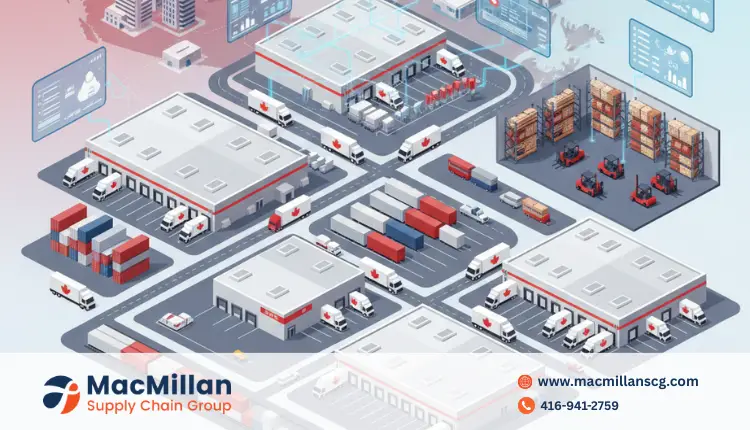
A Quick Summary and Overview When growing your business in Canada, choosing the right 3PL partner is crucial for success. The top 3PL companies in Canada offer comprehensive services including warehousing, e-commerce fulfillment, and cross-border shipping solutions. This guide examines the five leading third-party logistics providers based on service quality, technology integration, geographic reach, and customer satisfaction. Whether you’re an e-commerce startup or an established manufacturer, understanding these logistics powerhouses will help you make informed decisions to optimize your supply chain and deliver exceptional customer experiences. Introduction In today’s fast-paced business environment, efficient logistics management can make or break your company’s success. That’s where third-party logistics providers (3PLs) come in. These specialized companies handle the complex tasks of warehousing, transportation, and fulfillment, allowing businesses to focus on their core competencies. For Canadian businesses, especially those in e-commerce, finding the right 3PL partner is essential for managing the unique challenges of Canada’s vast geography, cross-border trade with the US, and growing consumer expectations for fast delivery. The best 3PL companies in Canada offer more than just storage and shipping – they provide end-to-end supply chain solutions that can transform your business operations. In this comprehensive review, we’ll examine the top five 3PL companies in Canada, analyzing their strengths, service offerings, and what makes them stand out in a competitive market. Whether you’re looking for a Toronto fulfillment center, cross-border logistics expertise, or sustainable shipping solutions, this guide will help you make an informed decision for your business needs. Understanding 3PL Services in Canada Third-party logistics providers have become essential partners for businesses of all sizes across Canada. But what exactly do these companies offer? At their core, 3PL companies in Canada provide outsourced logistics services that handle various aspects of your supply chain. The Canadian 3PL landscape has evolved significantly in recent years, driven by e-commerce growth and changing consumer expectations. Today’s top providers offer comprehensive services including: Warehousing in Canada Order Fulfillment Transportation Management Cross-Border Logistics Customs Clearance Services Reverse Logistics Value-Added Services What separates leading 3PLs from average providers is their technology integration. Modern 3PL companies leverage advanced warehouse management systems (WMS), transportation management systems (TMS), and real-time tracking capabilities to provide visibility and efficiency throughout the supply chain. For Canadian businesses, working with a specialized 3PL means gaining access to established shipping networks, volume discounts, and logistics expertise that would be difficult and costly to develop in-house. This partnership approach has made 3PL services increasingly popular among both startups and established enterprises looking to optimize their operations. Evaluation Criteria for Top 3PLs Selecting the right 3PL partner requires careful consideration of several key factors. Our comprehensive evaluation of the top 3PL companies in Canada is based on the following criteria: Geographic Coverage and Network Strength The best 3PL providers offer strategic warehouse locations near major population centers and transportation hubs. We assessed each company’s network of facilities, with special attention to Toronto fulfillment centers, Vancouver operations, and cross-border capabilities. Companies with multiple locations across Canada received higher ratings for their ability to provide faster delivery times to more customers. Technology Integration and Visibility In today’s digital economy, technology separates leading 3PLs from the competition. Our evaluation examined each provider’s technological capabilities, including: Service Diversity and Specialization The top 3PL companies in Canada offer comprehensive service portfolios while also demonstrating expertise in specific industries or logistics functions. We evaluated each provider’s capabilities in: Scalability and Flexibility Business needs change, especially for growing companies. The best 3PLs offer flexible solutions that can scale with your business, accommodating seasonal fluctuations and long-term growth without requiring new partnerships or significant disruption to operations. By applying these criteria consistently across our research, we’ve identified the five 3PL companies that truly stand out in the Canadian logistics landscape. Top 5 3PL Companies in Canada After thorough research and analysis, we’ve identified the five leading third-party logistics providers serving the Canadian market. Each offers unique strengths while maintaining excellence across core logistics functions. MacMillan Supply Chain Group MacMillan Supply Chain Group has established itself as a premier 3PL provider with exceptional warehousing in Canada and specialized e-commerce fulfillment services. Based in the Greater Toronto Area with additional facilities across Canada, MacMillan combines decades of logistics expertise with cutting-edge technology. Key Strengths: InterFulfillment With strategic Toronto fulfillment centers and Vancouver operations, InterFulfillment has built a reputation for excellence in e-commerce logistics. Their technology-first approach integrates seamlessly with major platforms like Shopify, Amazon, and WooCommerce. Key Strengths: Stallion Express Stallion Express has carved out a niche as a cross-border logistics specialist, offering streamlined shipping between Canada and the US. Their focus on affordable international shipping makes them particularly valuable for Canadian e-commerce businesses selling to American consumers. Key Strengths: Manitoulin Transport As one of Canada’s largest transportation providers, Manitoulin Transport offers comprehensive logistics services with particular strength in less-than-truckload (LTL) shipping across North America. Their extensive network makes them ideal for businesses shipping larger orders throughout Canada. Key Strengths: Day & Ross Rounding out our top five is Day & Ross, a well-established logistics provider with particular expertise in temperature-controlled shipping and dedicated fleet services. Their comprehensive approach to supply chain management makes them suitable for businesses with complex logistics requirements. Key Strengths: Each of these top 3PL companies in Canada offers distinct advantages, allowing businesses to select the provider that best aligns with their specific logistics needs and growth objectives. Common Problems with 3PL Services While partnering with a 3PL offers numerous benefits, businesses should be aware of potential challenges that can arise. Understanding these common problems can help you select the right provider and establish effective working relationships. Integration Difficulties Many businesses struggle with integrating their existing systems with their 3PL’s technology platform. This can lead to data inconsistencies, communication breakdowns, and fulfillment errors. Service Level Inconsistencies Quality control can become an issue, particularly during peak seasons when 3PLs handle increased volumes. This might manifest as slower processing times, packing errors, or shipping delays. Cost Transparency Challenges Some 3PL companies in Canada use complex