
Advancements in Last-Mile Delivery Transforming Canada

The Evolution of Last-Mile Delivery in Canada The e-commerce industry in Canada is expanding at an unprecedented rate, which presents last-mile delivery with both opportunities and challenges. Customers of today demand delivery options that are quicker, more dependable, and eco-friendly. The logistics sector is adopting technological advancements in last-mile delivery, including drones, driverless cars, and AI-powered warehousing, to satisfy these demands. Leading the way in these developments is MacMillan Supply Chain Group, which uses innovative technology and sustainable solutions to get past issues like cross-border bottlenecks, labor shortages, and delivery challenges in rural areas. This article examines how these developments are changing last-mile delivery in Canada and satisfying the changing demands of online shoppers. Advancements in Last-Mile Delivery The Last-Mile Revolution: Advancements in Last-Mile Delivery to Meet Canada’s Growing E-Commerce Needs The hardest and most expensive portion of the supply chain has always been the last leg of delivery, from the distribution center to the customer’s door. Last-mile delivery is under more strain than ever before, as it is anticipated that Canada’s e-commerce sales will surpass $100 billion by 2025. In addition to making more purchases online, customers now demand sustainable options, real-time tracking, and quicker deliveries. The logistics sector is experiencing a surge in advancements in last-mile delivery as a result of this change. The way goods are delivered to Canadian homes is being rethought, from drones hovering over isolated northern communities to robots sorting packages in warehouses. To assist companies in navigating this shifting environment, we at MacMillan Supply Chain Group are welcoming these advancements in last-mile delivery. However, what precisely are these innovations? How are they handling the particular geographic difficulties faced by Canada? What implications does this have for companies attempting to meet customer expectations? Let’s examine the advancements in last-mile delivery—the tactics and technologies currently revolutionizing logistics in Canada. Technological Breakthroughs Reshaping Canadian Deliveries Autonomous Delivery Vehicles: Advancements in Last-Mile Delivery on Canadian Streets Do you recall the days when autonomous cars seemed like science fiction? Autonomous delivery trucks are starting to appear on Canadian roads today. Businesses in Toronto experimenting with these advancements in last-mile delivery have reported an 80% reduction in emissions and a 30% decrease in failed deliveries. These intelligent cars deliver packages without the need for human drivers by navigating through cities using sensors and artificial intelligence. Why are they ideal for Canada’s crowded cities? They can avoid the traffic jams that traditional delivery vans encounter by using designated lanes or sidewalks. Although Canadian winters still present difficulties due to snow-covered sensors and icy pathways, they are also weather-adaptive. Drone Delivery in Canada: Key Advancements in Last-Mile Delivery to Reach the Unreachable Delivery to remote areas has always been costly and challenging due to Canada’s large geographic area. Let’s talk about drone delivery. Drones can now deliver packages to places with few or no roads because of new Transport Canada regulations that permit Beyond Visual Line of Sight (BVLOS) operations. Drones are reducing delivery times to minutes in northern communities where a basic delivery could take days using conventional methods. They are especially useful for perishable goods and medications that must be consumed quickly. Although it is still in its infancy, drone delivery represents one of the most significant advancements in last-mile delivery for inclusive delivery services across our diverse country. Infrastructure Innovations Supporting Advancements in Last-Mile Delivery Micro-Fulfillment Centers: Bringing Inventory Closer to Customers The traditional model of massive warehouses in industrial areas is being complemented by a new approach: micro-fulfillment centers. By placing these smaller facilities in key urban locations, inventory is brought closer to consumers. Deliveries can be made the same day or even the same hour thanks to this proximity, marking one of the key advancements in last-mile delivery to satisfy Canadian e-commerce demands. Smart Locker Networks: Advancements in Last-Mile Delivery for Missed Drop-Offs The frustration of missing a delivery is something we’ve all felt. Across Canada, smart locker networks are solving this issue. Secure, Internet of Things-connected locker networks are being extended by companies such as Snaile in transit hubs, retail establishments, and apartment buildings. Carriers can deliver several packages in a single stop at these lockers, which act as pickup locations around-the-clock. When a package arrives, customers are notified and given an access code, which they can use whenever it’s convenient for them. This system lowers package theft, which is becoming a bigger problem as porch piracy increases in Canadian cities, as well as failed deliveries and delivery expenses. For businesses, smart locker networks offer a cost-effective way to improve customer satisfaction while reducing last-mile expenses. Sustainability: Advancements in Last-Mile Delivery Driving the Green Revolution in Canadian Logistics Fleet Electrification: Advancements in Last-Mile Delivery for Cleaner Operations The rumble of diesel delivery trucks is gradually being replaced by the quiet hum of electric vehicles across Canada. With firms like Purolator aiming for 60% electric vehicles by 2030, major carriers are making significant investments in fleet electrification. In addition to being more environmentally friendly, these electric fleets represent important advancements in last-mile delivery, becoming cost-effective over time due to their lower fuel and maintenance expenses. Electric cargo bikes are having a big impact in crowded cities. These agile vehicles can transport up to 400 pounds of packages through crowded streets and tight alleyways. In urban areas, they frequently deliver more quickly than traditional cars, have zero emissions, and lessen noise pollution. When compared to van deliveries in urban areas, businesses that use these bikes report delivery cost savings of up to 40%. Sustainable Packaging and Reverse Logistics Beyond automobiles, sustainable logistics also applies to the actual packages. Businesses are responding to Canadian consumers’ growing expectations for environmentally friendly packaging by using reusable shipping containers, recyclable materials, and appropriately sized boxes. Even packaging that can be planted to produce wildflowers after use is being used by some creative companies! The handling of returns is equally important. Returned goods can now be processed more effectively thanks to advanced reverse logistics systems, which lower waste and emissions from
Supply Chain Disruption 2025 – Red Sea, Panama & Tariff Risks
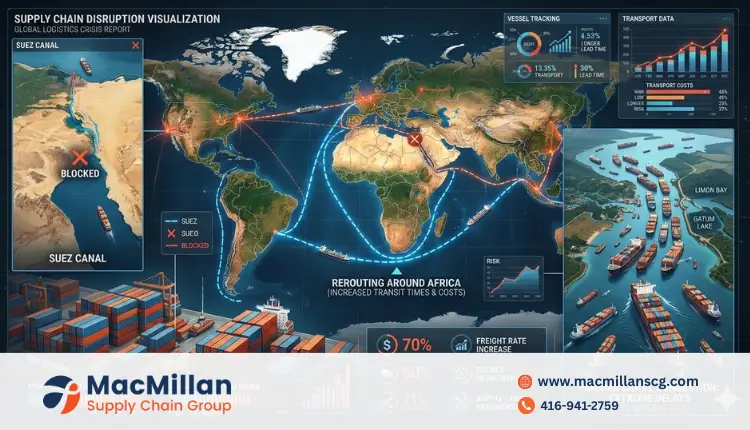
What You Need to Know About Supply Chain Disruption 2025 Global supply chains will face previously unheard-of difficulties due to supply chain disruption 2025. Ships have had to reroute around Africa due to the Red Sea crisis, which has increased shipping times by weeks and cost millions of dollars. Water shortages and maintenance problems are the main causes of the ongoing congestion in the Panama Canal. In the meantime, trade relations are changing as a result of post-election tariffs, especially between the US and China. Retail and the automotive industries are both feeling the effects of these disruptions. This playbook provides useful tactics for companies to overcome these obstacles, such as developing backup routing plans, deploying AI-driven forecasting, and nearshoring to Canada. Fast-adapting businesses will have a competitive edge in the face of supply chain disruption 2025. Introduction Why Supply Chain Resilience Matters in the Era of Supply Chain Disruption 2025 In 2025, a perfect storm is threatening the global supply chain. The Panama Canal congestion, the Red Sea shipping crisis, and new tariffs after recent elections have all combined to create previously unheard-of difficulties for businesses around the world. These are not merely short-term disruptions; rather, they signify significant changes in the global flow of goods. These disruptions present opportunities as well as challenges for Canadian companies. Everyone is impacted by increased costs and longer shipping times, but businesses that adjust swiftly can benefit greatly. The question is how you will handle these geopolitical challenges, not if they will have an impact on your supply chain. Each of these significant supply chain disruptions in 2025 will be covered in this playbook, along with an analysis of their effects on various industries and useful tactics to help your company not only survive but flourish. Maintaining competitiveness in today’s volatile global market requires an understanding of these changes, regardless of your industry—manufacturing, retail, or logistics. Red Sea Crisis and Its Role in Supply Chain Disruption 2025 In the context of supply chain disruption 2025, the Red Sea has changed from being an essential shipping route to a high-risk area. This vital maritime route has become more hazardous due to ongoing conflicts, which has forced shipping companies to make tough choices about how to transport goods between Asia and Europe. The Disruption Scale Nearly 80% of container ships have been forced to completely avoid the Suez Canal due to the Red Sea shipping crisis. Ships are instead choosing to take the longer route around the Cape of Good Hope in Africa, which adds 7–10 days to transit times and costs about $1 million more per voyage. An estimated 15% less shipping capacity has been available worldwide as a result of this rerouting, which has had an impact on supply chains. Emergency surcharges of $500 to $1,500 per container have been imposed by major carriers such as Maersk and ZIM. Raw materials to final goods are all impacted by these rising costs, which are unavoidably passed down the supply chain. Industry-Specific Impacts The automotive industry has been hit particularly hard by the Red Sea shipping crisis. Just-in-time manufacturing systems rely on predictable delivery schedules, and delays of even a few days can halt production lines. Similar issues arise for electronics manufacturers when parts from Asia take longer to arrive at assembly facilities in North America. This means that Canadian importers should budget for increased shipping expenses and longer lead times. Businesses that used to order inventory six weeks in advance now have to plan for eight to ten weeks, which causes smaller businesses to face more cash flow issues and ties up more capital in goods in transit. While the Red Sea situation dominates headlines, the Panama Canal is another major factor contributing to supply chain disruption 2025. Panama Canal Challenges: Water Shortages and Geopolitical Tensions In 2025, the Panama Canal will have its own set of issues, even as the Red Sea crisis makes headlines. The dependability of this vital trade route between the Atlantic and Pacific Oceans is in jeopardy due to political and natural issues. Environmental and Operational Restrictions The Panama Canal’s operations have been significantly impacted by climate change. Authorities have been forced to cut the number of daily transits from 36 to just 18 due to water shortages, causing a bottleneck that impacts shipping schedules worldwide. Ships now have to wait up to three weeks, as opposed to the usual three to five days in the past. With premium slots going to the highest bidders, the Panama Canal Authority has instituted a reservation system that ranks vessels according to cargo type and destination. For non-reserved vessels, this auction system has increased transit costs by 200–300%, putting further financial strain on shipping companies and their clients. Strategic Consequences For Canadian companies that depend on Asian imports reaching East Coast ports, the Panama Canal congestion is especially important. Although the volume of traffic using alternative routes through West Coast ports such as Vancouver and Prince Rupert has increased, the amount of traffic that can be diverted is limited by rail and truck capacity limitations. This disruption is accelerating the trend toward nearshoring, with many companies reconsidering their dependence on trans-Pacific supply chains. As businesses look for alternatives to Asian production, Mexican manufacturing has seen a 22% increase in capacity utilization. This change is also helping Canadian manufacturers, especially in industries like electronics assembly and automotive components where being close to US markets has major benefits. Election Tariffs: Navigating the New Trade Landscape With new tariffs reshaping supply chain economics in 2025, the US election of 2024 has brought about significant changes to the trade landscape. Businesses are being compelled by these policy changes to reevaluate their supply chain setups and sourcing tactics. The New Tariff Reality Under Trump’s 2025 tariffs, all imports will now be subject to 10% general duties, with targeted increases of up to 60% on Chinese goods. The cost equation for many products has been significantly changed by these actions, especially in the consumer goods, textile,
Cobots & Labor-Tech Solving Canada Warehouse Worker Shortage

The critical 11% vacancy rate in transportation and warehousing that Canada’s logistics industry faces is three times higher than the national average.Nationwide, the Canada warehouse worker shortage is causing supply chain disruptions and e-commerce fulfillment delays. A solution is provided by collaborative robots, or cobots, which can enhance human productivity by up to 30% while fostering safer working conditions. Businesses of all sizes can address labor shortages while increasing operational efficiency with flexible deployment strategies and government funding options like NRC IRAP, which cover up to 45% of implementation costs. This article examines how labor-tech and cobots are revolutionizing Canadian warehouses and opening up new doors for both companies and employees. Cobots & Labor-Tech: The Answer to Canada’s Warehouse Worker Shortage One major issue facing Canada’s warehouses is a severe labor shortage. Businesses find it difficult to satisfy customer demands, particularly in light of the e-commerce boom, as vacancy rates in transportation and warehousing reach 11%, which is three times the national average, this highlights the growing scale of the Canada warehouse worker shortage. This shortage affects the entire Canadian logistics industry and is not merely a short-term issue. However, there is hope for the future. Innovative labor-tech solutions and collaborative robots (cobots) are revolutionizing warehouses nationwide. Cobots are made to work alongside people, increasing productivity without completely replacing workers, in contrast to traditional industrial robots that operate alone. We’ll look at how these technologies are assisting Canadian companies in overcoming labor shortages, increasing productivity, and establishing safer workplaces in this post. We’ll also examine funding options, realistic implementation strategies, and the prospects for human-robot collaboration in Canada’s changing warehouse environment. Comprehending the Warehouse Labor Crisis in Canada With an 11% vacancy rate in the transportation and warehousing sectors, which is much higher than the 3.7% national average, Canada’s warehouse worker shortage has reached critical proportions. Not everyone is equally affected by this crisis; in Ontario alone, there are over 194,000 open positions, which causes supply chain bottlenecks that have an impact on both consumers and businesses. Ontario has been hit especially hard by the Canada warehouse worker shortage, making it the epicenter of warehousing strain in the country. This shortage is caused by multiple factors. First of all, working in a warehouse frequently entails physically taxing duties in uncomfortable settings, such as hot summers, cold winters, and a need for constant movement. Second, prospective employees are drawn away from logistics positions by rival industries that offer better compensation and working conditions, such as technology and healthcare. Third, fewer young people are pursuing these physically demanding jobs in Canada due to the country’s aging workforce. Businesses are significantly impacted. Delivery promises are especially difficult for e-commerce fulfillment centers, which have grown significantly since 2020. Businesses lose money and customers become dissatisfied when orders cannot be processed promptly. Smaller Canadian SMEs may experience an existential labor shortage as a result of their incapacity to offer competitive compensation or benefits. The Actual Price of Unfilled Jobs Missed deliveries are not the only financial impact. In order to make up for staff shortages, companies report spending an additional 30 to 45 percent on overtime. In the meantime, employee turnover in Canadian warehouses averages 36% per year, with training costs and lost productivity for each replacement coming to about $4,200. These figures demonstrate why, in the fiercely competitive Canadian logistics industry, finding technological solutions to the labor shortage is essential for survival as much as for growth. Ignoring the Canada warehouse worker shortage means risking both revenue and customer satisfaction. How Cobots Help Solve the Canada Warehouse Worker Shortage Compared to conventional industrial robots, collaborative robots, or cobots, represent a fundamentally different approach to warehouse automation. Cobots are made especially to work alongside human employees, enhancing rather than completely replacing their skills, whereas traditional robots operate in isolation behind safety cages. The inherent safety features of cobots are what set them apart. When a worker approaches too closely, they automatically slow down or stop using force-limited actuators and sophisticated sensors to detect human presence. This implies that there is no need for significant reconfiguration or safety precautions when deploying them directly in existing workspaces. These technologies offer real relief from the ongoing Canada warehouse worker shortage. Types of Cobots Transforming Canadian Warehouses Several facilities in Ontario use the DOBOT CR20A, which has AI vision systems that allow for real-time defect detection and dynamic worker movement adjustments. It can carry out tasks like palletizing and precise assembly with a payload capacity of 20 kg. Using LiDAR technology, autonomous mobile robots (AMRs) such as the OTTO 100 move objects up to 150 kg across warehouse floors without the need for fixed routes. AMRs are perfect for Canadian SMEs with limited funding because they don’t require costly floor modifications like traditional AGVs (Automated Guided Vehicles) do. For SMEs tackling the Canada warehouse worker shortage, AMRs provide flexible, cost-effective support that can be scaled without disruption. Cobots with modular grippers, like those from Geek+’s P Series, can be used for picking tasks and can be modified to handle anything from heavy car parts to delicate cosmetics. Because of its adaptability, a single robot can handle several jobs, increasing return on investment for Canadian companies on a tight budget. Implementation Strategies and ROI for Canadian Businesses It is not necessary to completely redesign the warehouse in order to implement cobots. Incremental deployment strategies, which minimize disruption while maximizing returns, are proving to be successful for many Canadian businesses. Before expanding, this strategy enables businesses to test technologies in particular domains. Workable Deployment Techniques The most economical place to start is frequently by retrofitting existing infrastructure. For instance, staging carts and OTTO 100 AMRs enable warehouses to automate transport tasks while preserving their existing layouts. Several distribution centers in the Toronto area have seen a 40% reduction in walking time without requiring significant renovations thanks to this technique. “Goods-to-person” systems can be introduced gradually for picking operations. Serving the Canadian market, Bergen Logistics began by implementing robotic picking stations
Electronics Supply Chain: Reshoring & 3PL in Canada
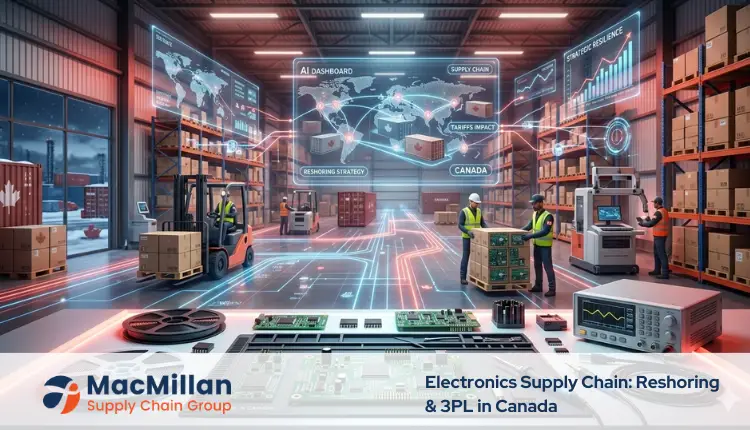
Growing tariffs, geopolitical unrest, and changing manufacturing environments present the electronics supply chain with previously unheard-of difficulties. This thorough guide examines the ways in which digital transformation, tariff mitigation, and strategic reshoring can help Canadian companies manage these challenges. Specialized 3PL solutions are provided by MacMillan Supply Chain Group to assist businesses in strengthening their supply chains, cutting expenses, and increasing resilience. Learn useful strategies to prosper in the face of trade disruptions and set up your company for long-term success in Canada’s developing electronics industry, from utilizing foreign trade zones to putting blockchain traceability into place. This guide will help Canadian companies future-proof their electronics supply chain. The Changing Landscape of Electronics Manufacturing The electronics manufacturing industry is changing dramatically. Major economy-to-economy tariffs have risen to all-time highs, with some electronic components subject to 245% duties. Global supply chains have been rocked by this, and businesses are now being forced to reconsider where and how they manufacture their products. These issues offer opportunities as well as challenges to Canadian companies. Effectively managing tariffs has emerged as a crucial business ability, and reshoring in Canada presents a viable substitute for manufacturing that is done abroad. More flexibility, transparency, and resilience are now more important than ever in the electronic supply chain. Numerous Canadian electronics manufacturers have benefited from our assistance at MacMillan Supply Chain Group in adjusting to these shifting circumstances. In today’s intricate trading environment, our specialized 3PL services offer the infrastructure and know-how required to overcome supply chain interruptions and preserve competitive advantage. Understanding Tariff Impacts on Canadian Electronics For Canadian electronics companies, tariffs have become a major headache. Canadian companies are frequently caught in the crossfire of trade disputes between the United States and China. Before a Chinese-made component reaches its final destination in North America, it may be subject to several tariffs, which would significantly raise supply chain costs. Think about the effects of tariffs on semiconductors, which are the fundamental components of contemporary electronics. Everything from smartphones to medical devices is impacted when these tiny chips are subjected to 50% or more of the workload. Higher production costs, reduced margins, and challenging pricing decisions are what this means for Canadian manufacturers. Strategies for mitigating tariffs are now crucial business tools. Smart businesses are looking into possibilities such as: Strategic inventory control (purchasing prior to the imposition of tariffs) Replacement of components with non-tariffed substitutes Moving assembly to areas that comply with the USMCA Utilizing the benefits of foreign trade zones to postpone duty payments Through specialized logistics planning, MacMillan assists Canadian companies in putting these strategies into practice. Our customs compliance specialists examine tariff codes, spot areas for improvement, and create customized solutions that reduce duty exposure while preserving supply chain effectiveness. Reshoring: Relocating Electronics Production to Canada As companies reevaluate their global manufacturing strategies, the idea of reshoring in Canada has gained a lot of traction. While tariffs reduced the economic appeal of offshore production, the pandemic revealed weaknesses in extended supply chains. Many electronics manufacturers are moving their manufacturing closer to home these days. This change has been largely attributed to Canadian manufacturing incentives. Companies that invest in domestic production can receive grants, tax breaks, and other forms of assistance from federal and provincial programs. By creating more robust supply networks, these incentives aid in offsetting the higher labor costs connected to North American manufacturing. Reshoring has advantages beyond just the bottom line: Shorter lead times and lower transportation expenses Improved quality assurance and protection of intellectual property Easier adherence to North American trade laws Reduced shipping distances result in a smaller carbon footprint Increased responsiveness and visibility in the supply chain At MacMillan, we provide specialized warehousing, distribution, and logistics services to support reshoring initiatives. Our well-positioned facilities across Canada give businesses the framework they need to successfully execute reshoring plans, and our cross-border knowledge guarantees seamless integration with American markets. Digital Transformation in the Canadian Electronics Supply Chain Canadian businesses in the electronics supply chain are turning to digital platforms the way electronic supply chains function is being revolutionized by technology. Businesses can now confidently navigate complex trade environments thanks to AI-driven supply chain solutions, which offer previously unheard-of visibility and control. Among the most potent uses of this technology are BOM optimization tools. Before production starts, these systems find cost-saving options by comparing bills of materials to tariff databases. Manufacturers can incorporate tariff mitigation into their product designs from the outset by choosing components according to origin, classification, and duty exposure. Another significant benefit is blockchain traceability. Immutable records of a component’s movement through the supply chain are produced by this technology, offering: Verifiable proof of origin for customs declarations Defense against the supply of fake parts Automated documentation for regulatory compliance Visibility in real time over intricate multi-tier networks MacMillan helps customers use technology to gain a competitive edge by incorporating these digital capabilities into our logistics services. Our systems offer real-time data flows that facilitate improved decision-making across the supply chain by integrating seamlessly with manufacturer ERPs. Regional Alternatives and Trade Agreements Pure domestic production isn’t always possible, even though reshoring has many advantages. For this reason, a lot of Canadian electronics companies are looking into regional options that strike a balance between supply chain resilience and cost considerations. Opportunities for nearshoring to Mexico have garnered a lot of interest. Mexico provides competitive labor rates and duty-free access to the U.S. and Canadian markets as a member of the USMCA trade zone. Mexico is now the production center for many electronics manufacturers’ “China+1” strategies in the Western Hemisphere. Important frameworks for cross-border trade are provided by the USMCA agreement itself. Electronics manufacturers can avoid tariffs and preserve effective production networks by adhering to regional content requirements. For competitive positioning, it is essential to comprehend and take advantage of these provisions. Southeast Asian countries for large-scale manufacturing, such as Vietnam and Malaysia Eastern European locations for access to European markets India’s expanding electronics industry, bolstered by the PLI
Trump’s 50% Steel Tariffs: Supply Chain Disruption Explained

Former U.S. President Donald Trump announced Trump’s 50% steel tariffs, doubling the previous 25% rate — a move that has rocked North American supply chains. Numerous industries are deeply concerned about this sharp rise, which is justified by Section 232 measures as necessary for national security. There are currently significant obstacles facing Canada’s steel industry, which exports steel products worth billions of dollars to the United States each year. These tariffs cause a complicated web of supply chain issues for companies that operate across the Canada-U.S. border. Consumer prices could rise and economic growth could be slowed by higher material costs, possible shortages, and logistical issues. Strategic supply chain management is more important than ever as Canadian manufacturers and their American consumers scramble to adapt. Understanding Trump’s 50% Steel Tariffs Trade tensions between the US and its trading partners, including Canada, have significantly increased as a result of Trump’s 50% steel tariffs. The Trade Expansion Act’s Section 232 measures, which give the US the authority to defend domestic industries considered essential to national security, are the basis for these tariffs. International partners and trade experts have criticized the national security rationale. Many contend that this line of thinking expands the meaning of security concerns to encompass economic protectionism. By raising the price of imported steel considerably, the policy seeks to support domestic steel producers in the United States. These tariffs present immediate difficulties for Canadian companies: Higher border crossing costs for steel-based materials Possible supply disruptions as trade patterns change Price and availability uncertainty for manufacturing inputs Difficult customs procedures and extra paperwork Businesses have limited time to modify their supply chains or look for alternate sourcing options due to the implementation timeline. The economy as a whole is impacted by this abrupt change, which forces businesses to either absorb increased costs or pass them on to customers. How Canadian Steel Industry and Manufacturers Are Affected The steel sector in Canada is at the forefront of this trade conflict. Canadian steel producers, a significant supplier to American markets, could suffer catastrophic repercussions. According to industry analysts, if these tariffs are maintained over time, domestic steel producers may lose billions of dollars in revenue. A double challenge confronts Canadian manufacturers who depend on steel inputs, in addition to the steel producers themselves. As Canadian producers adjust to lost U.S. market share, domestic steel buyers may see price increases. In the meantime, possible retaliatory tariffs increase the costs for manufacturers who import specialty steel from the United States. Among the issues facing the manufacturing sector are: Reduced ability to compete with international competitors Pressure to move production to avoid tariffs Difficulty keeping customer prices stable Difficulties with long-term planning and investment Because they frequently lack the resources to swiftly change their supply chains or absorb large cost increases, small and medium-sized manufacturers face especially difficult obstacles. Some businesses are already delaying plans for expansion and reevaluating their cross-border business strategies, according to industry associations. How Trump’s 50% Steel Tariffs Are Driving Up Construction and Auto Costs Trump’s 50% steel tariffs are putting immediate pressure on the construction sector. Steel accounts for a sizeable portion of material costs in both residential and commercial construction projects. According to industry experts, steel-intensive projects may see construction costs rise by 15% to 20%, making Canada’s housing affordability crisis worse. For Canada’s construction industry, which is already struck by high material costs and a lack of workers, the timing couldn’t be worse. Builders report: Delays in projects while budgets and material sourcing are reevaluated Contracts should be renegotiated to take price volatility into account Accurate quotes for upcoming projects are difficult to come by Project viability is a concern as costs increase In a similar vein, the automotive industry has particular difficulties. Vehicle manufacturing depends on components that cross borders several times due to integrated supply chains that span both nations. This carefully calibrated system could be upset by the tariffs, which could result in: Consumers paying more for cars Assembly plant production slowdowns Job losses in auto manufacturing regions A quicker transition to sourcing from overseas markets Tinplate Packaging and Consumer Goods Price Increases Tinplate packaging is one frequently disregarded area that is experiencing major disruption. This specialty steel product is necessary for many consumer goods, including beverage containers and food canning. Packaging manufacturers must deal with significant cost increases as a result of the tariffs, which will eventually affect consumers. Within months of going into effect, the 50% tariff could raise the cost of canned food by 8–12%, according to the Can Manufacturers Institute. Lower-income households that depend on reasonably priced canned goods would be disproportionately affected by this price inflation. In addition to food, consumers can anticipate price increases in a variety of categories: Steel-based appliances and household items Costs of auto parts and repairs Building supplies and home remodeling items Office supplies and furnishings At a time when many households are already experiencing financial strain, these price increases add to concerns about consumer price inflation in general. Economists caution that the tariffs might act as a regressive tax, burdening the most vulnerable. Challenges Facing Businesses Under the New Tariff Regime Businesses on both sides of the border face many operational difficulties as a result of Trump’s 50% steel tariffs. These issues go beyond straightforward price hikes to include serious supply chain interruptions. Planning becomes nearly impossible due to the uncertainty surrounding the policy’s implementation. Companies struggle to decide whether to pass costs on to customers, seek alternative suppliers, or lock in current prices — all while facing delayed investment decisions and a wait-and-see mentality. Beyond steel, the global supply chain faces ripple effects as manufacturers shift their sourcing strategies, causing potential shortages of other materials and components. Legal complications further muddy the waters. With disputes progressing through the WTO and domestic courts, businesses must prepare for outcomes ranging from tariff reductions to retaliatory measures. Fourth, simple substitution isn’t always feasible due to the specialized nature of many steel products. Regardless of cost,
3PL Risk Management: Building Resilient Supply Chains
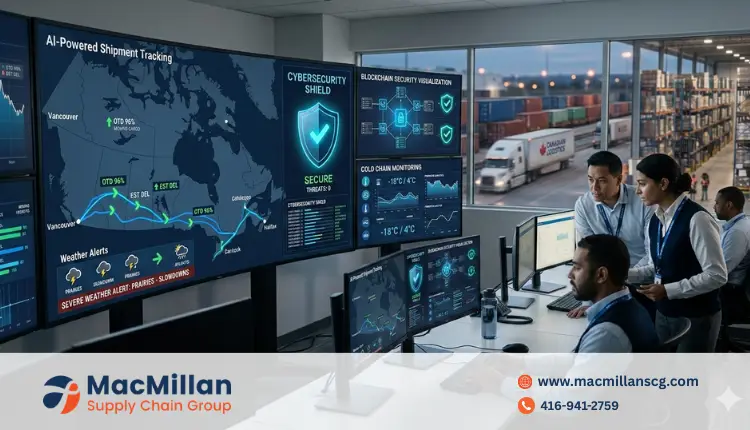
Businesses approaches to supply chain management were drastically altered by the COVID-19 pandemic. Resilience and adaptability must now be given top priority in a system that was previously primarily built for efficiency. This change has increased the importance of effective risk management for businesses that depend on third-party logistics (3PL) providers. We at MacMillan Supply Chain Group have seen directly how supply chain disruptions in Canada can affect companies of all sizes. The difficulties are numerous and frequently unforeseen, ranging from labor shortages to extreme weather events, from border closures to cybersecurity threats. For this reason, we have created thorough 3PL risk management plans that assist our clients in surviving disruptions and using them to their advantage. Let’s examine how contemporary 3PL risk management practices are constructing more robust supply chains for Canadian companies and adjusting to post-pandemic realities. Comprehending the New Risk Environment in Canadian Logistics In recent years, supply chains’ risk environment has significantly grown. Traditional issues like inventory control and delays in transit are still significant, but new problems have surfaced that call for creative answers. Changing Threat Trends Disruptions to the Canadian supply chain can now take many different forms. Cross-border shipping can be seriously delayed by border restrictions between the USA and Canada. Transportation networks are frequently impacted by extreme weather events, such as floods in British Columbia and ice storms in Quebec. Meanwhile, since 2019, the number of cybersecurity threats aimed at logistics systems has grown by more than 300%, with ransomware attacks having the ability to completely stop operations. The Interconnected Nature of Modern Risks The interconnectedness of today’s challenges is what makes them especially challenging. Transportation compliance problems could result from a cybersecurity breach. Failures in cold-chain management could be brought on by a weather event. During peak seasons, e-commerce fulfillment capabilities may be impacted by labor shortages. According to our Director of Operations, “the post-pandemic logistics environment requires thinking about risk in layers.” “Having a single backup plan is no longer sufficient; you need comprehensive strategies that address multiple potential failure points at the same time.” Working with 3PL partners who comprehend global supply chain dynamics and the particular difficulties of conducting business in Canada’s varied geographic and regulatory environment is essential for Canadian companies. Diversification and strategic sourcing are now crucial elements of successful 3PL risk management. Technology-Driven Solutions for 3PL Risk Management and Supply Chain Resilience Modern logistics technology is now essential to 3PL risk management success. To improve supply chain resilience for our clients, MacMillan Supply Chain Group makes use of a number of important technologies. AI-Powered Visibility in 3PL Risk Management Your whole logistics network is visible in real time thanks to our AI-powered supply chain platforms. This technology anticipates possible disruptions before they affect your operations, in addition to tracking shipments. By analyzing weather patterns, traffic data, border crossing times, and historical performance metrics, our systems can recommend proactive adjustments to routing and scheduling. For instance, our AI system automatically detected shipments that were at risk and recommended alternate routes when severe weather threatened deliveries throughout Ontario last winter, preventing delays for 94% of the impacted orders.This level of predictive control strengthens overall 3PL risk management capabilities. Blockchain for Enhanced Security and Transparency Blockchain has been incorporated into logistics processes for goods that need rigorous chain-of-custody documentation. This is especially helpful for food supply chains and pharmaceutical logistics, where product authenticity and temperature control are crucial. Our Technology Director observes that “Blockchain provides an immutable record of every touchpoint in the supply chain.” “This improves security and streamlines compliance paperwork for international shipping between the United States and Canada.” By adopting these technologies, we assist customers in creating resilient supply chains in Canada’s distinct and difficult logistics landscape, guaranteeing business continuity even in the face of interruptions. Together, these technologies form a core pillar of advanced 3PL risk management. Strategic Sourcing and Relationship Management Beyond technology, strategic sourcing and relationship management techniques that act as organic barriers against interruptions are also essential components of effective 3PL risk management. Diversification as a Strategy for Risk Mitigation We learned a valuable lesson from the pandemic: relying too much on a single supplier or transportation route can lead to dangerous vulnerabilities. At MacMillan Supply Chain Group, we assist customers in putting 3PL risk management-driven diversification plans into action that strike a balance between resilience and efficiency. Maintaining connections with several carriers for every transportation lane and setting up warehouse capacity in various geographical areas are two examples of what this could entail. Creating options for LTL and TL shipping to handle different volumes. Making backup plans for different ports of entry for shipments coming from abroad. “Strategic sourcing isn’t just about finding the lowest price,” explains our Supply Chain Director. “It’s about creating a network that can adapt when disruptions occur.” Contractual Frameworks for 3PL Risk Management Contemporary innovations in contracts have emerged as crucial instruments for risk management. We collaborate with clients to create contracts that contain the following: – Explicit force majeure provisions that cover pandemic situations. Metrics of performance that encourage proactive risk management. Provisions for managing tariffs on international shipping. Frameworks for shared responsibility regarding cybersecurity threats. We assist clients in developing supply chains that continue to function even in the event of disruptions to individual components by fusing strategic diversification with strong contractual frameworks. For Canadian companies negotiating the challenging post-pandemic logistics environment, this strategy has proven especially helpful. This layered approach to contracts plays a central role in our overall 3PL risk management model. Industry-Specific Risk Management Approaches Supply chain issues vary by industry, necessitating customized 3PL risk management techniques. We at MacMillan Supply Chain Group have created specialized strategies for a number of important industries. Medicine and Healthcare Maintaining product integrity throughout the supply chain is a non-negotiable requirement for pharmaceutical logistics. Our approach to risk management consists of: Cold chain management systems that are redundant and have backup power sources. Temperature tracking with blockchain verification and real-time alerts. Expert contingency
How Cross-Docking Streamlines Logistics Operations
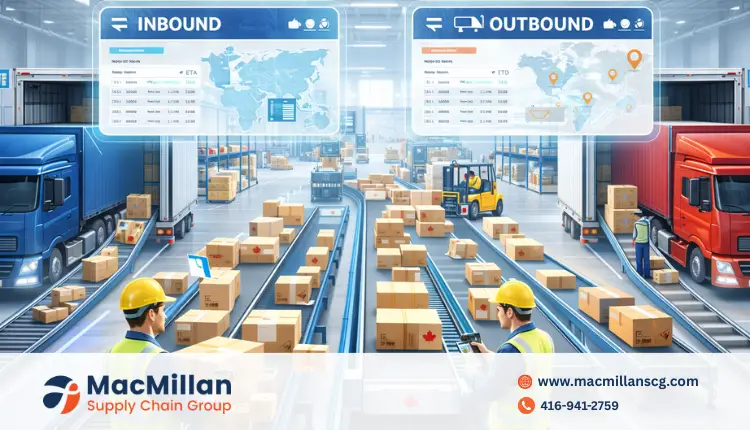
A quick summary and overview Cross-docking transforms traditional logistics by eliminating unnecessary storage and handling steps. Instead of warehousing products for extended periods, items move directly from inbound to outbound vehicles with minimal dwell time. This streamlined approach reduces costs, accelerates delivery times, and enhances supply chain efficiency. For Canadian businesses facing logistics challenges, cross-docking offers a strategic solution that improves inventory management, supports just-in-time distribution, and promotes sustainability. MacMillan Supply Chain Group provides comprehensive cross-docking services that help companies optimize their logistics operations while meeting customer demands for faster, more reliable deliveries. What Is Cross-Docking and Why Does It Matter? In today’s fast-paced business environment, efficiency isn’t just a goal—it’s a necessity. Cross-docking represents a revolutionary approach to logistics that’s changing how products move through supply chains across Canada and North America. But what exactly is it? Cross-docking is a logistics practice where products from incoming shipments are unloaded, sorted, and directly loaded onto outbound transportation with minimal or no storage time in between. Think of it as a well-choreographed dance: goods arrive at a distribution facility, move across the “dock” (hence the name), and depart to their next destination—all within hours, not days or weeks. This process eliminates traditional warehousing steps, reducing handling costs and accelerating delivery times. For businesses in Toronto, Calgary, Vancouver, or those managing cross-border shipping between Canada and the US, cross-docking offers a competitive edge in today’s speed-focused marketplace. The Mechanics of Effective Cross-Docking Cross-docking transforms logistics operations through a simple yet powerful concept: keep products moving. Unlike traditional warehousing where items might sit in storage for weeks, cross-docking facilities function as transfer points where goods typically remain for less than 24 hours. The process begins when inbound trucks arrive at designated doors of a cross-docking terminal. Workers quickly unload these shipments and sort them according to their outbound destinations. Some facilities use sophisticated conveyor systems that automatically scan and route items to the appropriate loading areas. Others rely on manual sorting with clear floor markings and staging areas. Either way, the goal remains the same—minimize handling and maximize flow. For this system to work effectively, timing is everything. Inbound and outbound schedules must be carefully synchronized. This is where warehouse management systems become essential, providing real-time visibility and coordination. These systems track every item from arrival to departure, ensuring nothing gets lost in the shuffle. Canadian distribution centers often adapt cross-docking to address unique regional challenges. For example, Toronto logistics solutions might emphasize cross-border capabilities, while Calgary cross-docking operations might focus on connecting western Canadian markets efficiently. The beauty of cross-docking lies in its flexibility—it can be customized to meet specific business needs while maintaining core efficiency principles. Key Benefits That Drive Cross-Docking Adoption Why are more Canadian businesses embracing cross-docking? The advantages extend far beyond simple cost savings. First and foremost, cross-docking dramatically reduces inventory holding costs. When products don’t sit in warehouses, you avoid expenses related to storage space, insurance, and inventory management. For businesses in expensive urban markets like Toronto or Vancouver, this space saving translates to significant financial benefits. Transportation efficiency represents another major advantage. Through freight consolidation services, cross-docking allows multiple smaller shipments to be combined into fuller truckloads. This consolidation reduces the total number of trips required, cutting fuel consumption and transportation costs by 25-30% in many cases. For companies managing cross-border shipping between Canada and the US, these savings can be substantial. Speed to market gives cross-docking users a competitive edge. In retail and e-commerce fulfillment, reducing delivery times by even a day can significantly improve customer satisfaction. Cross-docking supports just-in-time distribution models, allowing businesses to respond quickly to market demands without maintaining excessive inventory. Product quality benefits too, especially for time-sensitive goods. Fresh food, pharmaceuticals, and seasonal items spend less time in transit, reducing the risk of damage or obsolescence. This is particularly important in Canada’s varied climate zones, where temperature control during shipping presents ongoing challenges. Finally, cross-docking supports supply chain optimization by increasing visibility and control. With products spending minimal time in the system, managers can track inventory more accurately and respond faster to changing conditions. Industries That Benefit Most From Cross-Docking While cross-docking offers advantages for many businesses, certain industries see particularly impressive results. Retail stands at the forefront, with major chains using cross-docking to replenish stores quickly and efficiently. Rather than sending individual shipments from multiple suppliers to each store, retailers consolidate these deliveries at cross-docking facilities. This approach has helped Canadian retail chains reduce inventory costs by up to 15% while improving on-shelf availability. The food and grocery sector benefits enormously from cross-docking’s speed. Fresh produce, dairy, and frozen goods require rapid handling to maintain quality and shelf life. Cross-docking facilities equipped with temperature-controlled zones ensure these products move quickly from producers to grocery shelves. Montreal warehouse operations specializing in food distribution often use cross-docking to serve Quebec and eastern Canadian markets efficiently. E-commerce fulfillment in Canada has embraced cross-docking to meet rising consumer expectations for fast delivery. Online retailers use these facilities to sort incoming inventory directly into outbound customer orders, dramatically reducing processing time. This approach supports same-day or next-day delivery options that today’s online shoppers increasingly demand. Manufacturing operations benefit from cross-docking’s support of just-in-time production. Components and materials arrive precisely when needed, reducing factory storage requirements and supporting lean manufacturing principles. For companies with cross-border supply chains between Canada and the US, this coordination helps overcome potential customs delays. The automotive industry has long used cross-docking to manage complex supply chains. Parts from hundreds of suppliers converge at cross-docking facilities near assembly plants, arriving in sequence with production schedules. This precision helps manufacturers maintain efficient operations while minimizing costly production interruptions. Technology Enabling Modern Cross-Docking Today’s cross-docking success depends heavily on sophisticated technology systems that coordinate complex movements with precision. At the heart of these operations sits the warehouse management system (WMS), which orchestrates the entire process. Modern WMS platforms provide real-time inventory tracking, automatically directing where each item should go and when it should
Handling Hazards: WHMIS-Compliant Logistics for Homecare Brands
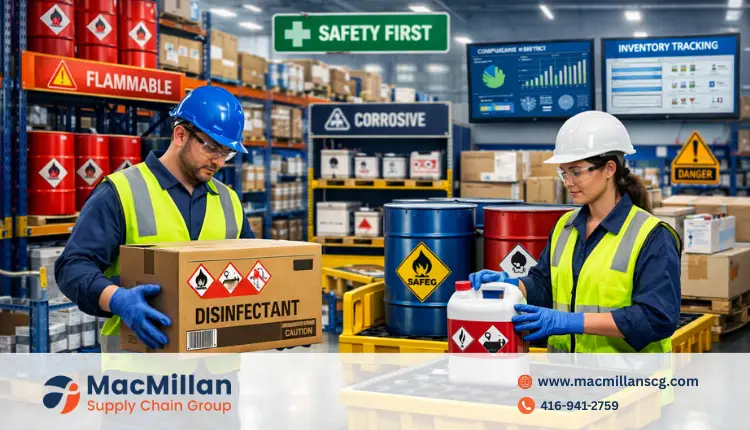
A Quick Summary and Overview Homecare brands dealing in cleaning agents, disinfectants, aerosols, and chemical-based products operate in a highly regulated environment. From storage and labeling to transportation and last-mile delivery, every step must comply with Canada’s Workplace Hazardous Materials Information System (WHMIS).Failure to meet compliance standards can result in fines, shipment delays, product recalls, or reputational damage.WHMIS-compliant logistics ensures hazardous materials are properly labeled, segregated, handled, documented, and transported according to federal and provincial regulations.At MacMillan Supply Chain Group, we design specialized 3PL solutions that protect homecare brands from compliance risks while maintaining operational efficiency and speed to market.The result? Safer operations, audit readiness, and a supply chain built for regulatory confidence. The Compliance Risks Facing Homecare Brands Homecare products often include: Disinfectants Surface cleaners Aerosols Solvents Flammable liquids Corrosive substances Without proper logistics controls, brands face: Improper labeling violations Cross-contamination risks Fire or safety hazards Transport rejections Regulatory fines Retailer non-compliance penalties Generic warehouses are not equipped to handle regulated goods safely. Hazardous product logistics requires structured SOPs, certified staff, and infrastructure designed for chemical storage. What Is WHMIS-Compliant Logistics? WHMIS-compliant logistics refers to warehousing and transportation processes aligned with Canada’s hazard communication and chemical handling regulations.This includes: Proper GHS labeling and documentation Safety Data Sheet (SDS) management Segregated storage by hazard class Controlled access storage zones Spill containment procedures Certified handling personnel Transport documentation and carrier compliance Compliance is not a single checklist—it is an integrated operational framework.At MacMillan SCG, hazardous product handling is built into our warehouse design, training programs, and transportation workflows from day one. How MacMillan SCG Protects Homecare Brands 1.Proper Labeling & Documentation Control Accurate labeling is the foundation of WHMIS compliance.MacMillan ensures: Verification of hazard symbols and classifications SDS tracking and digital record management Barcode integration tied to hazard data Real-time inventory visibility Audit-ready documentation access This reduces the risk of mislabeled shipments and retailer rejections. Result: Fewer compliance flags and smoother inspections. 2.Hazard-Based Storage Segregation Not all chemicals can be stored together. Improper storage increases safety risks and liability exposure.MacMillan’s warehouse controls include: Segregated storage zones by hazard class Flammable-rated storage areas Spill containment systems Controlled temperature environments Restricted-access handling protocols With over 250,000 sq. ft. of scalable space, brands can maintain compliance without sacrificing growth capacity. Result: Reduced cross-contamination risk and improved workplace safety. 3.Compliant Transport & Last-Mile SOPs Hazardous materials require specialized documentation and carrier coordination.MacMillan’s transportation network includes: Trained carrier partners familiar with regulated goods Verified transport documentation processes Secure palletization and load stabilization Real-time shipment tracking Reverse logistics for damaged or recalled goods For brands distributing nationally, our network supports efficient Canada-wide coverage with regulatory alignment at every stage. Result: Reduced transport delays and higher on-time delivery rates. 4.Inventory Control & Traceability In regulated environments, traceability protects your brand during audits or recalls.MacMillan leverages: Lot and batch tracking SKU-level visibility 350+ KPI monitoring metrics Near-zero shrinkage controls 99%+ inventory accuracy standards If a recall occurs, affected SKUs can be identified and isolated quickly—minimizing financial and reputational impact. Result: Faster response times and stronger risk mitigation. Why Specialized 3PL Matters for Homecare Products Homecare logistics isn’t standard pick-pack-ship. It involves: Regulatory oversight Retail compliance requirements Carrier restrictions Insurance considerations Safety audits Environmental reporting A specialized 3PL understands these nuances and builds infrastructure accordingly. At MacMillan SCG, compliance is embedded into operations—not treated as an add-on service.This ensures: Safer warehouse environments Reduced liability exposure Audit readiness Retailer trust Sustainable growth The Technology Layer Behind Compliance Regulatory control requires visibility.MacMillan integrates: Advanced WMS for hazard-tagged SKUs Real-time inventory dashboards Integrated SDS management workflows AI-supported route planning Digital proof-of-delivery tracking With transparent reporting and measurable KPIs, compliance becomes trackable—not reactive. Beyond Compliance: Protecting Brand Reputation In the homecare industry, one compliance incident can damage years of brand equity.WHMIS-compliant logistics protects more than inventory—it protects: Consumer trust Retail relationships Market access Insurance standing Long-term growth By aligning storage, fulfillment, and transportation with regulatory best practices, brands reduce operational risk while improving performance. Final Takeaway Handling hazardous homecare products demands precision, compliance, and structured execution. WHMIS-compliant logistics ensures proper labeling, storage segregation, documentation control, and safe transport—protecting your brand from costly disruptions. MacMillan Supply Chain Group delivers specialized hazardous product fulfillment solutions designed to safeguard your operations while supporting scalable growth. 📞 Ready to strengthen your compliance framework?Contact MacMillan SCG today for a customized hazardous product logistics assessment. FAQS What is WHMIS-compliant logistics? WHMIS-compliant logistics ensures hazardous products are labeled, stored, documented, and transported according to Canadian regulatory standards. Can MacMillan SCG handle flammable and chemical-based homecare products? Yes. MacMillan supports compliant storage, segregation, and transport SOPs for regulated chemical and cleaning products. Why is storage segregation important for homecare brands? Certain chemicals cannot be stored together due to safety risks. Proper segregation reduces liability and compliance violations. Does MacMillan provide traceability for regulated goods? Yes. Advanced WMS systems provide lot tracking, SKU-level visibility, and audit-ready documentation. Can MacMillan support national distribution across Canada? Yes. MacMillan’s integrated warehousing and transportation network supports compliant distribution across Canada. How quickly can I onboard hazardous product fulfillment? MacMillan offers structured onboarding with compliance review, SOP alignment, and integration testing to ensure a smooth go-live process.
AI 3PL Operating Systems: Transforming Canadian Logistics
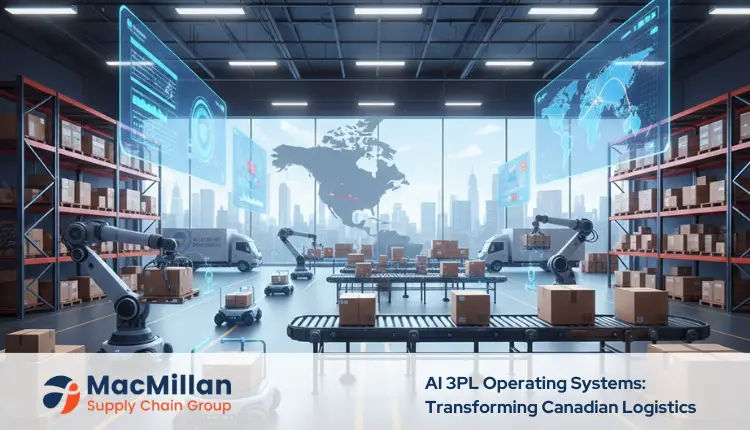
AI’s Revolutionary Potential: 3PL Operating Systems Changing the game Logistics in Canada The next era of third-party logistics (3PL) excellence is being propelled by artificial intelligence (AI), which is no longer a futuristic idea in the field of logistics. AI 3PL operating systems are providing previously unheard-of levels of efficiency. AI-powered 3PL operating systems are providing previously unheard-of levels of efficiency, visibility, and customer satisfaction for Canadian businesses, particularly those negotiating the challenges of e-commerce, omnichannel fulfillment, and last-mile delivery. We at Macmillan SCG are leading this change by using AI to transform supply chain difficulties into competitive advantages. Understanding the Impact of AI 3PL Operating Systems on 3PL Logistics The way 3PLs function is being drastically altered by AI. AI-driven systems are now able to analyze enormous volumes of data, identify patterns, and produce actionable insights more quickly and accurately than ever before by utilizing machine learning, predictive analytics, robotics, and real-time data processing. From last-mile delivery to warehouse management, this technological revolution is changing every aspect of logistics. Why AI 3PL Operating Systems Matter for 3PLs Intelligent Demand Forecasting: AI reduces stockouts and overstocking by forecasting order volumes and seasonal trends. Real-Time Visibility: Complete inventory, shipment, and delivery status tracking and monitoring. Warehouse Automation: Picking, packing, and sorting are optimized by robotics and AI-powered systems, which can reduce order fulfillment times by up to 65%. Personalized Customer Experience: AI chatbots and virtual assistants offer customized communication and real-time updates, which encourage repeat business and loyalty. Cost Reduction: Transportation and operating expenses are reduced by automated procedures and optimized routes. How Macmillan SCG Leverages AI in 3PL Operations 1. Inventory control and demand forecasting The foundation of effective logistics is precise demand forecasting. To forecast changes in demand, Macmillan SCG’s AI-driven models examine past sales, market trends, meteorological conditions, and promotional activities. This makes it possible to make more informed purchases, cut down on excess inventory, and guarantee that goods are available when and where consumers need them. AI is used by our integrated inventory management systems to: Monitor the current stock levels in every warehouse. Determine which inventory is at risk or moving slowly. Automate promotional or restocking tactics to maximize cash flow. 2. Robotics and Automation in Warehouses Advanced AI 3PL operating systems, including warehouse management systems (WMS) that manage conveyor systems, robotics, and autonomous mobile robots (AMRs) power our fulfillment centers in Canada. These technologies: Automate repetitive processes such as packing, sorting, and picking. Boost order accuracy to over 99% and minimize human error. Reduce order fulfillment times, even during periods of high demand when order volumes increase by 300–400%. Robots, scanners, and sensors all communicate with each other without interruption when all warehouse systems are integrated into the cloud. This allows them to instantly adapt to changing conditions and priorities for optimal efficiency. 3. Last-mile delivery and route optimization Real-time delivery route optimization by AI takes weather, traffic, and delivery deadlines into account. In addition to lowering transportation expenses, this raises the percentage of on-time deliveries, which is crucial for client satisfaction. Even in Canada’s most difficult regions, our committed fleet of more than 3,000 drivers, driven by AI, guarantees that deliveries are always made on time. Customers and shippers receive live tracking links with Uber-like transparency, reducing customer service inquiries by up to 70% and offering peace of mind. 4. Strengthening the Resilience of the Supply Chain The necessity of robust supply chains has been brought to light by the post-pandemic world. Macmillan SCG can do the following thanks to AI: Determine key nodes and map intricate supply chains. For proactive risk management, keep an eye on market conditions and supplier performance. In the event of disruptions such as natural disasters or geopolitical events, propose backup suppliers or plans. For our clients, this proactive approach guarantees business continuity and lessens the impact of disruptions. 5. Ethical sourcing and sustainability AI is a potent instrument for advancing sustainability as well. Our systems are able to: Reduce waste and carbon emissions by analyzing warehouse operations and routes. Monitor supplier adherence to social and environmental standards to promote ethical sourcing. Optimize resource use to support regulatory compliance and clients’ ESG objectives. The foundation of contemporary logistics is real-time visibility. In today’s supply chain, visibility is essential. The AI-powered platforms of Macmillan SCG offer real-time insights into: levels of inventory in several warehouses. order status from the time of receipt to the last delivery. Performance indicators for perishable goods and storage facilities. This transparency improves operational agility and customer trust while facilitating quicker, data-driven decisions. How AI 3PL Operating Systems Help Overcome Labor Challenges In Canadian logistics, labor shortages are a recurring problem. Macmillan SCG increases job satisfaction and lowers turnover by automating the most labor-intensive tasks, freeing up human workers to concentrate on quality control and exception handling. With operational savings, increased throughput, and lower labor costs, automation offers a substantial return on investment, with the majority of costs being recovered in 18 to 24 months. Scalability and Integration: Expanding with Your Company AI-powered 3PL operating systems are naturally scalable. The platforms from Macmillan SCG maintain consistent performance and accuracy by automatically adjusting processing capacity to handle increased volumes during peak periods. To ensure a smooth and disruption-free adoption of technology, our systems are built to integrate seamlessly with well-known e-commerce platforms like Shopify, WooCommerce, Amazon, and custom storefronts. Tailored Client Experience with AI 3PL Operating Systems Macmillan SCG can provide a better customer experience thanks to AI by: Proactive alerts and real-time order updates. AI-powered chatbots that offer individualized advice and assistance. Customization of services based on data, fostering loyalty and improving client relationships. Data Integrity and Security AI 3PL operating systems must prioritize security. Macmillan SCG uses strong security measures: warehouses with controlled access and separate storage spaces. encrypted data connections and multi-factor authentication. Blockchain technology provides tamper-proof records of all transactions and movements, particularly for sensitive or expensive goods. AI’s Return on Investment in 3PL: Real Business Gains Measurable business results are obtained when 3PL operations integrate
Geopolitical Risks in Canadian Supply Chains
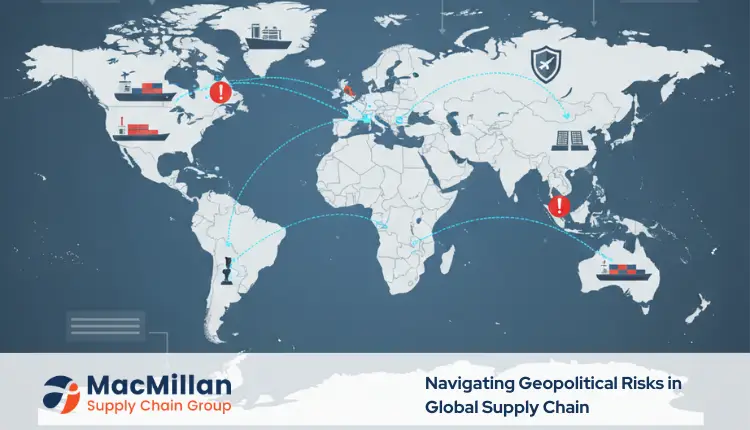
Introduction The world’s supply chains are more interconnected and vulnerable than ever in this age of rapid globalization. Geopolitical risks, which range from trade wars and sanctions to cyber threats and regional conflicts, are now a defining challenge for multinational corporations navigating geopolitical risks in global supply chain operations. For Canadian businesses, these risks are more than just news stories; they are actual, day-to-day challenges that have the potential to impair operations, raise expenses, and jeopardize business continuity. We at Macmillan SCG have personally witnessed how these difficulties affect our clients. As a top Canadian supply chain provider, we help companies handle the challenges of international trade by running warehouses and providing last-mile delivery services all over the nation. The most important risks to Canadian supply chains, the changing geopolitical risk landscape, and tried-and-true methods for enhancing resilience in an unpredictable world will all be covered in this blog. The New Geopolitical Reality: What’s Changed? 1. The Rise of Trade Wars and Tariffs Growing trade tensions, especially between the US, China, and the EU, have made things unstable for importers and exporters since 2018. The cost structure of goods and raw materials can be abruptly altered by the imposition of tariffs. The implications for Canadian companies are substantial: Unexpected cost increases: Some Canadian manufacturers have seen price increases of 10–40% as a result of steel, aluminum, and electronics tariffs. Reconfiguring the supply chain forces businesses to reconsider their sourcing strategies; in order to avoid penalties, they frequently change suppliers or reroute shipments. Regulatory uncertainty: The rules of the game can change with every new administration or international dispute. 2. Regional Conflicts and Disrupted Trade Routes Regional conflicts can quickly block important shipping lanes, delay cargo, and raise insurance and security costs, as demonstrated by the Russia-Ukraine war and the unrest in the Middle East and Asia-Pacific. For instance: In 2021, the blockage of the Suez Canal caused a daily delay of $9.6 billion in goods. Ships were forced to reroute around Africa due to the Red Sea crisis in 2024, which resulted in longer delivery times and higher fuel prices. The world’s semiconductor supply is under threat due to tensions in the Taiwan Strait, which affects everything from consumer electronics to automobiles. These real-world disruptions emphasise the need for navigating geopolitical risks in global supply chain networks with greater agility. 3. Sanctions, Export Controls, and Compliance Headaches Sanctions regimes are becoming more widespread, focusing on particular businesses, people, and even entire industries in addition to nations. Businesses in Canada have to negotiate a complicated web of: restrictions on exporting sensitive technologies prohibitions on sourcing from areas where human rights are violated The US Uyghur Forced Labor Prevention Act (UFLPA), for example, requires evidence that products are not manufactured using forced labor 4. Digital Espionage and Cyberthreats Supply chains are increasingly being targeted by state-sponsored hackers and cybercriminals as they digitize. The number of ransomware attacks on logistics companies grew by 300% in 2024 alone. Inventory systems can become paralyzed, sensitive data compromised, and operations halted for days or weeks due to a single breach. 5. Geopolitical Risks Associated with the Environment and Climate With nations enacting carbon border taxes, limiting imports of high-emission goods, and calling for increased supply chain emissions transparency, climate change has become a geopolitical issue. This implies the following for Canadian exporters: adjusting to the US and EU’s new carbon pricing plans fulfilling more stringent environmental, social, and governance (ESG) reporting requirements getting ready for “green trade wars,” in which sustainability is used as a weapon to compete The Canadian Viewpoint: Navigating Geopolitical Risks in Global Supply Chain Geographically, economically, and politically, Canada is unique, which presents a unique set of opportunities and challenges for our supply chains. Strong reliance on international trade: Since the US accounts for more than 75% of Canadian exports, changes in US policy will have a significant impact on us. Long, difficult supply chains: Because of our large geographic area and reliance on rail and maritime transportation, Canada is susceptible to infrastructure disruptions and chokepoints. Diverse sourcing: A large number of Canadian businesses rely on international vendors for essential parts, ranging from Asia to Europe and Latin America. We at Macmillan SCG have assisted clients in navigating these complexities across a variety of industries, from electronics and automotive to food and pharmaceuticals. Our experience demonstrates that although risks are present, they can be used as opportunities for growth if proactive measures are taken. Significant Geopolitical Risks Affecting Canadian Supply Chains 1. Trade and Tariff Policy Volatility Example: New regulations for labor, digital trade, and automotive content were introduced by the US-Mexico-Canada Agreement (USMCA/CUSMA), which superseded NAFTA. Impact: Businesses were forced to invest in compliance systems, renegotiate contracts, and quickly modify their sourcing. 2. Export Controls and Sanctions Example: Exports of specific metals, energy products, and technology were prohibited as a result of sanctions imposed on Russia in response to the conflict in Ukraine. Impact: Due to shortages, Canadian manufacturers had to look for other suppliers, frequently at a higher cost. 3. Disruptions to Shipping Routes Example: Carriers had to reroute around the Cape of Good Hope due to the Red Sea crisis in 2024, which extended shipments from Asia to North America by up to 20 days. Impact: The requirement for greater safety stocks, higher shipping expenses, and inventory delays. These factors highlight why navigating geopolitical risks in global supply chain operations is now a strategic necessity. 4. ESG Regulations and Forced Labor Example: New regulations in the US and the EU demand evidence that products are not produced using forced labor or in a way that violates environmental regulations. Impact: Businesses need to invest in clear reporting systems, trace materials, and audit suppliers. 5. Cybersecurity Risks Example: Ransomware attacks on logistics companies have the potential to stop operations, compromise data, and result in fines from the government. Impact: Strong cybersecurity procedures, staff education, and incident response strategies are required. Techniques for Navigating Geopolitical Risks in Global Supply Chain 1. Diversification Strategies for Navigating Geopolitical Risks in Global Supply Chain Find substitute suppliers in other areas (the