Trump’s 50% Steel Tariffs: Supply Chain Disruption Explained
Trump’s 50% Steel Tariffs: Industry Pushback and Supply Chain Disruption…
Businesses approaches to supply chain management were drastically altered by…
A quick summary and overview Cross-docking transforms traditional logistics by…
Handling Hazards: How WHMIS-Compliant Logistics Protect Your Homecare Brand A…
Electronic Data Interchange (EDI) transforms how businesses exchange information across the supply chain. By replacing manual, paper-based processes with automated digital communication, EDI integration eliminates errors, speeds up transactions, and reduces costs. For Canadian businesses dealing with complex supply chains, streamlining EDI provides real-time visibility, improves trading partner relationships, and ensures compliance with both Canadian and North American standards. MacMillan Supply Chain Group helps organizations implement robust EDI solutions that connect seamlessly with existing systems, creating more efficient, sustainable, and profitable supply chain operations.

Is your business still relying on emails, faxes, and manual data entry to manage supply chain communications? If so, you’re likely facing unnecessary delays, errors, and costs that are holding your company back.
Electronic Data Interchange (EDI) represents the digital backbone of modern supply chains. At its core, EDI is a standardized method for businesses to exchange documents electronically—purchase orders, invoices, shipping notices, and inventory reports—directly between computer systems.
But streamlining EDI goes beyond simply digitizing paperwork. True EDI integration connects these communications directly with your internal systems, creating an automated flow of information that transforms your entire supply chain operation.
For Canadian businesses navigating complex supply networks that often cross borders, implementing Canadian EDI standards through proper integration isn’t just a technical upgrade—it’s a strategic advantage that delivers measurable benefits to your bottom line.
In this guide, we’ll explore how EDI integration works, the specific benefits it brings to your supply chain, and how MacMillan Supply Chain Group can help you implement a solution tailored to your business needs.
EDI replaces traditional document exchange methods with standardized electronic formats that computers can process automatically. Instead of printing a purchase order, mailing it, and waiting for someone to manually enter it into their system, EDI sends the information directly from your system to your partner’s system in seconds.
The magic happens through standardized formats like ANSI X12 (common in North America) and EDIFACT (used internationally). These standards ensure that all parties “speak the same language” regardless of what internal systems they use.
For example, when your inventory management system needs to order more products, it can automatically generate a purchase order in EDI format (typically an X12 850 document in North America). This standardized document is then transmitted securely to your supplier’s system, where it’s automatically processed without any manual intervention.
This seamless integration eliminates data silos and creates a continuous flow of accurate information throughout your supply chain. With supply chain integration Canada businesses can achieve unprecedented visibility and control over their operations.
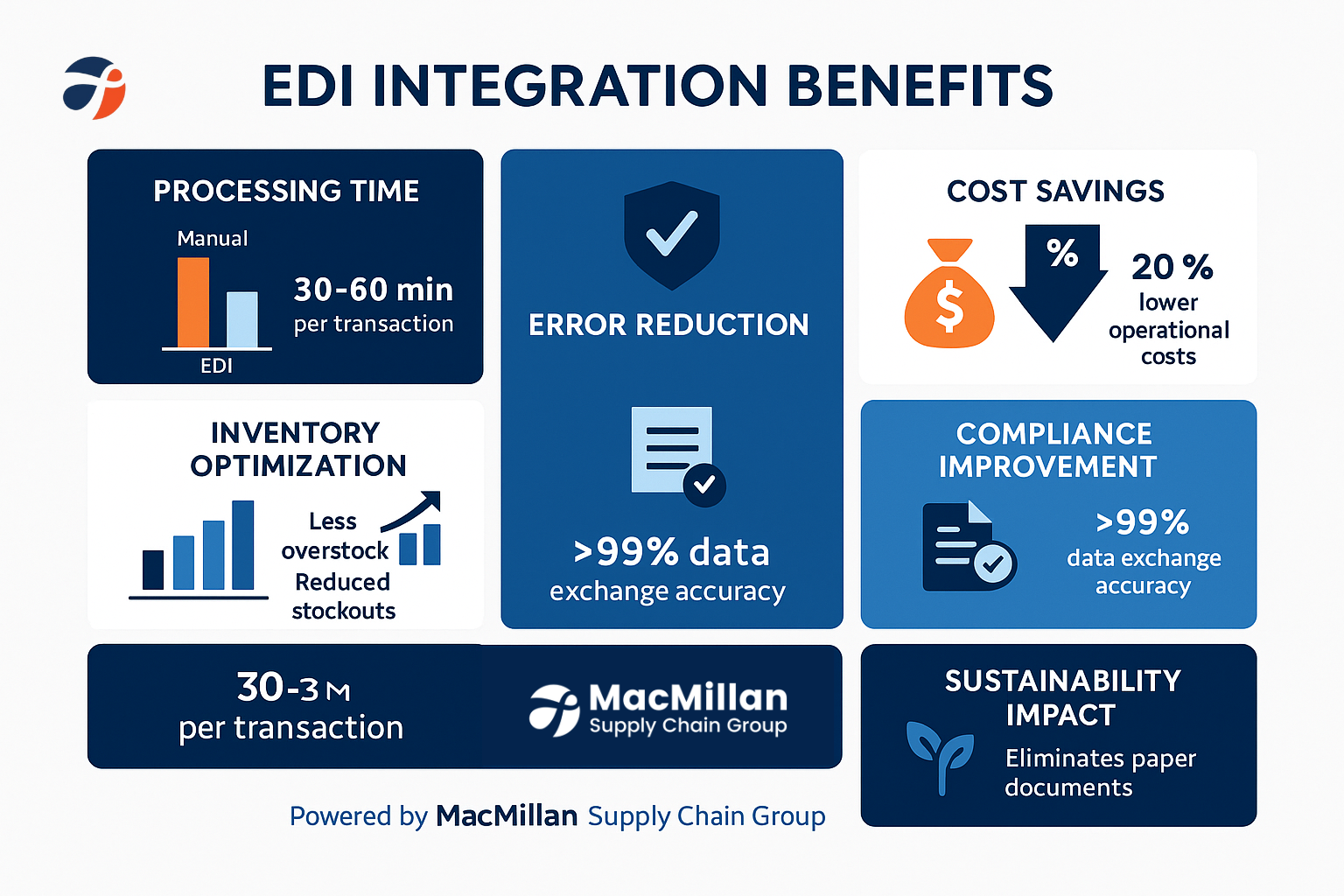
Manual document processing is slow, labor-intensive, and expensive. Each purchase order, invoice, or shipping notice might take 15-30 minutes to process manually, with associated labor costs and delays.
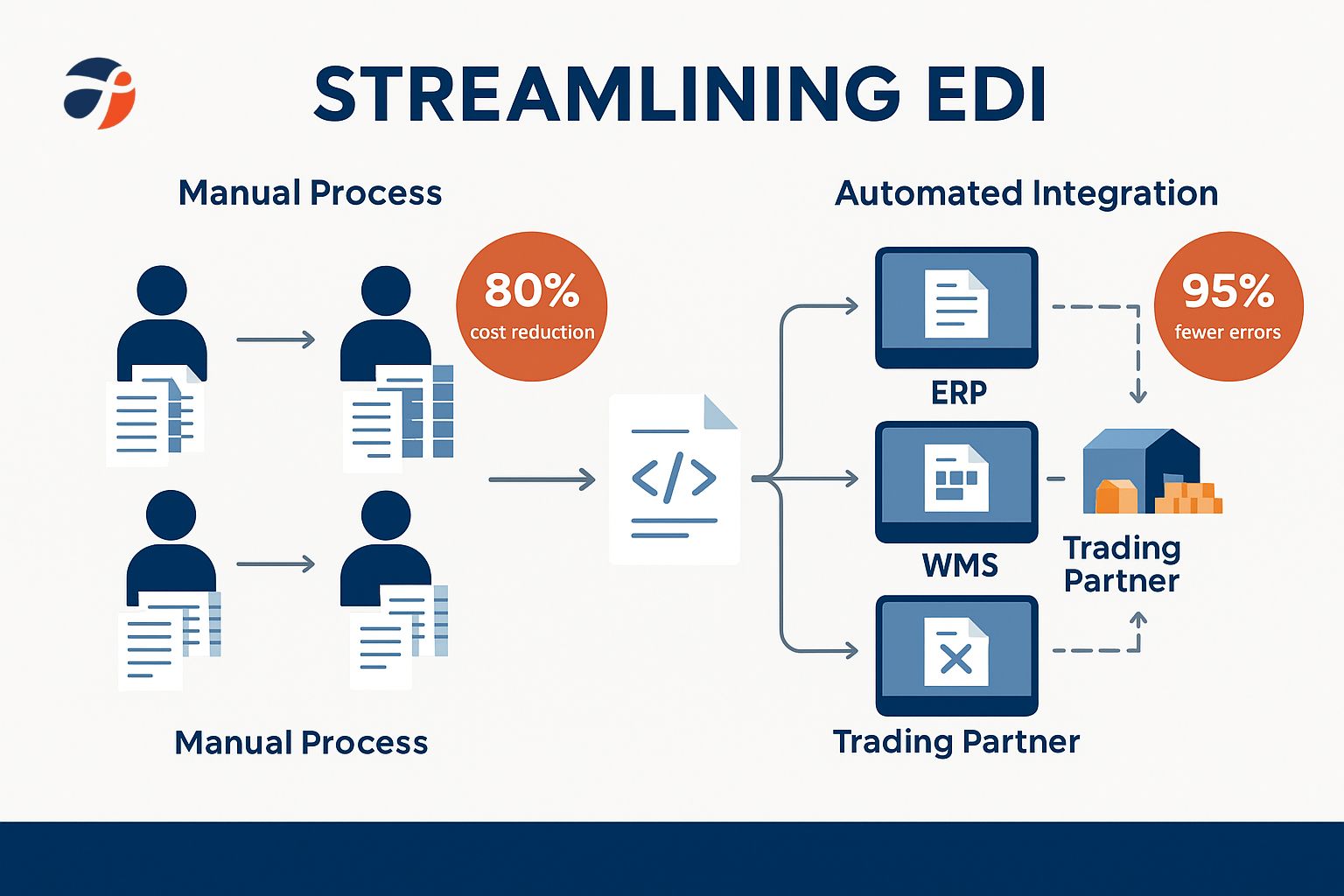
EDI integration slashes these times to seconds while reducing processing costs by up to 80%. A typical manual purchase order might cost $70-$100 to process when accounting for labor, materials, and overhead. With streamlined EDI, that same transaction might cost just $5-$10.
For Canadian businesses dealing with cross-border trade, these savings multiply. Cross-border EDI solutions automate customs documentation and compliance requirements, preventing costly delays at the border and ensuring smooth movement of goods between Canada and the US.
Human error is inevitable in manual processes. A single mistyped product code, quantity, or price can cascade into major supply chain disruptions:
– Wrong products shipped or received
EDI integration removes these error points by eliminating manual data entry. Information flows directly between systems with validation checks at each step. Organizations typically report error rate reductions from 5-10% with manual processes to less than 0.5% with EDI integration.
For businesses in Ontario and across Canada, this accuracy is particularly valuable when dealing with bilingual documentation requirements and complex regulatory compliance.

Implementing EDI requires several key technical components working together:
Modern EDI cloud platforms simplify implementation by providing these components as managed services, reducing the technical burden on your IT team. This approach is particularly valuable for small and medium-sized Canadian businesses that may not have extensive IT resources.
One of the biggest challenges in EDI implementation is connecting with your existing business systems. ERP integration services ensure your EDI solution works seamlessly with platforms like SAP, Oracle, Microsoft Dynamics, or industry-specific systems.
The integration process typically involves:
MacMillan Supply Chain Group specializes in creating these integrations for Canadian businesses, ensuring your EDI solution connects smoothly with your existing technology investments while maintaining compliance with Canadian EDI standards.
Despite its benefits, EDI implementation can present several challenges:
These challenges often lead to incomplete implementations that capture only a fraction of EDI’s potential benefits, or worse, failed projects that waste resources and create frustration.85
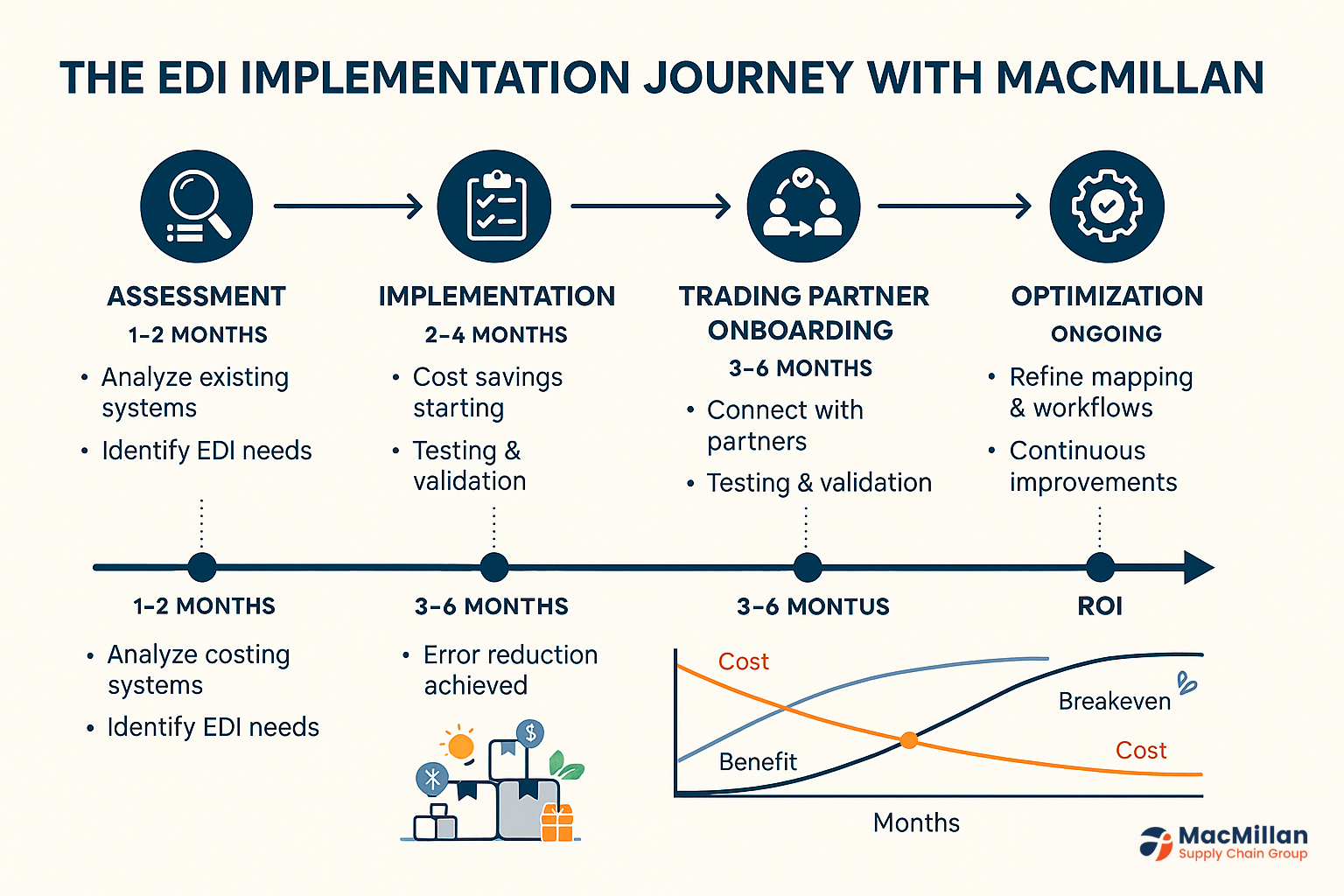
At MacMillan Supply Chain Group, we’ve developed a proven approach to EDI implementation that overcomes common challenges and delivers measurable results for Canadian businesses:
Beyond basic EDI functionality, we offer advanced capabilities that maximize the value of your investment:
Our approach combines technical expertise with practical supply chain knowledge, ensuring your EDI implementation delivers both operational improvements and strategic advantages.
Implementing EDI doesn’t have to be overwhelming. Follow this proven roadmap to achieve successful integration:
Ready to transform your supply chain with streamlined EDI? MacMillan Supply Chain Group offers comprehensive consultation services to help you assess your needs and develop an implementation plan tailored to your business.
Our team understands the unique challenges facing Canadian businesses, from cross-border trade complexities to bilingual documentation requirements. We’ll help you navigate these challenges while implementing a solution that delivers measurable ROI.
Contact MacMillan Supply Chain Group today to schedule a consultation and take the first step toward a more efficient, accurate, and cost-effective supply chain. Our experts are ready to help you leverage the power of EDI integration to gain competitive advantage in today’s fast-paced business environment.

EDI integration goes beyond simple document exchange by connecting EDI processes directly with your internal business systems. While basic EDI digitizes documents, true integration automatically triggers appropriate actions in your ERP, inventory, and accounting systems when EDI transactions occur. For example, an incoming purchase order automatically creates a sales order in your system, allocates inventory, and initiates fulfillment without manual intervention. This end-to-end automation is what delivers the transformative benefits of streamlining EDI.
Implementation timelines vary based on complexity, but most organizations can expect:
- Basic EDI setup: 2-4 weeks
- Initial trading partner connections: 2-4 weeks per partner
- ERP integration: 4-8 weeks depending on system complexity
- Full implementation with multiple partners: 3-6 months
MacMillan Supply Chain Group's cloud-based approach can accelerate these timelines by eliminating hardware procurement and setup steps.
EDI costs typically include:
- Initial implementation and integration services
- Software licensing or cloud subscription fees
- Per-transaction fees (with some providers)
- Ongoing maintenance and support
Cloud-based EDI platforms have significantly reduced upfront costs, making EDI accessible to businesses of all sizes. Many organizations achieve ROI within 6-12 months through reduced processing costs, fewer errors, and improved cash flow.
Cross-border EDI solutions streamline international trade by:
- Automating customs documentation and compliance reporting
- Ensuring accurate product classification and duty calculation
- Providing advance notification to customs authorities
- Supporting both English and French documentation requirements
- Maintaining compliance with both Canadian and US EDI standards
These capabilities reduce border delays, prevent compliance issues, and accelerate the movement of goods between countries.
Absolutely! Cloud-based EDI platforms have made sophisticated integration accessible to businesses of all sizes. SMBs often see proportionally greater benefits because:
- They typically have fewer IT resources to handle manual processes
- EDI helps them meet requirements of larger trading partners
- Automation compensates for limited staff resources
- Improved cash flow has greater impact on smaller operations
MacMillan Supply Chain Group offers scalable solutions designed specifically for the needs and budgets of small and medium-sized Canadian businesses.
EDI supports sustainability through:
- Dramatic reduction in paper usage (typical organizations reduce paper by 80%+)
- Lower carbon footprint from eliminated physical document transportation
- Reduced storage requirements for paper documents
- More efficient transportation planning that minimizes fuel consumption
- Optimized inventory levels that reduce waste from obsolete products
These benefits support corporate sustainability goals while simultaneously reducing costs and improving efficiency.
Canadian businesses typically use:
- ANSI X12: The predominant standard in North America
- EDIFACT: Used primarily for international trade
- GS1 EDI: Common in retail and consumer goods sectors
MacMillan Supply Chain Group supports all major standards and can help you determine which are most relevant for your trading partner network.
EDI transforms inventory management through:
- Real-time inventory visibility across locations
- Automated replenishment based on actual consumption
- Accurate demand forecasting from point-of-sale data
- Reduced safety stock requirements due to reliable lead times
- Prevention of stockouts and overstock situations
Organizations typically reduce inventory levels by 15-30% while maintaining or improving product availability.
Modern EDI implementations include robust security through:
- Encrypted transmission protocols (AS2, SFTP, HTTPS)
- Digital signatures to verify sender authenticity
- Access controls and user authentication
- Audit trails of all transactions
- Secure cloud infrastructure with multiple redundancies
These measures ensure your sensitive business data remains protected throughout the EDI process.
MacMillan Supply Chain Group differentiates our EDI services through:
- Deep understanding of Canadian supply chain operations and compliance requirements
- Practical experience across multiple industries and ERP platforms
- Cloud-based approach that reduces technical complexity and upfront costs
- Comprehensive trading partner onboarding services
- Integration expertise that connects EDI with your existing systems
- Ongoing optimization to ensure continued performance improvement
- Responsive local support from our Canadian team
Our approach focuses on delivering practical business results, not just technical implementation.