
How Competitive Pricing Impacts 3PL Decision-Making
n today’s volatile supply chain landscape, competitive pricing isn’t just a marketing tool — it’s a strategic lever. For third-party logistics (3PL) providers, pricing decisions impact not only profit margins but also service quality, scalability, and customer retention. At MacMillan Supply Chain Group, we understand that transparent, data-informed pricing plays a key role in how businesses choose the right 3PL partner. The Role of Competitor Pricing in 3PL Strategy Third-party logistics is no longer a race to the bottom on cost. Companies are now evaluating: Total cost of ownership Speed-to-market capabilities Tech-enabled value (like real-time tracking) Specialized services (such as cold chain or white-glove delivery) While some competitors may lure customers with unsustainably low pricing, this often leads to service compromises or hidden fees. That’s why leading brands prefer pricing models that reflect value — not just cost. For broader context, check out this guide on total cost of ownership in logistics by Supply Chain Dive. Pricing Models in the Canadian 3PL Landscape There’s no one-size-fits-all approach to pricing. Common 3PL pricing strategies include: Transactional (per order/pallet) Volume-based discounts Tiered service packages Custom contract-based rates At MacMillan SCG, we customize our 3PL pricing to fit each client’s business goals, SKU mix, and required service levels. We also provide supply chain cost breakdowns to increase transparency and help clients optimize long-term. Analytics-Driven Pricing Decisions We use supply chain analytics to continuously refine our pricing models. Key metrics include: Cost per delivery zone Warehouse space utilization Accessorial cost trends OTIF performance vs. cost per shipment This ensures our clients receive cost-efficient services without compromising performance — especially in high-cost segments like last mile delivery or temperature-controlled logistics. How to Benchmark Your 3PL Pricing When evaluating a logistics partner, pricing should never be looked at in isolation. Ask: What’s included? Are accessorial charges broken out clearly? What’s the service-to-cost ratio? Are SLAs and performance benchmarks tied to pricing tiers? Can it scale? Will your costs stay efficient as your business grows? Want help benchmarking your logistics spend? Contact MacMillan SCG for a customized cost analysis. Final Thoughts Competitive pricing is powerful — but only when balanced with reliability, innovation, and transparency. At MacMillan SCG, our pricing isn’t just competitive — it’s aligned with your business success. Get in touch today to discuss pricing strategies that deliver both savings and service excellence.
The Ultimate E-commerce Fulfillment Guide: Steps to Success
A Quick Summary and Overview E-commerce fulfillment encompasses everything from inventory storage to order processing, picking, packing, shipping, and returns management. For Canadian online retailers, mastering these operations is crucial for business success. This guide breaks down the essential steps of e-commerce fulfillment, explores cutting-edge technologies transforming the industry, and provides actionable strategies to optimize your fulfillment process. Whether you’re handling fulfillment in-house or partnering with a 3PL provider, understanding these fundamentals will help you deliver exceptional customer experiences while managing costs effectively. Introduction In today’s fast-paced digital marketplace, e-commerce fulfillment has become the backbone of online retail success. When a customer clicks “buy now,” they set in motion a complex chain of events that determines whether their experience will be delightful or disappointing. With Canadian e-commerce sales projected to reach $92.7 billion in 2025, businesses that master fulfillment gain a significant competitive advantage. E-commerce fulfillment isn’t just about shipping packages—it’s about creating customer experiences that build loyalty and drive repeat business. Research shows that 73% of shoppers consider delivery speed a key factor in their purchasing decisions, while 69% are less likely to shop with a retailer again after a poor delivery experience. For Canadian businesses competing with global giants, optimizing the fulfillment process isn’t optional—it’s essential for survival and growth. This guide will walk you through each step of the e-commerce fulfillment journey, from receiving inventory to managing returns, with practical insights to help your business thrive in this competitive landscape. Understanding the E-commerce Fulfillment Process E-commerce fulfillment encompasses the complete journey of getting products from your warehouse to your customer’s doorstep. This process begins the moment a customer places an order and continues until they receive their package—and sometimes beyond, if returns are involved. For Canadian businesses, understanding each step in this process is crucial for building efficient operations. The fulfillment journey typically includes receiving inventory, warehousing, order processing, picking and packing, shipping, delivery, and returns management. Each stage requires careful planning and execution to ensure customer satisfaction. The importance of fulfillment can’t be overstated—it directly impacts your bottom line. Research shows that 38% of customers will abandon their cart if delivery takes longer than a week, while 45% are unlikely to shop with a retailer again after a late delivery. By optimizing your fulfillment process, you’re not just shipping products—you’re building customer relationships and strengthening your brand. Modern fulfillment has evolved beyond simple shipping. Today’s consumers expect fast delivery, accurate order fulfillment, and transparent tracking information. Meeting these expectations requires a combination of strategic planning, technology integration, and sometimes partnerships with specialized providers like 3PLs. For Canadian retailers looking to compete with larger players, mastering these elements is the key to standing out in a crowded marketplace. Technology Solutions for Modern Fulfillment The technology powering e-commerce fulfillment has transformed dramatically in recent years, creating opportunities for businesses of all sizes to operate more efficiently. Implementing the right tech stack can be the difference between struggling with manual processes and running a streamlined operation that delights customers. Inventory management software forms the foundation of effective fulfillment. These systems provide real-time visibility into stock levels, automatically trigger reorders when inventory runs low, and help prevent the costly mistake of overselling products. For Canadian businesses managing inventory across multiple locations or channels, these tools are invaluable for maintaining accuracy and preventing stockouts that frustrate customers. Warehouse management systems (WMS) take efficiency to the next level by optimizing how products are stored, picked, and packed. A good WMS can increase picking accuracy to over 99% while reducing labor costs by 15-20%. These systems map warehouse layouts, direct staff along optimal picking routes, and ensure inventory is stored in locations that minimize travel time during order fulfillment. Automated picking and packing technologies are revolutionizing fulfillment centers across Canada. From simple barcode scanners that reduce human error to sophisticated robotic systems that can pick hundreds of items per hour, automation helps businesses scale operations without proportionally increasing labor costs. Even small operations can benefit from semi-automated solutions that boost productivity while maintaining flexibility. The integration of these technologies creates a seamless flow of information from the moment a customer places an order to when it arrives at their door. This connectivity eliminates data silos, reduces manual entry errors, and provides valuable insights that help businesses continuously improve their fulfillment operations. Optimizing Shipping and Delivery Shipping represents one of the largest expenses in e-commerce fulfillment, but it also offers significant opportunities for optimization. Strategic approaches to shipping can reduce costs while improving customer satisfaction—a winning combination for any online retailer. Shipping cost optimization starts with understanding dimensional weight pricing, which most carriers use to calculate shipping rates. By using appropriately sized packaging and minimizing void fill, businesses can avoid paying to ship “air” and reduce costs by 10-15%. Canadian retailers should also consider negotiating rates with multiple carriers rather than relying on a single shipping partner, as this competition can lead to better pricing and service. Last-mile delivery optimization focuses on the final and most expensive leg of the shipping journey. Strategies include using regional carriers for certain areas, implementing zone skipping for high-volume destinations, and exploring alternative delivery options like pickup points. For urban Canadian markets, same-day delivery is becoming increasingly important, with 30% of shoppers willing to pay a premium for this service. Cross-border shipping to the US presents both challenges and opportunities for Canadian e-commerce businesses. While navigating customs requirements adds complexity, accessing the massive US market can significantly boost sales. Successful cross-border strategies include clear communication about duties and taxes, partnering with experienced carriers, and considering fulfillment centers on both sides of the border for faster delivery. B2C shipping in Canada has unique challenges, including vast geographic distances and relatively low population density outside major urban centers. Successful retailers address these challenges by strategically locating inventory, offering realistic delivery timeframes based on region, and providing transparent tracking information to set appropriate customer expectations. The 3PL Advantage for Canadian Retailers Many growing e-commerce businesses reach a point where
Your Guide to Launching a 3PL Business: Opportunities and Trends

In the past two years, the logistics industry has experienced many transformative changes. These shifts are driven by technological advancements, changing customer behavior, and increased delivery traffic. The global 3PL industry is composed for substantial growth. Research indicate it will exceed $1.3 trillion by 2026 and touch $1.75 trillion by 2027, with an average annual growth rate (CAGR) of nearly 8%. Embarking on a 3PL warehousing business venture requires a thorough understanding of market trends, opportunities, and the competitive landscape. This blog will offer comprehensive insights into the core functions of a 3PL warehousing and essential steps to follow for starting a 3PL business and exploring its vast opportunities. 3 core functions when starting a 3PL The 3PL business model is revolving around inventory control and managing 3PL warehousing operations for other businesses. While the specific services and capabilities of a 3PL can vary, there are three core functions that most 3PLs offer. Let’s take a closer look at each of these fundamental operations. Inbound inventory operations: A 3PL assists customers in transferring and managing products from manufacturers or wholesalers to the 3PL’s warehouses. This involves scheduling inbound inventory and replenishment orders to ensure customers maintain appropriate stock levels. Some 3PL warehousing services solely receive inventory, while others also help create orders and manage inbound inventory. At MacMillan SCG, we provide data and support to help customers restock at optimal times, reducing the risk of stockouts and revenue loss. Our inbound teams swiftly offload goods and scan them into inventory software, or WMS systems giving you real-time visibility of available items at each location (read more about choosing the right WMS for your business) 3PL warehousing and storage: One of the most important functions 3PL warehousing includes is storing your inventory properly. Top-tier 3PLs use scanning and automation tools to maintain order accurate, real-time inventory counts to be accessible 24/7. MacMillan as a top tier 3PL warehousing provider specializes in space accommodation and handling product specifications (e.g., hazardous materials, temperature-controlled goods). Additionally, 3PLs work diligently to minimize shrinkage, optimizing both their customers and their own operations. Order fulfillment: The final component of standard 3PL warehousing service is order fulfillment. This involves picking products from stored inventory, packing them according to customized orders, and shipping these packages to the end customer. Effective order fulfillment relies on the 3PL’s strong relationships with carriers and local partners to ensure efficient distribution. To minimize costs, it is important to work with multiple carriers and maintain multiple locations. Ensuring order accuracy is a critical responsibility of the 3PL. At MacMillan, we believe in taking accountability for our services, which is why we cover the cost of any damaged orders. A fulfillment network such as Ship Bob with its most noticeable 2-Day Express shipping program which allows you to meet the high expectations set by Amazon, significantly reducing shipping costs for customers and speeds up last-mile delivery. Business Opportunity in starting a 3PL Business Starting a 3PL business offers significant benefits, the ease of online shopping, heightened by the pandemic, led to an 11.16% growth in ecommerce in 2023. This surge is driving global demand for 3PL warehousing services, as customers increasingly expect timely and accurate deliveries. Many smaller merchants, unable to manage their own logistics operations, are outsourcing their distribution and fulfillment operations to 3PL warehousing partners to remain competitive. In response, 3PL companies are making substantial changes in supply chain management, focusing on reducing delivery costs, cutting-edge technologies, and enhancing overall responsiveness. These new adaptations are key metrics for growth in the 3PL industry. Steps for starting a 3PL business Before starting a 3PL business, there are several factors to consider, here are the steps a business must follow: PART 1- EVALUATION AND SETUP Deciding 3PL type and specialization: To start a 3PL business, it’s crucial to understand industry verticals and decide on a specialization. A 3PL can focus on a specific product category, such as retail, food, apparel, or large appliances, or they can operate as an ecommerce fulfillment provider. For instance, a 3PL operating in electronics fulfillment can also handle apparel due to the similar processes involved. The chosen product specialization will form the warehouse layout, as the storage needs for apparel differs from those for appliances. This specialization also determines the appropriate pallet configurations. Additionally, 3PLs must select relevant sales channels that align with their specialized product class to maximize efficiency and market reach. Selecting the Location: The geographic location of the warehouse is a critical consideration for a 3PL owner. When selecting a warehouse location, the 3PL must prioritize proximity to where products are stored and ensure it is centrally located to 3PL warehousing activities. This strategic positioning helps the 3PL achieve fulfillment and reduce shipping costs by minimizing the distance for receiving and dispatching products. Setting up 3PL warehousing space: Each 3PL warehouse has its storage capacity tailored to the specific product category it serves. However, there are fundamental principles that 3PL warehouse managers should consider for effective layout design: For inventory movement, each warehouse should include several key areas: Reserve storage area Carton and product picking area Packing and dispatch area Cross-dock area Empty pallet and packaging area MHE charging area Shipping PART-2: TECHNOLOGICAL OPERATIONS Modern warehouse management software is essential for meeting the unique needs of customers and efficiently managing 3PL warehousing and fulfillment operations, ultimately enhancing the customer experience. Such as, MacMillan offering an integrated WMS and TMS for your systems which will optimize your business processes. Find out more. The right 3PL software: The right software helps to optimize fulfillment operations seamlessly for modern 3PL warehousing. MANAGE 3PL WAREHOUSING OPERATIONS: Implementing 3PL WMS optimizes both inbound and outbound operations by providing flexibility and real-time data visibility. It optimizes inbound processes, reducing dock-to-stock time with almost zero shrinkage, and manages the inbound workflow processes, including receiving, quality control, and put away. The WMS software enables strategies, reduces cost, automates picking, packing, sorting, and shipping processes. MANAGING CLIENT OPERATIONS: Once clients are onboarded, the right software
Mastering Last Mile Fulfilment: The Key to Winning in E-Commerce Logistics
A Quick Summary and Overview In today’s experience-driven economy, where consumer loyalty hinges on speed and convenience, the final leg of your delivery process—last mile fulfilment—can either elevate or erode your brand. Particularly for food and beverage brands and fast-moving consumer goods (FMCGs), the last mile is where trust is tested and customer expectations peak. MacMillan Supply Chain Group helps businesses meet these expectations with scalable, AI-powered logistics solutions that transform the final mile into a competitive advantage. What is Last Mile Fulfilment and Why Does It Matter? Last mile fulfilment refers to the final step in a product’s journey—from warehouse to customer doorstep. Despite being the shortest segment, it’s often the most expensive and complex, accounting for over 50% of total logistics costs, as highlighted in Capgemini’s Last Mile Report. This step has a direct impact on customer satisfaction, loyalty, and perceived product value. According to McKinsey & Company, 70% of online shoppers consider delivery speed and reliability crucial to their buying decision. MacMillan ensures 90% of Forward Sortation Areas (FSAs) in Canada are covered by next-day delivery through a dedicated fleet of over 3,000 drivers, processing 3.1 million shipments annually. Common Barriers in Last Mile Delivery Urban congestion and rising fuel costs Failed or late deliveries leading to perishables loss Lack of visibility into in-transit shipments Pressure to meet tight SLAs for DTC and retail customers Fragmented 3PL services leading to inconsistent brand experience At MacMillan, we address these with predictive analytics, AI-optimized routes, and real-time tracking technologies that keep operations transparent and aligned with your service standards. Explore our transportation technology Why MacMillan SCG is Built for Complex Last Mile Logistics Our last mile framework is built for agility and scale: High Lane Densities: Reduce delivery cost per unit across major markets Nationwide Network: Access to 45+ cross-dock hubs and metro-to-rural reach Big & Bulky Fulfilment: Full-service delivery for CPGs, appliances, and more SLA-Centric Execution: We deliver on your commitments with precision Need specialized fulfilment like temperature-controlled delivery or white-glove service for high-value goods? Explore our specialized solutions Integrated Fulfilment Backed by a Robust WMS What sets us apart is full-stack fulfilment integration. We connect: Warehousing and Distribution Order Fulfilment Services Container Destuffing All operations are unified under our Mantis-powered Warehouse Management System (WMS), providing: Real-time inventory tracking 99.56% accuracy 99% OTIF (on-time in-full) shipments Over 350 KPI metrics to inform your decisions Built for Food & Beverage, Retail, and DTC Brands MacMillan’s fulfilment architecture is purpose-built for fast-moving industries: Perishables: Time-sensitive, condition-controlled delivery Beverages & Supplements: Bulk order management with FIFO/FEFO logic Retail & Apparel: White-label branding and SKU-level tracking DTC E-commerce: Seamless integrations with Shopify, Amazon, WooCommerce, and more According to the National Retail Federation (NRF), 83% of consumers expect full control over delivery times, locations, and tracking—which places even more pressure on your last mile strategy. Learn how we support high-growth sectors Is Your Business Ready to Scale with Smarter Logistics? Switching logistics providers can feel risky—but at MacMillan, we make it seamless. Our fast-track migration model includes: Zero-downtime onboarding Data-driven WMS integration Dedicated support throughout testing, go-live, and scaling Discover our onboarding process Transform Your Last Mile into a Brand Asset In a world where logistics is a major brand differentiator, last mile fulfilment can’t be an afterthought. It must be optimized, visible, and reliable. By partnering with MacMillan SCG, you empower your operations with: A proven nationwide delivery network Tech-enabled, insight-driven execution Flexible fulfilment models tailored to your product and market Get a personalized quote Contact our team to explore a solution Further Reading How to Improve Last Mile Delivery Optimizing Last Mile Delivery for Heavy Goods Advancements in Last Mile Delivery
How 3PL Services Power Fast Moving Consumer Goods (FMCG) Logistics in Canada
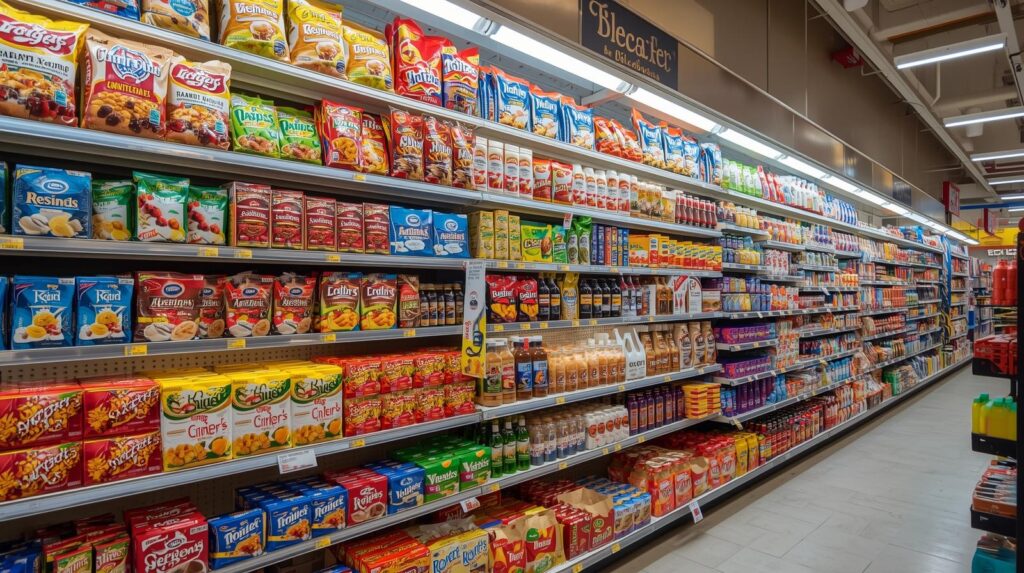
Fast-moving consumer goods (FMCGs), such as snacks, beverages, toiletries, and household items, are essential to daily life and are in constant demand. Their high turnover rate requires supply chains that are not only fast but also reliable, scalable, and cost-effective. In Canada’s competitive retail and e-commerce sectors, businesses handling FMCGs need a logistics partner that can keep pace with demand fluctuations, ensure timely delivery, and maintain product quality. This is where third-party logistics (3PL) providers, such as MacMillan SCG, come in. What Are Fast-Moving Consumer Goods? FMCGs are products that sell quickly at relatively low cost. Examples include packaged foods, soft drinks, over-the-counter medicines, and personal care items. These goods typically have a short shelf life due to high consumer demand or perishability. Therefore, speed and efficiency in warehousing, distribution, and delivery are vital to avoiding stockouts and spoilage. These items often require multiple shipments, specific handling requirements (such as ambient or temperature-controlled storage), and high-frequency order fulfillment. Even minor disruptions in the supply chain can have a significant impact on customer satisfaction and revenue. Logistics Challenges in FMCG Managing the logistics of FMCGs presents several challenges: Products need rapid turnover and replenishment. Inventory must be precisely managed to avoid overstocking or stockouts. Cold or ambient storage may be required. High-volume orders must be fulfilled accurately and quickly. Seasonal or promotional demand spikes require flexible scaling. Efficient last-mile delivery is essential to meeting delivery SLAs and maintaining customer satisfaction. 3PL Solutions from MacMillan SCG MacMillan SCG addresses these challenges with integrated, tech-driven 3PL services tailored for the FMCG sector. With over 20 years of experience, MacMillan is one of Canada’s most trusted logistics partners, offering end-to-end visibility and efficiency throughout the supply chain: Warehousing: GMP-certified, temperature-controlled storage options, with over 250,000 sq. ft. of racked and bulk space strategically positioned across Canada. Learn more about our warehousing and distribution services. Speed & Accuracy: 8-hour dock-to-stock times and 99.56% inventory accuracy ensure products are always ready for sale. Our WMS is Mantis-powered, allowing real-time tracking and reporting. Order Fulfillment: 99.5% perfect order rate backed by seamless integration with major e-commerce platforms. Discover more on our e-commerce fulfillment solutions. Transportation: Our national fleet of 3000+ drivers uses AI-powered route optimization for timely, efficient delivery, covering 90% of FSAs with next-day service. Visit our transportation services page to explore the network. Final Mile Delivery: Our last-mile delivery solutions ensure your FMCGs arrive exactly when and where needed, with options for white-glove service and real-time tracking. Real Results for FMCG Businesses MacMillan’s ability to handle high-volume, fast-turnaround operations makes it a preferred logistics partner for FMCG brands. With 45 cross-dock locations nationally and over 3.1 million shipments handled annually, our clients benefit from scalable logistics, reduced delivery times, and end-to-end support. Whether you’re shipping personal care products across Ontario or distributing beverages nationwide, MacMillan’s precision-driven approach ensures your inventory moves seamlessly through every stage of the supply chain. Why Choose a 3PL for FMCG? Partnering with a specialized 3PL provider like MacMillan gives FMCG businesses: Reduced operational costs through shared infrastructure Flexibility during demand spikes and seasonal surges Enhanced tracking and inventory control via advanced WMS Compliance with Canadian health and safety regulations Scalable logistics infrastructure to support growth Seamless integration with leading e-commerce platforms like Shopify, Amazon, and Walmart About MacMillan SCG MacMillan Supply Chain Group is a Canadian leader in 3PL and logistics services, trusted by over 40 top-tier brands. We specialize in tailored supply chain solutions, including warehousing, container destuffing, final mile delivery, and more. Our systems are designed to scale with your business, using data and automation to reduce errors, improve visibility, and increase profitability. Our same-day and next-day capabilities, combined with 99.00% OTIF performance, make us a reliable choice for FMCG businesses across Canada. Ready to streamline your FMCG supply chain? Partner with MacMillan SCG to simplify your logistics and meet your consumers’ expectations with precision and speed. Request a quote today and experience Canada’s trusted 3PL advantage. What services do third-party logistics (3PL) providers like MacMillan Supply Chain Group offer? What is cold chain logistics and why is it important in Canada?