
Cobots & Labor-Tech Solving Canada Warehouse Worker Shortage

The critical 11% vacancy rate in transportation and warehousing that Canada’s logistics industry faces is three times higher than the national average.Nationwide, the Canada warehouse worker shortage is causing supply chain disruptions and e-commerce fulfillment delays. A solution is provided by collaborative robots, or cobots, which can enhance human productivity by up to 30% while fostering safer working conditions. Businesses of all sizes can address labor shortages while increasing operational efficiency with flexible deployment strategies and government funding options like NRC IRAP, which cover up to 45% of implementation costs. This article examines how labor-tech and cobots are revolutionizing Canadian warehouses and opening up new doors for both companies and employees. Cobots & Labor-Tech: The Answer to Canada’s Warehouse Worker Shortage One major issue facing Canada’s warehouses is a severe labor shortage. Businesses find it difficult to satisfy customer demands, particularly in light of the e-commerce boom, as vacancy rates in transportation and warehousing reach 11%, which is three times the national average, this highlights the growing scale of the Canada warehouse worker shortage. This shortage affects the entire Canadian logistics industry and is not merely a short-term issue. However, there is hope for the future. Innovative labor-tech solutions and collaborative robots (cobots) are revolutionizing warehouses nationwide. Cobots are made to work alongside people, increasing productivity without completely replacing workers, in contrast to traditional industrial robots that operate alone. We’ll look at how these technologies are assisting Canadian companies in overcoming labor shortages, increasing productivity, and establishing safer workplaces in this post. We’ll also examine funding options, realistic implementation strategies, and the prospects for human-robot collaboration in Canada’s changing warehouse environment. Comprehending the Warehouse Labor Crisis in Canada With an 11% vacancy rate in the transportation and warehousing sectors, which is much higher than the 3.7% national average, Canada’s warehouse worker shortage has reached critical proportions. Not everyone is equally affected by this crisis; in Ontario alone, there are over 194,000 open positions, which causes supply chain bottlenecks that have an impact on both consumers and businesses. Ontario has been hit especially hard by the Canada warehouse worker shortage, making it the epicenter of warehousing strain in the country. This shortage is caused by multiple factors. First of all, working in a warehouse frequently entails physically taxing duties in uncomfortable settings, such as hot summers, cold winters, and a need for constant movement. Second, prospective employees are drawn away from logistics positions by rival industries that offer better compensation and working conditions, such as technology and healthcare. Third, fewer young people are pursuing these physically demanding jobs in Canada due to the country’s aging workforce. Businesses are significantly impacted. Delivery promises are especially difficult for e-commerce fulfillment centers, which have grown significantly since 2020. Businesses lose money and customers become dissatisfied when orders cannot be processed promptly. Smaller Canadian SMEs may experience an existential labor shortage as a result of their incapacity to offer competitive compensation or benefits. The Actual Price of Unfilled Jobs Missed deliveries are not the only financial impact. In order to make up for staff shortages, companies report spending an additional 30 to 45 percent on overtime. In the meantime, employee turnover in Canadian warehouses averages 36% per year, with training costs and lost productivity for each replacement coming to about $4,200. These figures demonstrate why, in the fiercely competitive Canadian logistics industry, finding technological solutions to the labor shortage is essential for survival as much as for growth. Ignoring the Canada warehouse worker shortage means risking both revenue and customer satisfaction. How Cobots Help Solve the Canada Warehouse Worker Shortage Compared to conventional industrial robots, collaborative robots, or cobots, represent a fundamentally different approach to warehouse automation. Cobots are made especially to work alongside human employees, enhancing rather than completely replacing their skills, whereas traditional robots operate in isolation behind safety cages. The inherent safety features of cobots are what set them apart. When a worker approaches too closely, they automatically slow down or stop using force-limited actuators and sophisticated sensors to detect human presence. This implies that there is no need for significant reconfiguration or safety precautions when deploying them directly in existing workspaces. These technologies offer real relief from the ongoing Canada warehouse worker shortage. Types of Cobots Transforming Canadian Warehouses Several facilities in Ontario use the DOBOT CR20A, which has AI vision systems that allow for real-time defect detection and dynamic worker movement adjustments. It can carry out tasks like palletizing and precise assembly with a payload capacity of 20 kg. Using LiDAR technology, autonomous mobile robots (AMRs) such as the OTTO 100 move objects up to 150 kg across warehouse floors without the need for fixed routes. AMRs are perfect for Canadian SMEs with limited funding because they don’t require costly floor modifications like traditional AGVs (Automated Guided Vehicles) do. For SMEs tackling the Canada warehouse worker shortage, AMRs provide flexible, cost-effective support that can be scaled without disruption. Cobots with modular grippers, like those from Geek+’s P Series, can be used for picking tasks and can be modified to handle anything from heavy car parts to delicate cosmetics. Because of its adaptability, a single robot can handle several jobs, increasing return on investment for Canadian companies on a tight budget. Implementation Strategies and ROI for Canadian Businesses It is not necessary to completely redesign the warehouse in order to implement cobots. Incremental deployment strategies, which minimize disruption while maximizing returns, are proving to be successful for many Canadian businesses. Before expanding, this strategy enables businesses to test technologies in particular domains. Workable Deployment Techniques The most economical place to start is frequently by retrofitting existing infrastructure. For instance, staging carts and OTTO 100 AMRs enable warehouses to automate transport tasks while preserving their existing layouts. Several distribution centers in the Toronto area have seen a 40% reduction in walking time without requiring significant renovations thanks to this technique. “Goods-to-person” systems can be introduced gradually for picking operations. Serving the Canadian market, Bergen Logistics began by implementing robotic picking stations
AI 3PL Operating Systems: Transforming Canadian Logistics
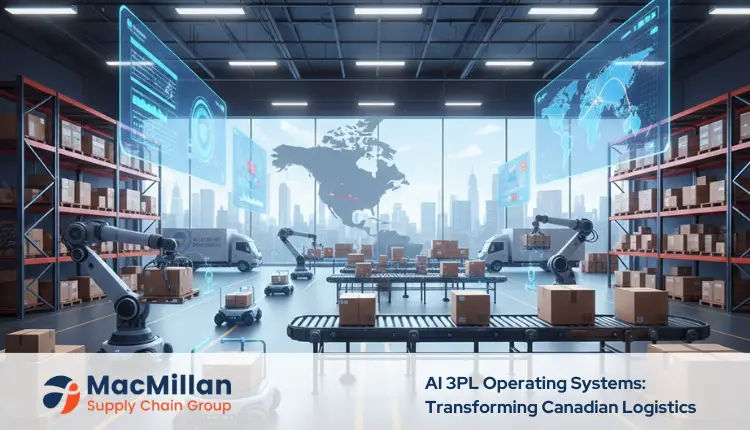
AI’s Revolutionary Potential: 3PL Operating Systems Changing the game Logistics in Canada The next era of third-party logistics (3PL) excellence is being propelled by artificial intelligence (AI), which is no longer a futuristic idea in the field of logistics. AI 3PL operating systems are providing previously unheard-of levels of efficiency. AI-powered 3PL operating systems are providing previously unheard-of levels of efficiency, visibility, and customer satisfaction for Canadian businesses, particularly those negotiating the challenges of e-commerce, omnichannel fulfillment, and last-mile delivery. We at Macmillan SCG are leading this change by using AI to transform supply chain difficulties into competitive advantages. Understanding the Impact of AI 3PL Operating Systems on 3PL Logistics The way 3PLs function is being drastically altered by AI. AI-driven systems are now able to analyze enormous volumes of data, identify patterns, and produce actionable insights more quickly and accurately than ever before by utilizing machine learning, predictive analytics, robotics, and real-time data processing. From last-mile delivery to warehouse management, this technological revolution is changing every aspect of logistics. Why AI 3PL Operating Systems Matter for 3PLs Intelligent Demand Forecasting: AI reduces stockouts and overstocking by forecasting order volumes and seasonal trends. Real-Time Visibility: Complete inventory, shipment, and delivery status tracking and monitoring. Warehouse Automation: Picking, packing, and sorting are optimized by robotics and AI-powered systems, which can reduce order fulfillment times by up to 65%. Personalized Customer Experience: AI chatbots and virtual assistants offer customized communication and real-time updates, which encourage repeat business and loyalty. Cost Reduction: Transportation and operating expenses are reduced by automated procedures and optimized routes. How Macmillan SCG Leverages AI in 3PL Operations 1. Inventory control and demand forecasting The foundation of effective logistics is precise demand forecasting. To forecast changes in demand, Macmillan SCG’s AI-driven models examine past sales, market trends, meteorological conditions, and promotional activities. This makes it possible to make more informed purchases, cut down on excess inventory, and guarantee that goods are available when and where consumers need them. AI is used by our integrated inventory management systems to: Monitor the current stock levels in every warehouse. Determine which inventory is at risk or moving slowly. Automate promotional or restocking tactics to maximize cash flow. 2. Robotics and Automation in Warehouses Advanced AI 3PL operating systems, including warehouse management systems (WMS) that manage conveyor systems, robotics, and autonomous mobile robots (AMRs) power our fulfillment centers in Canada. These technologies: Automate repetitive processes such as packing, sorting, and picking. Boost order accuracy to over 99% and minimize human error. Reduce order fulfillment times, even during periods of high demand when order volumes increase by 300–400%. Robots, scanners, and sensors all communicate with each other without interruption when all warehouse systems are integrated into the cloud. This allows them to instantly adapt to changing conditions and priorities for optimal efficiency. 3. Last-mile delivery and route optimization Real-time delivery route optimization by AI takes weather, traffic, and delivery deadlines into account. In addition to lowering transportation expenses, this raises the percentage of on-time deliveries, which is crucial for client satisfaction. Even in Canada’s most difficult regions, our committed fleet of more than 3,000 drivers, driven by AI, guarantees that deliveries are always made on time. Customers and shippers receive live tracking links with Uber-like transparency, reducing customer service inquiries by up to 70% and offering peace of mind. 4. Strengthening the Resilience of the Supply Chain The necessity of robust supply chains has been brought to light by the post-pandemic world. Macmillan SCG can do the following thanks to AI: Determine key nodes and map intricate supply chains. For proactive risk management, keep an eye on market conditions and supplier performance. In the event of disruptions such as natural disasters or geopolitical events, propose backup suppliers or plans. For our clients, this proactive approach guarantees business continuity and lessens the impact of disruptions. 5. Ethical sourcing and sustainability AI is a potent instrument for advancing sustainability as well. Our systems are able to: Reduce waste and carbon emissions by analyzing warehouse operations and routes. Monitor supplier adherence to social and environmental standards to promote ethical sourcing. Optimize resource use to support regulatory compliance and clients’ ESG objectives. The foundation of contemporary logistics is real-time visibility. In today’s supply chain, visibility is essential. The AI-powered platforms of Macmillan SCG offer real-time insights into: levels of inventory in several warehouses. order status from the time of receipt to the last delivery. Performance indicators for perishable goods and storage facilities. This transparency improves operational agility and customer trust while facilitating quicker, data-driven decisions. How AI 3PL Operating Systems Help Overcome Labor Challenges In Canadian logistics, labor shortages are a recurring problem. Macmillan SCG increases job satisfaction and lowers turnover by automating the most labor-intensive tasks, freeing up human workers to concentrate on quality control and exception handling. With operational savings, increased throughput, and lower labor costs, automation offers a substantial return on investment, with the majority of costs being recovered in 18 to 24 months. Scalability and Integration: Expanding with Your Company AI-powered 3PL operating systems are naturally scalable. The platforms from Macmillan SCG maintain consistent performance and accuracy by automatically adjusting processing capacity to handle increased volumes during peak periods. To ensure a smooth and disruption-free adoption of technology, our systems are built to integrate seamlessly with well-known e-commerce platforms like Shopify, WooCommerce, Amazon, and custom storefronts. Tailored Client Experience with AI 3PL Operating Systems Macmillan SCG can provide a better customer experience thanks to AI by: Proactive alerts and real-time order updates. AI-powered chatbots that offer individualized advice and assistance. Customization of services based on data, fostering loyalty and improving client relationships. Data Integrity and Security AI 3PL operating systems must prioritize security. Macmillan SCG uses strong security measures: warehouses with controlled access and separate storage spaces. encrypted data connections and multi-factor authentication. Blockchain technology provides tamper-proof records of all transactions and movements, particularly for sensitive or expensive goods. AI’s Return on Investment in 3PL: Real Business Gains Measurable business results are obtained when 3PL operations integrate
Streamlining EDI: How Integration Improves Your Supply Chain
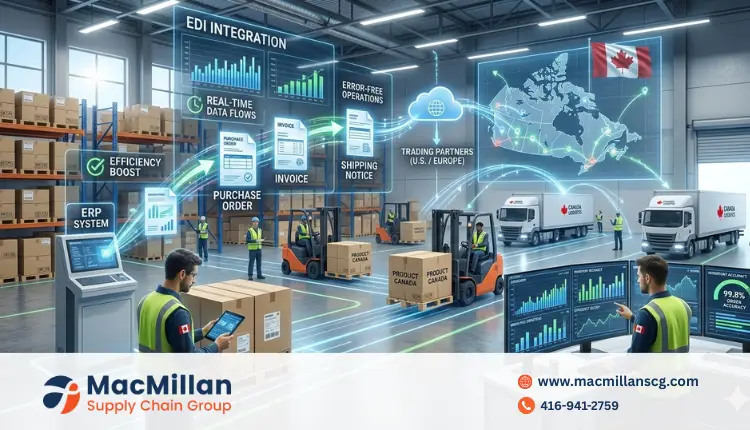
A Quick Summary and Overview Electronic Data Interchange (EDI) transforms how businesses exchange information across the supply chain. By replacing manual, paper-based processes with automated digital communication, EDI integration eliminates errors, speeds up transactions, and reduces costs. For Canadian businesses dealing with complex supply chains, streamlining EDI provides real-time visibility, improves trading partner relationships, and ensures compliance with both Canadian and North American standards. MacMillan Supply Chain Group helps organizations implement robust EDI solutions that connect seamlessly with existing systems, creating more efficient, sustainable, and profitable supply chain operations. What is EDI and Why Does Your Supply Chain Need It? Is your business still relying on emails, faxes, and manual data entry to manage supply chain communications? If so, you’re likely facing unnecessary delays, errors, and costs that are holding your company back. Electronic Data Interchange (EDI) represents the digital backbone of modern supply chains. At its core, EDI is a standardized method for businesses to exchange documents electronically—purchase orders, invoices, shipping notices, and inventory reports—directly between computer systems. But streamlining EDI goes beyond simply digitizing paperwork. True EDI integration connects these communications directly with your internal systems, creating an automated flow of information that transforms your entire supply chain operation. For Canadian businesses navigating complex supply networks that often cross borders, implementing Canadian EDI standards through proper integration isn’t just a technical upgrade—it’s a strategic advantage that delivers measurable benefits to your bottom line. In this guide, we’ll explore how EDI integration works, the specific benefits it brings to your supply chain, and how MacMillan Supply Chain Group can help you implement a solution tailored to your business needs. The Basics of Electronic Data Interchange EDI replaces traditional document exchange methods with standardized electronic formats that computers can process automatically. Instead of printing a purchase order, mailing it, and waiting for someone to manually enter it into their system, EDI sends the information directly from your system to your partner’s system in seconds. The magic happens through standardized formats like ANSI X12 (common in North America) and EDIFACT (used internationally). These standards ensure that all parties “speak the same language” regardless of what internal systems they use. For example, when your inventory management system needs to order more products, it can automatically generate a purchase order in EDI format (typically an X12 850 document in North America). This standardized document is then transmitted securely to your supplier’s system, where it’s automatically processed without any manual intervention. How EDI Integration Connects Your Supply Chain True EDI integration goes beyond basic document exchange by connecting EDI processes directly with your core business systems: Your ERP system automatically triggers purchase orders when inventory reaches reorder points Suppliers send Advanced Shipping Notices (Canada format) that automatically update your receiving schedule Electronic invoices (CA format) are matched against purchase orders and receipts for automated payment processing Inventory levels update in real-time across your network as products move through the supply chain This seamless integration eliminates data silos and creates a continuous flow of accurate information throughout your supply chain. With supply chain integration Canada businesses can achieve unprecedented visibility and control over their operations. Dramatic Reduction in Processing Time and Costs Manual document processing is slow, labor-intensive, and expensive. Each purchase order, invoice, or shipping notice might take 15-30 minutes to process manually, with associated labor costs and delays. EDI integration slashes these times to seconds while reducing processing costs by up to 80%. A typical manual purchase order might cost $70-$100 to process when accounting for labor, materials, and overhead. With streamlined EDI, that same transaction might cost just $5-$10. For Canadian businesses dealing with cross-border trade, these savings multiply. Cross-border EDI solutions automate customs documentation and compliance requirements, preventing costly delays at the border and ensuring smooth movement of goods between Canada and the US. Near-Elimination of Data Entry Errors Human error is inevitable in manual processes. A single mistyped product code, quantity, or price can cascade into major supply chain disruptions: – Wrong products shipped or received Incorrect quantities leading to stockouts or overstock Pricing discrepancies causing payment delays Address errors resulting in misdeliveries EDI integration removes these error points by eliminating manual data entry. Information flows directly between systems with validation checks at each step. Organizations typically report error rate reductions from 5-10% with manual processes to less than 0.5% with EDI integration. For businesses in Ontario and across Canada, this accuracy is particularly valuable when dealing with bilingual documentation requirements and complex regulatory compliance. Essential Technical Elements for Successful EDI Implementing EDI requires several key technical components working together: Translation Software: Converts your internal data formats to standardized EDI formats and vice versa Communication Protocols: Secure methods for transmitting EDI documents (AS2 is widely used for its security features) Integration Middleware: Connects EDI processes with your ERP, WMS, and other internal systems Mapping Tools: Define how data fields in your systems correspond to EDI standard fields Monitoring and Reporting: Track transaction status and alert you to exceptions Modern EDI cloud platforms simplify implementation by providing these components as managed services, reducing the technical burden on your IT team. This approach is particularly valuable for small and medium-sized Canadian businesses that may not have extensive IT resources. Integration with Existing Systems One of the biggest challenges in EDI implementation is connecting with your existing business systems. ERP integration services ensure your EDI solution works seamlessly with platforms like SAP, Oracle, Microsoft Dynamics, or industry-specific systems. The integration process typically involves: Analyzing your current business processes and document flows Mapping internal data fields to EDI standard fields Developing integration points between your EDI solution and internal systems Testing transactions with trading partners Implementing validation rules and exception handling MacMillan Supply Chain Group specializes in creating these integrations for Canadian businesses, ensuring your EDI solution connects smoothly with your existing technology investments while maintaining compliance with Canadian EDI standards. Technical and Organizational Challenges Despite its benefits, EDI implementation can present several challenges: Technical Complexity: EDI standards can be complex, with hundreds of transaction types and thousands of