
How Cross-Docking Streamlines Logistics Operations
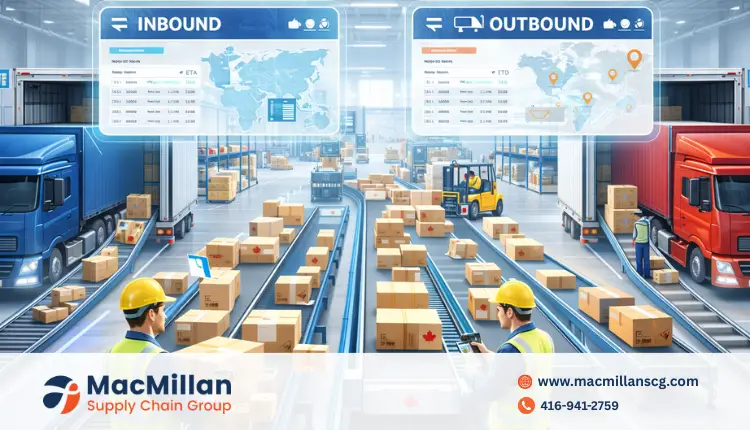
A quick summary and overview Cross-docking transforms traditional logistics by eliminating unnecessary storage and handling steps. Instead of warehousing products for extended periods, items move directly from inbound to outbound vehicles with minimal dwell time. This streamlined approach reduces costs, accelerates delivery times, and enhances supply chain efficiency. For Canadian businesses facing logistics challenges, cross-docking offers a strategic solution that improves inventory management, supports just-in-time distribution, and promotes sustainability. MacMillan Supply Chain Group provides comprehensive cross-docking services that help companies optimize their logistics operations while meeting customer demands for faster, more reliable deliveries. What Is Cross-Docking and Why Does It Matter? In today’s fast-paced business environment, efficiency isn’t just a goal—it’s a necessity. Cross-docking represents a revolutionary approach to logistics that’s changing how products move through supply chains across Canada and North America. But what exactly is it? Cross-docking is a logistics practice where products from incoming shipments are unloaded, sorted, and directly loaded onto outbound transportation with minimal or no storage time in between. Think of it as a well-choreographed dance: goods arrive at a distribution facility, move across the “dock” (hence the name), and depart to their next destination—all within hours, not days or weeks. This process eliminates traditional warehousing steps, reducing handling costs and accelerating delivery times. For businesses in Toronto, Calgary, Vancouver, or those managing cross-border shipping between Canada and the US, cross-docking offers a competitive edge in today’s speed-focused marketplace. The Mechanics of Effective Cross-Docking Cross-docking transforms logistics operations through a simple yet powerful concept: keep products moving. Unlike traditional warehousing where items might sit in storage for weeks, cross-docking facilities function as transfer points where goods typically remain for less than 24 hours. The process begins when inbound trucks arrive at designated doors of a cross-docking terminal. Workers quickly unload these shipments and sort them according to their outbound destinations. Some facilities use sophisticated conveyor systems that automatically scan and route items to the appropriate loading areas. Others rely on manual sorting with clear floor markings and staging areas. Either way, the goal remains the same—minimize handling and maximize flow. For this system to work effectively, timing is everything. Inbound and outbound schedules must be carefully synchronized. This is where warehouse management systems become essential, providing real-time visibility and coordination. These systems track every item from arrival to departure, ensuring nothing gets lost in the shuffle. Canadian distribution centers often adapt cross-docking to address unique regional challenges. For example, Toronto logistics solutions might emphasize cross-border capabilities, while Calgary cross-docking operations might focus on connecting western Canadian markets efficiently. The beauty of cross-docking lies in its flexibility—it can be customized to meet specific business needs while maintaining core efficiency principles. Key Benefits That Drive Cross-Docking Adoption Why are more Canadian businesses embracing cross-docking? The advantages extend far beyond simple cost savings. First and foremost, cross-docking dramatically reduces inventory holding costs. When products don’t sit in warehouses, you avoid expenses related to storage space, insurance, and inventory management. For businesses in expensive urban markets like Toronto or Vancouver, this space saving translates to significant financial benefits. Transportation efficiency represents another major advantage. Through freight consolidation services, cross-docking allows multiple smaller shipments to be combined into fuller truckloads. This consolidation reduces the total number of trips required, cutting fuel consumption and transportation costs by 25-30% in many cases. For companies managing cross-border shipping between Canada and the US, these savings can be substantial. Speed to market gives cross-docking users a competitive edge. In retail and e-commerce fulfillment, reducing delivery times by even a day can significantly improve customer satisfaction. Cross-docking supports just-in-time distribution models, allowing businesses to respond quickly to market demands without maintaining excessive inventory. Product quality benefits too, especially for time-sensitive goods. Fresh food, pharmaceuticals, and seasonal items spend less time in transit, reducing the risk of damage or obsolescence. This is particularly important in Canada’s varied climate zones, where temperature control during shipping presents ongoing challenges. Finally, cross-docking supports supply chain optimization by increasing visibility and control. With products spending minimal time in the system, managers can track inventory more accurately and respond faster to changing conditions. Industries That Benefit Most From Cross-Docking While cross-docking offers advantages for many businesses, certain industries see particularly impressive results. Retail stands at the forefront, with major chains using cross-docking to replenish stores quickly and efficiently. Rather than sending individual shipments from multiple suppliers to each store, retailers consolidate these deliveries at cross-docking facilities. This approach has helped Canadian retail chains reduce inventory costs by up to 15% while improving on-shelf availability. The food and grocery sector benefits enormously from cross-docking’s speed. Fresh produce, dairy, and frozen goods require rapid handling to maintain quality and shelf life. Cross-docking facilities equipped with temperature-controlled zones ensure these products move quickly from producers to grocery shelves. Montreal warehouse operations specializing in food distribution often use cross-docking to serve Quebec and eastern Canadian markets efficiently. E-commerce fulfillment in Canada has embraced cross-docking to meet rising consumer expectations for fast delivery. Online retailers use these facilities to sort incoming inventory directly into outbound customer orders, dramatically reducing processing time. This approach supports same-day or next-day delivery options that today’s online shoppers increasingly demand. Manufacturing operations benefit from cross-docking’s support of just-in-time production. Components and materials arrive precisely when needed, reducing factory storage requirements and supporting lean manufacturing principles. For companies with cross-border supply chains between Canada and the US, this coordination helps overcome potential customs delays. The automotive industry has long used cross-docking to manage complex supply chains. Parts from hundreds of suppliers converge at cross-docking facilities near assembly plants, arriving in sequence with production schedules. This precision helps manufacturers maintain efficient operations while minimizing costly production interruptions. Technology Enabling Modern Cross-Docking Today’s cross-docking success depends heavily on sophisticated technology systems that coordinate complex movements with precision. At the heart of these operations sits the warehouse management system (WMS), which orchestrates the entire process. Modern WMS platforms provide real-time inventory tracking, automatically directing where each item should go and when it should
Handling Hazards: WHMIS-Compliant Logistics for Homecare Brands
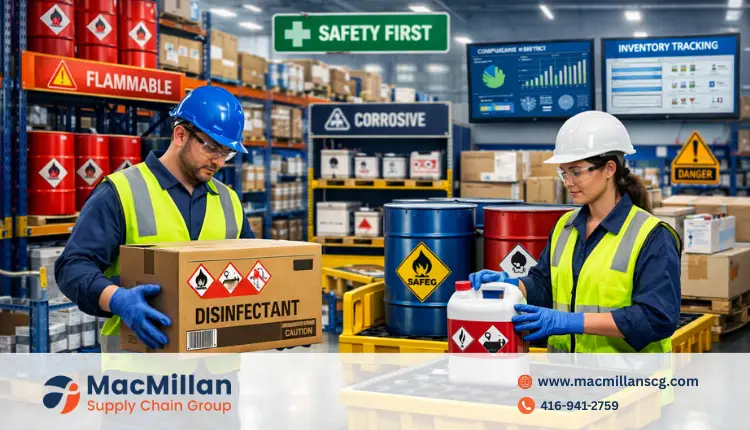
A Quick Summary and Overview Homecare brands dealing in cleaning agents, disinfectants, aerosols, and chemical-based products operate in a highly regulated environment. From storage and labeling to transportation and last-mile delivery, every step must comply with Canada’s Workplace Hazardous Materials Information System (WHMIS).Failure to meet compliance standards can result in fines, shipment delays, product recalls, or reputational damage.WHMIS-compliant logistics ensures hazardous materials are properly labeled, segregated, handled, documented, and transported according to federal and provincial regulations.At MacMillan Supply Chain Group, we design specialized 3PL solutions that protect homecare brands from compliance risks while maintaining operational efficiency and speed to market.The result? Safer operations, audit readiness, and a supply chain built for regulatory confidence. The Compliance Risks Facing Homecare Brands Homecare products often include: Disinfectants Surface cleaners Aerosols Solvents Flammable liquids Corrosive substances Without proper logistics controls, brands face: Improper labeling violations Cross-contamination risks Fire or safety hazards Transport rejections Regulatory fines Retailer non-compliance penalties Generic warehouses are not equipped to handle regulated goods safely. Hazardous product logistics requires structured SOPs, certified staff, and infrastructure designed for chemical storage. What Is WHMIS-Compliant Logistics? WHMIS-compliant logistics refers to warehousing and transportation processes aligned with Canada’s hazard communication and chemical handling regulations.This includes: Proper GHS labeling and documentation Safety Data Sheet (SDS) management Segregated storage by hazard class Controlled access storage zones Spill containment procedures Certified handling personnel Transport documentation and carrier compliance Compliance is not a single checklist—it is an integrated operational framework.At MacMillan SCG, hazardous product handling is built into our warehouse design, training programs, and transportation workflows from day one. How MacMillan SCG Protects Homecare Brands 1.Proper Labeling & Documentation Control Accurate labeling is the foundation of WHMIS compliance.MacMillan ensures: Verification of hazard symbols and classifications SDS tracking and digital record management Barcode integration tied to hazard data Real-time inventory visibility Audit-ready documentation access This reduces the risk of mislabeled shipments and retailer rejections. Result: Fewer compliance flags and smoother inspections. 2.Hazard-Based Storage Segregation Not all chemicals can be stored together. Improper storage increases safety risks and liability exposure.MacMillan’s warehouse controls include: Segregated storage zones by hazard class Flammable-rated storage areas Spill containment systems Controlled temperature environments Restricted-access handling protocols With over 250,000 sq. ft. of scalable space, brands can maintain compliance without sacrificing growth capacity. Result: Reduced cross-contamination risk and improved workplace safety. 3.Compliant Transport & Last-Mile SOPs Hazardous materials require specialized documentation and carrier coordination.MacMillan’s transportation network includes: Trained carrier partners familiar with regulated goods Verified transport documentation processes Secure palletization and load stabilization Real-time shipment tracking Reverse logistics for damaged or recalled goods For brands distributing nationally, our network supports efficient Canada-wide coverage with regulatory alignment at every stage. Result: Reduced transport delays and higher on-time delivery rates. 4.Inventory Control & Traceability In regulated environments, traceability protects your brand during audits or recalls.MacMillan leverages: Lot and batch tracking SKU-level visibility 350+ KPI monitoring metrics Near-zero shrinkage controls 99%+ inventory accuracy standards If a recall occurs, affected SKUs can be identified and isolated quickly—minimizing financial and reputational impact. Result: Faster response times and stronger risk mitigation. Why Specialized 3PL Matters for Homecare Products Homecare logistics isn’t standard pick-pack-ship. It involves: Regulatory oversight Retail compliance requirements Carrier restrictions Insurance considerations Safety audits Environmental reporting A specialized 3PL understands these nuances and builds infrastructure accordingly. At MacMillan SCG, compliance is embedded into operations—not treated as an add-on service.This ensures: Safer warehouse environments Reduced liability exposure Audit readiness Retailer trust Sustainable growth The Technology Layer Behind Compliance Regulatory control requires visibility.MacMillan integrates: Advanced WMS for hazard-tagged SKUs Real-time inventory dashboards Integrated SDS management workflows AI-supported route planning Digital proof-of-delivery tracking With transparent reporting and measurable KPIs, compliance becomes trackable—not reactive. Beyond Compliance: Protecting Brand Reputation In the homecare industry, one compliance incident can damage years of brand equity.WHMIS-compliant logistics protects more than inventory—it protects: Consumer trust Retail relationships Market access Insurance standing Long-term growth By aligning storage, fulfillment, and transportation with regulatory best practices, brands reduce operational risk while improving performance. Final Takeaway Handling hazardous homecare products demands precision, compliance, and structured execution. WHMIS-compliant logistics ensures proper labeling, storage segregation, documentation control, and safe transport—protecting your brand from costly disruptions. MacMillan Supply Chain Group delivers specialized hazardous product fulfillment solutions designed to safeguard your operations while supporting scalable growth. 📞 Ready to strengthen your compliance framework?Contact MacMillan SCG today for a customized hazardous product logistics assessment. FAQS What is WHMIS-compliant logistics? WHMIS-compliant logistics ensures hazardous products are labeled, stored, documented, and transported according to Canadian regulatory standards. Can MacMillan SCG handle flammable and chemical-based homecare products? Yes. MacMillan supports compliant storage, segregation, and transport SOPs for regulated chemical and cleaning products. Why is storage segregation important for homecare brands? Certain chemicals cannot be stored together due to safety risks. Proper segregation reduces liability and compliance violations. Does MacMillan provide traceability for regulated goods? Yes. Advanced WMS systems provide lot tracking, SKU-level visibility, and audit-ready documentation. Can MacMillan support national distribution across Canada? Yes. MacMillan’s integrated warehousing and transportation network supports compliant distribution across Canada. How quickly can I onboard hazardous product fulfillment? MacMillan offers structured onboarding with compliance review, SOP alignment, and integration testing to ensure a smooth go-live process.