
AI 3PL Operating Systems: Transforming Canadian Logistics
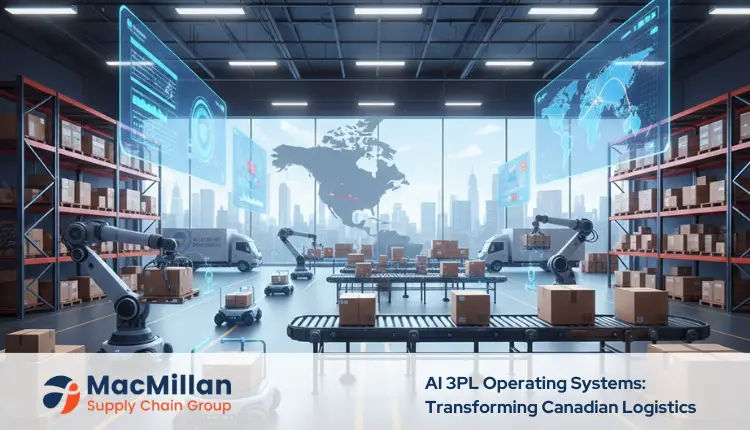
AI’s Revolutionary Potential: 3PL Operating Systems Changing the game Logistics in Canada The next era of third-party logistics (3PL) excellence is being propelled by artificial intelligence (AI), which is no longer a futuristic idea in the field of logistics. AI 3PL operating systems are providing previously unheard-of levels of efficiency. AI-powered 3PL operating systems are providing previously unheard-of levels of efficiency, visibility, and customer satisfaction for Canadian businesses, particularly those negotiating the challenges of e-commerce, omnichannel fulfillment, and last-mile delivery. We at Macmillan SCG are leading this change by using AI to transform supply chain difficulties into competitive advantages. Understanding the Impact of AI 3PL Operating Systems on 3PL Logistics The way 3PLs function is being drastically altered by AI. AI-driven systems are now able to analyze enormous volumes of data, identify patterns, and produce actionable insights more quickly and accurately than ever before by utilizing machine learning, predictive analytics, robotics, and real-time data processing. From last-mile delivery to warehouse management, this technological revolution is changing every aspect of logistics. Why AI 3PL Operating Systems Matter for 3PLs Intelligent Demand Forecasting: AI reduces stockouts and overstocking by forecasting order volumes and seasonal trends. Real-Time Visibility: Complete inventory, shipment, and delivery status tracking and monitoring. Warehouse Automation: Picking, packing, and sorting are optimized by robotics and AI-powered systems, which can reduce order fulfillment times by up to 65%. Personalized Customer Experience: AI chatbots and virtual assistants offer customized communication and real-time updates, which encourage repeat business and loyalty. Cost Reduction: Transportation and operating expenses are reduced by automated procedures and optimized routes. How Macmillan SCG Leverages AI in 3PL Operations 1. Inventory control and demand forecasting The foundation of effective logistics is precise demand forecasting. To forecast changes in demand, Macmillan SCG’s AI-driven models examine past sales, market trends, meteorological conditions, and promotional activities. This makes it possible to make more informed purchases, cut down on excess inventory, and guarantee that goods are available when and where consumers need them. AI is used by our integrated inventory management systems to: Monitor the current stock levels in every warehouse. Determine which inventory is at risk or moving slowly. Automate promotional or restocking tactics to maximize cash flow. 2. Robotics and Automation in Warehouses Advanced AI 3PL operating systems, including warehouse management systems (WMS) that manage conveyor systems, robotics, and autonomous mobile robots (AMRs) power our fulfillment centers in Canada. These technologies: Automate repetitive processes such as packing, sorting, and picking. Boost order accuracy to over 99% and minimize human error. Reduce order fulfillment times, even during periods of high demand when order volumes increase by 300–400%. Robots, scanners, and sensors all communicate with each other without interruption when all warehouse systems are integrated into the cloud. This allows them to instantly adapt to changing conditions and priorities for optimal efficiency. 3. Last-mile delivery and route optimization Real-time delivery route optimization by AI takes weather, traffic, and delivery deadlines into account. In addition to lowering transportation expenses, this raises the percentage of on-time deliveries, which is crucial for client satisfaction. Even in Canada’s most difficult regions, our committed fleet of more than 3,000 drivers, driven by AI, guarantees that deliveries are always made on time. Customers and shippers receive live tracking links with Uber-like transparency, reducing customer service inquiries by up to 70% and offering peace of mind. 4. Strengthening the Resilience of the Supply Chain The necessity of robust supply chains has been brought to light by the post-pandemic world. Macmillan SCG can do the following thanks to AI: Determine key nodes and map intricate supply chains. For proactive risk management, keep an eye on market conditions and supplier performance. In the event of disruptions such as natural disasters or geopolitical events, propose backup suppliers or plans. For our clients, this proactive approach guarantees business continuity and lessens the impact of disruptions. 5. Ethical sourcing and sustainability AI is a potent instrument for advancing sustainability as well. Our systems are able to: Reduce waste and carbon emissions by analyzing warehouse operations and routes. Monitor supplier adherence to social and environmental standards to promote ethical sourcing. Optimize resource use to support regulatory compliance and clients’ ESG objectives. The foundation of contemporary logistics is real-time visibility. In today’s supply chain, visibility is essential. The AI-powered platforms of Macmillan SCG offer real-time insights into: levels of inventory in several warehouses. order status from the time of receipt to the last delivery. Performance indicators for perishable goods and storage facilities. This transparency improves operational agility and customer trust while facilitating quicker, data-driven decisions. How AI 3PL Operating Systems Help Overcome Labor Challenges In Canadian logistics, labor shortages are a recurring problem. Macmillan SCG increases job satisfaction and lowers turnover by automating the most labor-intensive tasks, freeing up human workers to concentrate on quality control and exception handling. With operational savings, increased throughput, and lower labor costs, automation offers a substantial return on investment, with the majority of costs being recovered in 18 to 24 months. Scalability and Integration: Expanding with Your Company AI-powered 3PL operating systems are naturally scalable. The platforms from Macmillan SCG maintain consistent performance and accuracy by automatically adjusting processing capacity to handle increased volumes during peak periods. To ensure a smooth and disruption-free adoption of technology, our systems are built to integrate seamlessly with well-known e-commerce platforms like Shopify, WooCommerce, Amazon, and custom storefronts. Tailored Client Experience with AI 3PL Operating Systems Macmillan SCG can provide a better customer experience thanks to AI by: Proactive alerts and real-time order updates. AI-powered chatbots that offer individualized advice and assistance. Customization of services based on data, fostering loyalty and improving client relationships. Data Integrity and Security AI 3PL operating systems must prioritize security. Macmillan SCG uses strong security measures: warehouses with controlled access and separate storage spaces. encrypted data connections and multi-factor authentication. Blockchain technology provides tamper-proof records of all transactions and movements, particularly for sensitive or expensive goods. AI’s Return on Investment in 3PL: Real Business Gains Measurable business results are obtained when 3PL operations integrate
The Benefits of Value-Added Packaging in Your Supply Chain

A quick summary and overview Value-added packaging goes beyond basic product protection to deliver strategic advantages throughout your supply chain. By incorporating specialized services like custom labeling, kitting, assembly, and sustainable materials, businesses can significantly improve operational efficiency while reducing costs. MacMillan Supply Chain Group offers comprehensive value-added packaging solutions that help Canadian companies enhance product presentation, meet compliance requirements, and achieve sustainability goals. Our expertise spans various industries, providing tailored packaging strategies that optimize your entire supply chain process. How Value-Added Packaging Transforms Your Supply Chain In today’s competitive marketplace, packaging is no longer just about protecting products during transit. Value-added packaging has emerged as a strategic tool that can dramatically improve your supply chain efficiency while delivering significant business advantages. But what exactly is value-added packaging, and how can it benefit your operations? Value-added packaging encompasses specialized services that enhance standard packaging processes. These include custom labeling, kitting, assembly, product customization, and implementing sustainable packaging solutions. At MacMillan Supply Chain Group, we’ve seen firsthand how these services help Canadian businesses streamline operations, reduce costs, and improve customer satisfaction. Whether you’re in retail, food and beverage, pharmaceuticals, or manufacturing, the right packaging strategy can be a game-changer for your business. Let’s explore how value-added packaging solutions in Canada can transform your supply chain from a cost center into a competitive advantage. Key Components of Value-Added Packaging Services Value-added packaging extends far beyond simply placing products in boxes. It’s a comprehensive approach that can include numerous specialized services tailored to your specific needs. Understanding these components helps you identify which solutions will deliver the greatest impact for your business. Custom Labeling and Branding Custom labeling ensures your products comply with Canadian packaging regulations while enhancing brand recognition. This includes bilingual labeling (essential for the Canadian market), barcode generation, and brand-consistent design elements. Our advanced printing capabilities allow for high-quality graphics that make your products stand out on shelves. Kitting and Assembly Kitting involves grouping related items together in a single package, while assembly focuses on putting product components together before shipment. These services save time and resources by consolidating operations. For example, retail promotions often require special kitting of multiple products, which we can handle efficiently within our facilities. Product Customization We can modify standard products to meet specific customer requirements. This might include adding accessories, creating special bundles, or adjusting packaging sizes for different markets. This flexibility allows you to respond quickly to changing consumer demands without maintaining excessive inventory. Sustainable Materials Selection Our team helps you select eco-friendly materials that align with your sustainability goals while meeting product protection requirements. From biodegradable fillers to recyclable containers, we source materials that reduce environmental impact without compromising on quality or protection. This approach supports circular economy packaging principles that increasingly matter to Canadian consumers. How Value-Added Packaging Drives Supply Chain Efficiency Implementing strategic packaging solutions creates ripple effects of efficiency throughout your entire supply chain. These improvements touch everything from warehouse operations to final delivery, creating measurable benefits at each stage. Streamlined Warehouse Operations Value-added packaging services consolidate multiple steps into a single process, reducing handling time and warehouse space requirements. By integrating packaging with other logistics functions, we eliminate redundant steps and minimize the risk of errors. Our contract packaging services can be performed within our facilities, freeing up your valuable warehouse space for core operations. Optimized Transportation Properly designed packaging maximizes container and truck utilization by optimizing product dimensions and weight. This means you can fit more products in each shipment, reducing transportation costs and carbon emissions. Our packaging engineers analyze your products to design solutions that minimize dimensional weight charges while ensuring adequate protection. Reduced Handling Damage Custom-designed packaging provides superior product protection, significantly reducing damage rates during transit. This means fewer returns, less waste, and higher customer satisfaction. For fragile or high-value items, we develop specialized protective solutions using appropriate materials and designs that prevent movement and absorb shock. Improved Inventory Management Value-added packaging facilitates better inventory control through clear labeling and organized kitting. When products arrive pre-packaged and ready for sale, you can implement just-in-time inventory strategies that reduce carrying costs. Our IoT-enabled packaging solutions can also provide real-time visibility into inventory levels and product location. Cost Benefits of Strategic Packaging Solutions While some businesses view packaging as simply a necessary expense, strategic value-added packaging actually delivers significant cost savings throughout your supply chain. Understanding these financial benefits helps justify investment in improved packaging solutions. Reduced Labor Costs By consolidating packaging operations with a specialized provider like MacMillan Supply Chain Group, you can significantly reduce labor costs associated with in-house packaging. Our efficient processes, specialized equipment, and experienced staff complete packaging tasks faster and with fewer errors than most in-house operations. This allows your team to focus on core business activities that drive growth. Lower Materials Expenses Our packaging expertise helps identify opportunities to reduce material usage without compromising protection. We can implement returnable packaging systems for regular shipments between fixed locations, dramatically cutting ongoing packaging expenses. Our volume purchasing power also means we secure better pricing on packaging materials than most individual companies can achieve. Decreased Transportation Expenses Optimized packaging reduces dimensional weight charges and allows more products per shipment. For example, properly designed packaging can sometimes reduce shipping costs by 15-25% by eliminating unnecessary space and weight. Our packaging engineers analyze your current solutions and recommend improvements that maximize transportation efficiency. Minimized Product Damage Well-designed packaging significantly reduces product damage during transit, cutting replacement costs and eliminating the administrative burden of processing returns. For products with high damage rates, the savings from improved packaging can be substantial – often paying for the packaging upgrade many times over. Sustainability Advantages of Modern Packaging Approaches Today’s consumers and businesses increasingly prioritize sustainability, making eco-friendly packaging solutions not just environmentally responsible but commercially advantageous. MacMillan Supply Chain Group helps you navigate the complex world of sustainable packaging to find solutions that work for your products, your customers, and the planet. Eco-Friendly Materials Selection We help
How Specialized 3PL Solutions Are Redefining Logistics | MacMillan SCG
A Quick Summary and Overview The era of “one-size-fits-all” 3PL providers is over. As brands scale across food, wellness, pet care, CPG, and retail sectors, logistics complexity increases and generic fulfillment models simply can’t keep up. Category-tailored fulfillment is redefining the 3PL industry by aligning warehousing, compliance, inventory management, packaging, and last-mile delivery with the specific demands of each product category. MacMillan Supply Chain Group (SCG) leads this shift in Canada by delivering specialized 3PL solutions designed around industry requirements not retrofitted after the fact. The result? Higher accuracy, stronger compliance, faster sell-through, and a more resilient supply chain. The Problem with One-Size-Fits-All 3PL Models Many third-party logistics providers promote flexibility but operate on standardized workflows designed to serve the “average” product.Here’s where that approach breaks down: Food requires expiry management and FEFO rotation Nutraceuticals demand GMP-compliant environments Pet care products often need mixed-SKU kitting and retail display builds High-value electronics require strict lot traceability and shrink control Retail CPG brands must meet retailer-specific compliance standards When categories are treated the same, brands face: Chargebacks and compliance penalties Inventory inaccuracies Damaged goods or improper storage Missed retail windows Increased operational costs The reality is simple: logistics should adapt to the product—not the other way around. What Is Category-Tailored Fulfillment? Category-tailored fulfillment is a logistics strategy where warehouse design, SOPs, compliance frameworks, KPIs, and technology workflows are built around the specific needs of a product category. At MacMillan SCG, this means: GMP-certified warehousing for regulated goods Temperature-controlled storage for sensitive SKUs Lot tracking and expiry management for food & wellness Retail-ready pallet builds for national chains High-accuracy pick-and-pack systems for e-commerce brands AI-powered route optimization for last-mile delivery It’s not customization as an afterthought it’s operational design from day one. How MacMillan SCG Specializes by Category 1. Food & Beverage Fulfillment Food logistics requires precision, speed, and compliance.MacMillan’s approach includes: FEFO (First Expiry, First Out) inventory rotation Expiry date validation Temperature-controlled and ambient storage Fast dock-to-stock timelines (as low as 8 hours) CFIA-aligned processes Rapid container destuffing (under 4 hours) With 99%+ inventory accuracy and strict quality control, food brands gain both compliance and shelf confidence. Result: Reduced spoilage, faster retail replenishment, and fewer chargebacks. 2. Nutraceutical & Wellness Logistics The wellness industry demands traceability, hygiene standards, and regulatory alignment.MacMillan provides: GMP-certified warehouse space Lot and batch tracking Secure storage with shrink control Clean handling procedures Integrated reporting for compliance audits For supplement brands and wellness companies scaling in Canada, this level of precision protects brand reputation and regulatory standing. Result: Audit-ready operations with scalable fulfillment capacity. 3.Pet Care & Consumer Packaged Goods (CPG) Pet care brands and CPG companies often operate in high-velocity environments with both retail and DTC channels.MacMillan supports this with: Mixed-SKU case configurations Promotion-ready kitting Retail display builds Omnichannel fulfillment (B2B + DTC from same inventory) Real-time WMS integration via Mantis-powered systems With over 250,000 sq. ft. of racked and bulk storage and scalable shared or dedicated space options, brands can grow without operational friction. Result: Seamless retail compliance + high-speed e-commerce fulfillment. 4. Big & Bulky, Retail & Last-Mile Solutions Large-format products require specialized transportation and delivery execution.MacMillan’s last-mile network includes: 45 cross-dock locations nationally 3000+ dedicated drivers 90% of FSAs serviced next day Real-time, Uber-like tracking White glove delivery options Reverse logistics integration For categories where the delivery experience defines the brand, tailored last-mile strategy is non-negotiable. Result: Higher first-attempt success rates and improved customer satisfaction. The Technology Layer That Makes It Work Category specialization requires visibility.MacMillan leverages: Mantis-powered WMS for full SKU-level transparency 350+ KPI tracking metrics AI-driven route optimization Real-time TMS tracking Integrated eCommerce platform connectivity With 99.5%+ perfect order rates and near-zero shrinkage, technology transforms operational promises into measurable performance. Why Category-Tailored 3PL Is the Future of Logistics Consumer expectations are rising. Retailers are stricter. Regulations are tighter. Margins are thinner. Brands can no longer afford generic fulfillment.The future of 3PL includes: Industry-specific SOPs Regulatory-aligned warehousing Real-time data visibility Faster onboarding Sustainable, net-zero aligned operations MacMillan’s rapid onboarding process, predictable pricing models, and scalable infrastructure make transition seamless even for brands switching from another provider. Beyond Fulfillment: A True Supply Chain Partner MacMillan SCG goes beyond pick-pack-ship.Specialized services include: Supply chain network design Workflow optimization Product lifecycle management ESG and carbon reporting Promotional print & packaging Crisis planning & contingency logistics Instead of juggling multiple vendors, brands work with one integrated 3PL partner under one roof. That’s the difference between outsourcing logistics and transforming it. Final Takeaway Category-tailored fulfillment isn’t a trend. It’s a competitive necessity. Brands in food, wellness, pet care, retail, and CPG require logistics partners who understand their industry’s compliance standards, operational rhythms, and growth pressures. MacMillan Supply Chain Group delivers specialized 3PL solutions designed around your category—ensuring efficiency, reliability, and trust at every stage. 📞 Ready to align your fulfillment strategy with your product category? Contact MacMillan SCG today for a customized supply chain assessment and discover how specialized 3PL can drive measurable growth. FAQs What is category-tailored fulfillment? Category-tailored fulfillment is a logistics strategy where warehousing, compliance, inventory control, and transportation processes are customized to meet the unique requirements of a specific product category. Why is one-size-fits-all 3PL outdated? Different industries have distinct compliance, storage, and handling needs. Generic 3PL models often create inefficiencies, compliance risks, and operational bottlenecks. Does MacMillan SCG offer GMP-certified warehousing? Yes. MacMillan provides GMP-certified spaces suitable for nutraceutical, wellness, and regulated product categories. Can MacMillan handle both retail and DTC fulfillment? Absolutely. MacMillan supports omnichannel fulfillment, allowing brands to manage retail, e-commerce, and last-mile delivery from the same inventory pool. What industries does MacMillan specialize in? MacMillan supports food & beverage, nutraceuticals, pet care, consumer packaged goods, retail, electronics, fashion, and more. How quickly can I onboard with MacMillan? MacMillan offers a rapid onboarding process with integration testing and go-live support, ensuring minimal disruption to your operations.
Optimizing E-commerce Warehouse Costs to Boost Your Profit Margins

A Quick Summary and Overview E-commerce warehouse operations typically consume 50-55% of total operating costs, making optimization crucial for profitability. By implementing strategic improvements in layout, technology, inventory management, and labor allocation, businesses can reduce costs by up to 75% per order while improving accuracy from 85% to 99.8%. This article explores practical strategies for optimizing warehouse costs, from layout redesign to automation, and explains how partnering with MacMillan Supply Chain Group can transform your e-commerce operations and boost profit margins. Introduction Is your e-commerce business struggling with rising warehouse costs eating into your profit margins? You’re not alone. In today’s competitive online retail landscape, the efficiency of your fulfillment operations can make or break your business success. Warehouse operations typically consume more than half of an e-commerce company’s operating budget, presenting both a challenge and an opportunity. The good news? Even modest improvements in warehouse efficiency can dramatically impact your bottom line. From smarter layouts to cutting-edge automation, from inventory optimization to strategic 3PL partnerships, there are multiple paths to reducing costs while improving service levels. In this comprehensive guide, we’ll explore proven strategies for optimizing e-commerce warehouse costs and transforming your fulfillment operations. Whether you’re running a small Canadian online store or managing a large cross-border e-commerce operation, these insights will help you identify opportunities to boost your profit margins while delivering exceptional customer experiences. Understanding Warehouse Cost Structures Before diving into optimization strategies, it’s essential to understand where your warehouse dollars are going. For most e-commerce operations, costs break down into several key categories that offer different optimization opportunities. Labor typically represents the largest expense, accounting for 50-70% of warehouse operating costs. This includes not just wages but also training, benefits, overtime, and management overhead. As warehouse wages continue rising (nearly four times the national average in recent years), labor optimization becomes increasingly critical. Space utilization presents another significant cost factor. Whether you’re leasing or owning your facility, every square foot carries a price tag. Many warehouses operate at just 60-70% space efficiency, leaving substantial room for improvement through better layout planning and storage solutions. Inventory carrying costs silently drain profits, consuming 15-27% of inventory value annually through warehouse fees, insurance, depreciation, and spoilage. These costs multiply for businesses operating multiple locations without unified inventory management systems, as each facility maintains excess safety stock. Technology infrastructure represents both a cost and an investment. While implementing advanced warehouse management systems requires upfront investment, the ROI typically materializes quickly through improved accuracy, efficiency, and reduced labor requirements. Equipment maintenance, utilities, packaging materials, and shipping costs round out the expense picture. By analyzing your specific cost breakdown, you can prioritize optimization efforts where they’ll deliver the greatest impact on your profit margins. Strategic Warehouse Layout Planning Your warehouse layout fundamentally determines operational efficiency and cost structure. Even without significant technology investments, thoughtful layout redesign can deliver substantial savings and productivity improvements. The most effective layouts follow U-shaped or straight-through flow patterns that minimize cross-traffic and eliminate bottlenecks in high-volume processing areas. This simple principle can reduce picker travel time by 20-30%, directly impacting labor costs and order fulfillment speed. Vertical space utilization offers another high-impact opportunity. Many warehouses fail to maximize their cubic footage, focusing only on floor space. Advanced storage systems can quadruple capacity within the same footprint through taller, denser shelving configurations and mezzanine installations. Modern automated storage and retrieval systems achieve up to 80% floor space savings while improving picking accuracy and speed. Dynamic slotting strategies represent sophisticated inventory positioning that adapts to changing demand patterns. Fast-moving SKUs positioned closer to packing stations reduce picker travel time, while seasonal demand patterns trigger automatic inventory repositioning. This approach ensures your most popular items are always in the most accessible locations. Zone-based picking systems divide warehouse space into specialized areas with dedicated staff, reducing congestion and improving workflow efficiency. Each zone operates semi-independently, allowing parallel processing of multiple orders while maintaining quality control through specialized expertise. Cross-docking integration creates additional space optimization opportunities by eliminating storage time for fast-moving items that transfer directly from inbound to outbound vehicles. This strategy particularly benefits businesses with predictable demand patterns and reliable supplier relationships. By implementing these layout optimization principles, you can achieve significant cost savings without major capital investments, creating a solid foundation for more advanced optimization initiatives. Technology Integration and Automation Technology has transformed warehouse operations, offering powerful tools for cost reduction and efficiency improvement. From basic inventory management software to advanced robotics, technology investments typically deliver compelling ROI for e-commerce operations. Warehouse Management Systems (WMS) serve as the central nervous system for optimized fulfillment operations. The transformation from manual tracking to comprehensive WMS platforms typically delivers order accuracy improvements from 85% to 99.8% while reducing labor costs through intelligent task assignment and route optimization. Modern systems process real-time data from multiple sources to orchestrate complex fulfillment operations with precision exceeding human capabilities. Automation solutions range from simple conveyor systems to sophisticated robotics. Autonomous mobile robots (AMRs) now handle everything from picking to packing, reducing labor requirements while improving accuracy and throughput. The warehouse robotics market reached $6.1 billion in 2023 and is projected to hit $10.5 billion by 2028, reflecting widespread adoption of these productivity-enhancing technologies. Barcode and RFID systems eliminate manual data entry and tracking errors, providing real-time visibility into inventory movements. These technologies reduce labor costs while dramatically improving inventory accuracy, reducing costly stockouts and overstock situations. Voice-directed picking systems free workers’ hands and eyes, improving both speed and accuracy. These systems typically boost productivity by 15-25% while reducing training time for new employees, addressing both cost and labor availability challenges. Artificial intelligence and machine learning capabilities provide predictive analytics that anticipate operational challenges before they impact performance. AI-driven demand forecasting analyzes historical data, seasonal patterns, and external factors to optimize inventory positioning and reduce carrying costs. The software-driven segment of the AI warehouse market expands at a 27% annual rate and is projected to reach $31.5 billion by 2032. When implementing technology solutions, focus on
Buffer Inventory in 3PL: Boost Efficiency & Optimize Supply Chain
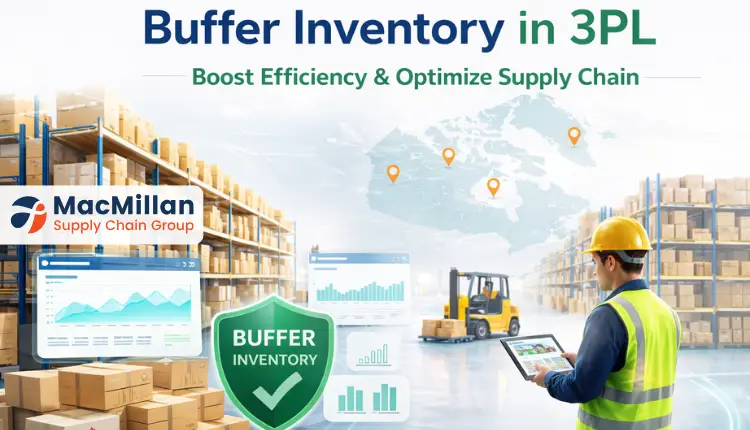
A quick summary and overview Buffer inventory, also known as safety stock, serves as a strategic cushion in third-party logistics operations. It protects businesses against supply chain uncertainties while ensuring consistent customer service. For Canadian businesses partnering with 3PL providers like MacMillan Supply Chain Group, properly managed buffer inventory can dramatically improve fulfillment speed, reduce stockouts, and create supply chain resilience. This comprehensive guide explores how buffer inventory works within 3PL operations, its key benefits, implementation strategies, and how it can transform your logistics operations across Canada and beyond. What Is Buffer Inventory and Why Does It Matter in 3PL? In today’s fast-paced business environment, meeting customer expectations isn’t just important—it’s essential for survival. When you partner with a third-party logistics (3PL) provider like MacMillan Supply Chain Group, one of the most powerful tools at your disposal is buffer inventory. But what exactly is buffer inventory? Simply put, it’s additional stock kept on hand beyond what’s needed for immediate demand. Think of it as your safety net—ready to deploy when unexpected situations arise. In 3PL operations, this extra inventory helps maintain service levels despite supply chain disruptions, demand spikes, or delivery delays. For Canadian businesses navigating complex supply chains, buffer inventory isn’t just a nice-to-have—it’s a strategic necessity. Whether you’re shipping across the Greater Toronto Area or managing cross-border fulfillment between Canada and the US, proper safety stock management ensures your customers get what they need, when they need it. Let’s explore how this works and why it matters to your business. The Strategic Role of Buffer Inventory in 3PL Operations Buffer inventory plays a crucial role in modern third-party logistics, transforming how businesses approach fulfillment and customer satisfaction. But how exactly does it work within a 3PL environment? In traditional inventory management, companies often struggle with the balance between having too much stock (increasing carrying costs) and too little (risking stockouts). This is where 3PL providers like MacMillan Supply Chain Group add tremendous value. We maintain strategically positioned buffer inventory across our fulfillment network, creating multiple benefits: Protection Against Supply Chain Disruptions Supply chains face constant challenges—from weather events affecting transportation to supplier delays or global disruptions. Buffer inventory provides a cushion against these uncertainties. When a shipment from your manufacturer is delayed, your safety stock ensures orders still go out on time. Enhanced Customer Satisfaction Today’s consumers expect fast, reliable delivery. With buffer inventory strategically positioned in our Canadian fulfillment centers, we can offer same-day or next-day shipping to major markets. This speed creates competitive advantage and builds customer loyalty. Seasonal Demand Management Most businesses experience fluctuating demand throughout the year. During peak seasons like holidays or promotional periods, buffer inventory prevents stockouts when orders surge. Our warehouse management system (WMS) tracks these patterns and adjusts safety stock levels accordingly. By integrating buffer inventory into your 3PL strategy, you’re not just storing extra products—you’re creating a responsive supply chain that can adapt to changing market conditions while maintaining consistent service levels. Calculating Optimal Buffer Levels: The Science Behind Safety Stock Determining the right amount of buffer inventory isn’t guesswork—it’s a science that combines data analysis with strategic planning. At MacMillan Supply Chain Group, we use sophisticated approaches to calculate optimal safety stock levels for each product in your inventory. Key Factors in Buffer Inventory Calculations Several variables influence how much buffer stock you should maintain: Demand variability: How much does demand fluctuate from week to week or month to month? Lead time: How long does it take to receive new inventory from suppliers? Service level targets: What percentage of orders must be fulfilled immediately? Seasonality: Do you experience predictable demand spikes during certain periods? Product value: Higher-value items may require different buffer strategies than lower-value ones Our inventory optimization experts use these factors in mathematical formulas to determine precise safety stock requirements. For example, a basic calculation might look like: Safety Stock = Z-score × Standard Deviation of Demand × √Lead Time Where the Z-score represents your desired service level (higher Z-scores provide greater protection against stockouts). ABC Analysis for Smarter Buffer Management Not all products deserve the same buffer strategy. We implement ABC analysis in inventory management to categorize your products: A items: High-value, high-volume products that require precise buffer management B items: Moderate-value products with steady demand C items: Lower-value items that might need proportionally higher buffers due to irregular demand This segmentation ensures you’re investing in buffer inventory where it matters most, optimizing both service levels and carrying costs across your product range. Technology-Driven Buffer Management in Modern 3PL The effectiveness of buffer inventory depends heavily on the technology systems supporting it. Modern 3PL providers like MacMillan Supply Chain Group leverage advanced warehouse management systems (WMS) and integrated technologies to optimize safety stock management. Real-Time Inventory Visibility Our WMS provides complete visibility into your inventory levels across all locations. This transparency allows for: Instant access to current stock levels, including buffer inventory Automated alerts when safety stock falls below predetermined thresholds Historical data analysis to refine buffer calculations over time Integration with your own systems for seamless information flow With real-time visibility, both our team and yours can make informed decisions about inventory positioning and replenishment. Predictive Analytics and Demand Forecasting Beyond tracking current inventory, our systems use predictive analytics to anticipate future needs. By analyzing historical sales data, seasonal patterns, and market trends, we can forecast demand with remarkable accuracy. This demand forecasting capability allows us to: Adjust buffer levels before demand spikes occur Reduce safety stock during predictable slow periods Identify emerging trends that might affect inventory requirements Recommend proactive inventory positioning strategies The combination of real-time visibility and predictive analytics creates a dynamic buffer inventory system that continuously adapts to changing conditions. Rather than static safety stock levels that might be reviewed quarterly, our technology enables weekly or even daily adjustments to optimize your inventory investment while maintaining service levels. Geographic Buffer Strategies: Positioning Inventory for Speed Where you position your buffer inventory is just as important as how much you maintain. MacMillan Supply Chain Group’s extensive fulfillment
Is On-Demand 3PL Warehousing Right for Your Business?

A Quick Summary and Overview On-demand 3PL warehousing offers businesses a flexible way to handle storage, fulfillment, and shipping without the overhead of managing their own facilities. This model lets companies pay only for the space and services they use, making it ideal for seasonal businesses or those experiencing growth. With benefits like reduced capital investment, professional logistics expertise, and scalable operations, on-demand warehousing has become a game-changer for many Canadian businesses looking to optimize their supply chain while focusing on core operations. Introduction Running a growing business comes with plenty of challenges, but managing warehouse space shouldn’t be one of them. As e-commerce continues to boom across Canada and customer expectations for fast delivery rise, many businesses find themselves at a crossroads: invest in their own warehouse infrastructure or partner with a third-party logistics (3PL) provider. On-demand 3PL warehousing represents a modern approach to this age-old problem. Rather than committing to long-term leases or building your own facilities, you can access professional warehousing services when and where you need them. What Is On-Demand 3PL Warehousing? On-demand 3PL warehousing is a flexible logistics solution where businesses can access warehouse space, fulfillment services, and distribution networks without long-term commitments. You only pay for the space and services you actually use. Core components include: Flexible warehouse space based on inventory needs Professional picking, packing, and shipping services Real-time inventory management systems Scalable resources during peak seasons Integration with e-commerce platforms Key Benefits of On-Demand 3PL Warehousing Partnering with a Canadian 3PL service provider offers more than outsourced storage. It provides financial flexibility, improved geographic reach, and operational efficiency. Reduced capital investment and improved cash flow Faster shipping with fulfillment centers across Canada Higher order accuracy through automation Access to discounted shipping rates Expertise in cross-border shipping (CA-US) When Is On-Demand 3PL Warehousing the Right Choice? This solution works best for businesses experiencing rapid growth, seasonal demand fluctuations, geographic expansion, or increasing fulfillment complexity. 200–500+ orders per month Seasonal or promotional sales spikes Expansion across Canada or into the US Limited internal warehouse capacity Common Problems with Traditional Warehousing High upfront investment and long-term leases Overstaffing or understaffing issues Slow fulfillment during peak seasons Limited geographic shipping reach Lack of logistics expertise How MacMillan Supply Chain Solves These Challenges MacMillan Supply Chain Group offers scalable, technology-driven on-demand 3PL warehousing solutions across Canada. Our services transform logistics from a constraint into a competitive advantage. Toronto & Vancouver fulfillment centers Advanced WMS with real-time inventory visibility 99.9% picking accuracy using barcode systems Cross-border CA-US shipping expertise Flexible pricing that scales with usage How to Implement On-Demand 3PL Warehousing Assess your current fulfillment operations Define clear business and logistics goals Select a scalable and experienced 3PL partner Integrate systems and transfer inventory Launch with performance monitoring Ready to scale your business? Contact MacMillan Supply Chain Group today for a customized on-demand warehousing solution tailored to your growth goals. FAQs About On-Demand 3PL Warehousing What exactly does a 3PL provider do? A third-party logistics (3PL) provider handles various aspects of your supply chain operations, including warehousing, inventory management, order fulfillment, and shipping. With on-demand 3PL warehousing, these services are provided on a flexible basis, allowing you to scale up or down based on your current needs. Rather than managing these operations in-house, you outsource them to specialists who have the expertise, technology, and infrastructure to perform these functions more efficiently. How much does on-demand 3PL warehousing typically cost? Pricing for on-demand 3PL warehousing varies based on several factors, including your inventory volume, order quantity, product characteristics, and service requirements. Most providers charge a combination of: Storage fees (typically per pallet or cubic foot per month) Pick and pack fees (per order or per item) Receiving fees (per shipment or per hour) Special service fees for custom requirements Many businesses find that total outsourced warehousing costs range from 5-15% of their product revenue. While this might seem significant, it often represents a cost savings when compared to operating your own warehouse when all expenses are considered. How quickly can I implement on-demand warehousing for my business? Implementation timelines vary based on complexity, but most businesses can transition to on-demand 3PL warehousing within 4-8 weeks. Simple operations with standard integrations might be implemented in as little as 2-3 weeks, while complex operations requiring custom integrations or special handling procedures may take longer. Working with an experienced provider like MacMillan Supply Chain Group can help streamline this process through proven onboarding methodologies. Will my customers notice a difference when I switch to 3PL fulfillment? When implemented properly, customers should notice only positive changes – typically faster shipping, more accurate orders, and potentially more delivery options. Professional 3PL providers maintain or improve upon your existing packaging standards and can even enhance the unboxing experience with custom packaging solutions. The best providers become a seamless extension of your brand, ensuring consistent quality and service levels that reflect your company’s values. How does on-demand warehousing handle seasonal fluctuations? Managing seasonal fluctuations is one of the primary advantages of on-demand 3PL warehousing. During peak season fulfillment periods, your 3PL partner can allocate additional space, staff, and resources to handle increased volume without long-term commitments. When volume decreases, your costs adjust accordingly. This flexibility eliminates the need to maintain year-round capacity for your busiest season, resulting in significant cost savings compared to traditional warehousing models. Can 3PL warehousing integrate with my existing e-commerce platform? Yes, modern 3PL providers offer integration with all major e-commerce platforms including Shopify, WooCommerce, Magento, Amazon, and others. These integrations allow for automated order flow, real-time inventory updates, and synchronized tracking information. When evaluating potential partners, verify they have experience with your specific platforms and can provide references from similar implementations to ensure smooth integration. How does cross-border shipping work with Canadian 3PL services? Experienced Canadian 3PL providers simplify cross-border shipping (CA-US) through established processes and relationships with customs brokers and international carriers. They handle documentation requirements, duty calculations, and compliance with regulations for both countries. Some providers maintain facilities
How Buffer Inventory Helps in Third-Party Logistics: Maximizing Efficiency in Your Supply Chain

A quick summary and overview Buffer inventory, also known as safety stock, serves as a strategic cushion in third-party logistics operations. It protects businesses against supply chain uncertainties while ensuring consistent customer service. For Canadian businesses partnering with 3PL providers like MacMillan Supply Chain Group, properly managed buffer inventory can dramatically improve fulfillment speed, reduce stockouts, and create supply chain resilience. This comprehensive guide explores how buffer inventory works within 3PL operations, its key benefits, implementation strategies, and how it can transform your logistics operations across Canada and beyond. What Is Buffer Inventory and Why Does It Matter in 3PL? In today’s fast-paced business environment, meeting customer expectations isn’t just important—it’s essential for survival. When you partner with a third-party logistics (3PL) provider like MacMillan Supply Chain Group, one of the most powerful tools at your disposal is buffer inventory. But what exactly is buffer inventory? Simply put, it’s additional stock kept on hand beyond what’s needed for immediate demand. Think of it as your safety net—ready to deploy when unexpected situations arise. In 3PL operations, this extra inventory helps maintain service levels despite supply chain disruptions, demand spikes, or delivery delays. For Canadian businesses navigating complex supply chains, buffer inventory isn’t just a nice-to-have—it’s a strategic necessity. Whether you’re shipping across the Greater Toronto Area or managing cross-border fulfillment between Canada and the US, proper safety stock management ensures your customers get what they need, when they need it. Let’s explore how this works and why it matters to your business. The Strategic Role of Buffer Inventory in 3PL Operations Buffer inventory plays a crucial role in modern third-party logistics, transforming how businesses approach fulfillment and customer satisfaction. But how exactly does it work within a 3PL environment? In traditional inventory management, companies often struggle with the balance between having too much stock (increasing carrying costs) and too little (risking stockouts). This is where 3PL providers like MacMillan Supply Chain Group add tremendous value. We maintain strategically positioned buffer inventory across our fulfillment network, creating multiple benefits: Protection Against Supply Chain Disruptions Supply chains face constant challenges—from weather events affecting transportation to supplier delays or global disruptions. Buffer inventory provides a cushion against these uncertainties. When a shipment from your manufacturer is delayed, your safety stock ensures orders still go out on time. Enhanced Customer Satisfaction Today’s consumers expect fast, reliable delivery. With buffer inventory strategically positioned in our Canadian fulfillment centers, we can offer same-day or next-day shipping to major markets. This speed creates competitive advantage and builds customer loyalty. Seasonal Demand Management Most businesses experience fluctuating demand throughout the year. During peak seasons like holidays or promotional periods, buffer inventory prevents stockouts when orders surge. Our warehouse management system (WMS) tracks these patterns and adjusts safety stock levels accordingly. By integrating buffer inventory into your 3PL strategy, you’re not just storing extra products—you’re creating a responsive supply chain that can adapt to changing market conditions while maintaining consistent service levels. Calculating Optimal Buffer Levels: The Science Behind Safety Stock Determining the right amount of buffer inventory isn’t guesswork—it’s a science that combines data analysis with strategic planning. At MacMillan Supply Chain Group, we use sophisticated approaches to calculate optimal safety stock levels for each product in your inventory. Key Factors in Buffer Inventory Calculations Several variables influence how much buffer stock you should maintain: Demand variability: How much does demand fluctuate from week to week or month to month? Lead time: How long does it take to receive new inventory from suppliers? Service level targets: What percentage of orders must be fulfilled immediately? Seasonality: Do you experience predictable demand spikes during certain periods? Product value: Higher-value items may require different buffer strategies than lower-value ones Our inventory optimization experts use these factors in mathematical formulas to determine precise safety stock requirements. For example, a basic calculation might look like: Safety Stock = Z-score × Standard Deviation of Demand × √Lead Time Where the Z-score represents your desired service level (higher Z-scores provide greater protection against stockouts). ABC Analysis for Smarter Buffer Management Not all products deserve the same buffer strategy. We implement ABC analysis in inventory management to categorize your products: A items: High-value, high-volume products that require precise buffer management B items: Moderate-value products with steady demand C items: Lower-value items that might need proportionally higher buffers due to irregular demand This segmentation ensures you’re investing in buffer inventory where it matters most, optimizing both service levels and carrying costs across your product range. Technology-Driven Buffer Management in Modern 3PL The effectiveness of buffer inventory depends heavily on the technology systems supporting it. Modern 3PL providers like MacMillan Supply Chain Group leverage advanced warehouse management systems (WMS) and integrated technologies to optimize safety stock management. Real-Time Inventory Visibility Our WMS provides complete visibility into your inventory levels across all locations. This transparency allows for: Instant access to current stock levels, including buffer inventory Automated alerts when safety stock falls below predetermined thresholds Historical data analysis to refine buffer calculations over time Integration with your own systems for seamless information flow With real-time visibility, both our team and yours can make informed decisions about inventory positioning and replenishment. Predictive Analytics and Demand Forecasting Beyond tracking current inventory, our systems use predictive analytics to anticipate future needs. By analyzing historical sales data, seasonal patterns, and market trends, we can forecast demand with remarkable accuracy. This demand forecasting capability allows us to: Adjust buffer levels before demand spikes occur Reduce safety stock during predictable slow periods Identify emerging trends that might affect inventory requirements Recommend proactive inventory positioning strategies The combination of real-time visibility and predictive analytics creates a dynamic buffer inventory system that continuously adapts to changing conditions. Rather than static safety stock levels that might be reviewed quarterly, our technology enables weekly or even daily adjustments to optimize your inventory investment while maintaining service levels. Geographic Buffer Strategies: Positioning Inventory for Speed Where you position your buffer inventory is just as important as how much you