Is Your Fulfillment Ready for AI Shopping in Canada?
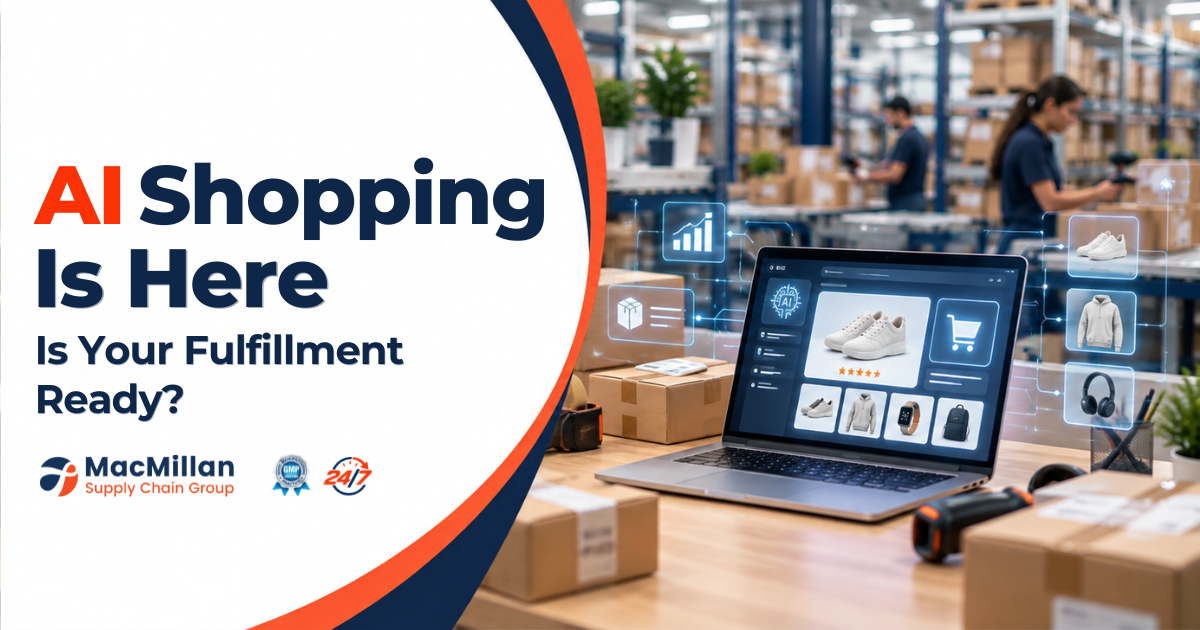
A shopper asks an AI assistant to find a fragrance-free…
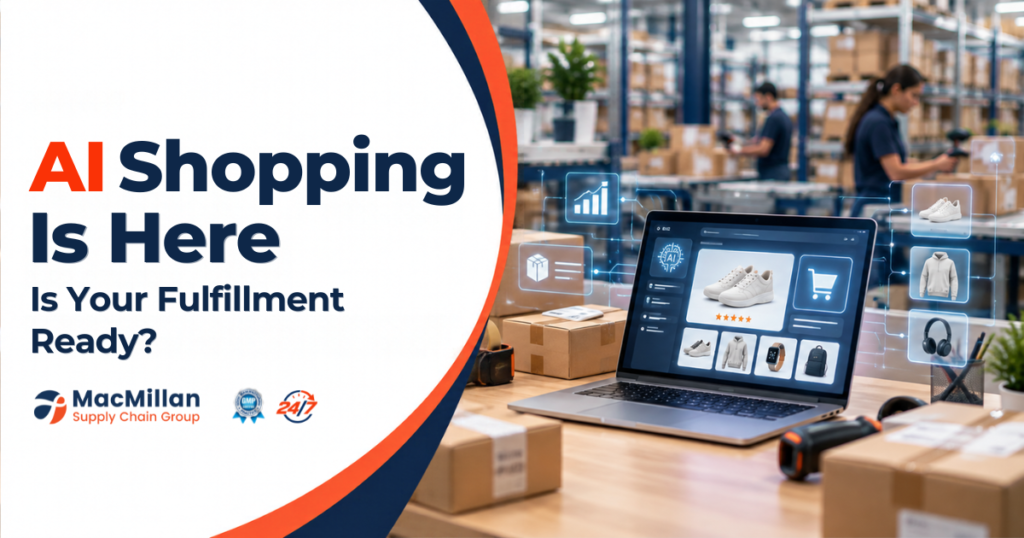
A shopper asks an AI assistant to find a fragrance-free…
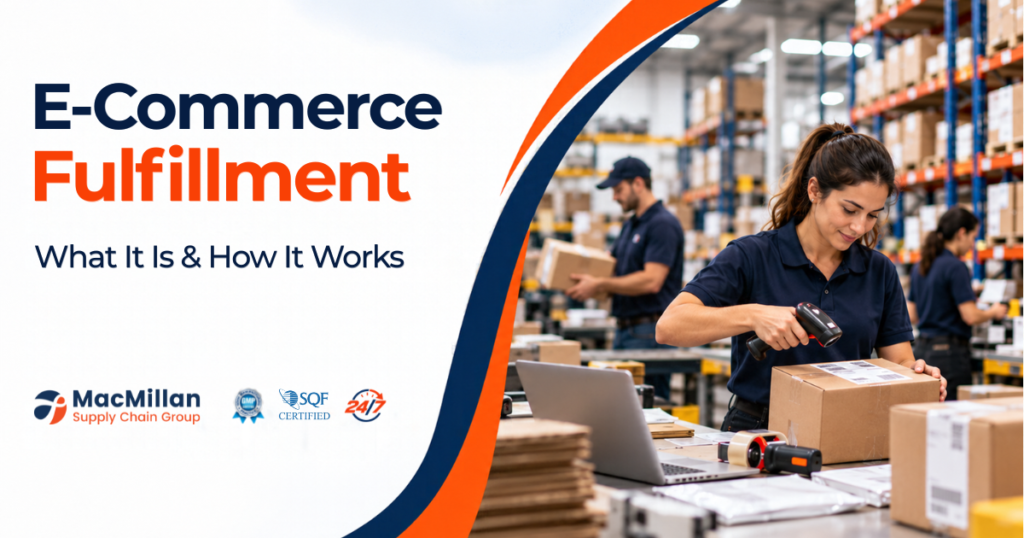
As an online store business owner, offering the best customer…
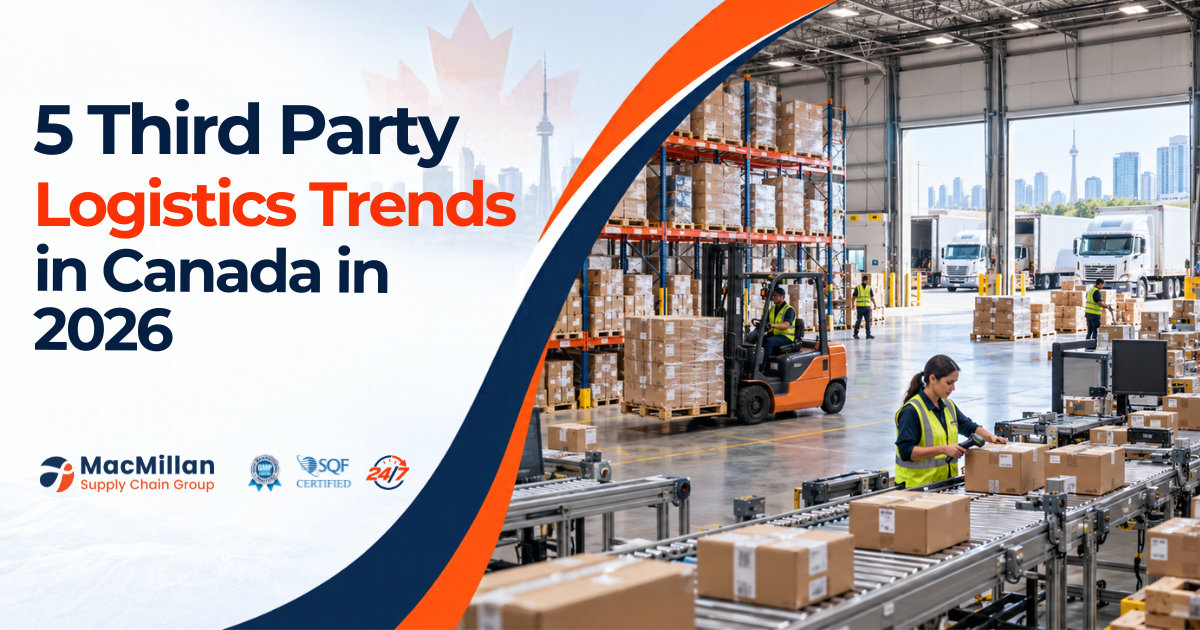
The logistics industry in Canada is growing at an impressive…
In today’s competitive business landscape, staying ahead of the curve…
Cross-docking is a revolutionary logistics strategy that bypasses traditional warehousing by transferring goods directly from inbound to outbound transport with minimal storage. This technique optimizes supply chain efficiency, reduces costs, and accelerates delivery. Beneficial for industries like retail, manufacturing, and eCommerce, cross-docking meets the growing demand for quicker, seamless fulfillment processes. With MacMillan Supply Chain, businesses can leverage expert solutions to enhance logistics operations—ushering a new era of streamlined supply chain management.
In a fast-paced market where timely delivery is paramount, cross-docking emerges as a pivotal logistics strategy. This innovative approach transcends conventional warehousing methods by expediting the movement of goods from receiving to shipping with negligible storage time. Not only does this technique significantly reduce storage costs and handling time, but it also caters to the escalating need for enhanced customer satisfaction through quick and efficient delivery. At MacMillan Supply Chain, we understand the intricacies and potential of cross-docking to transform your logistics operations, helping you stay ahead in a highly competitive industry. Explore the types, processes, and benefits of cross-docking and see how optimizing these can support your operational goals and foster sustained business growth.
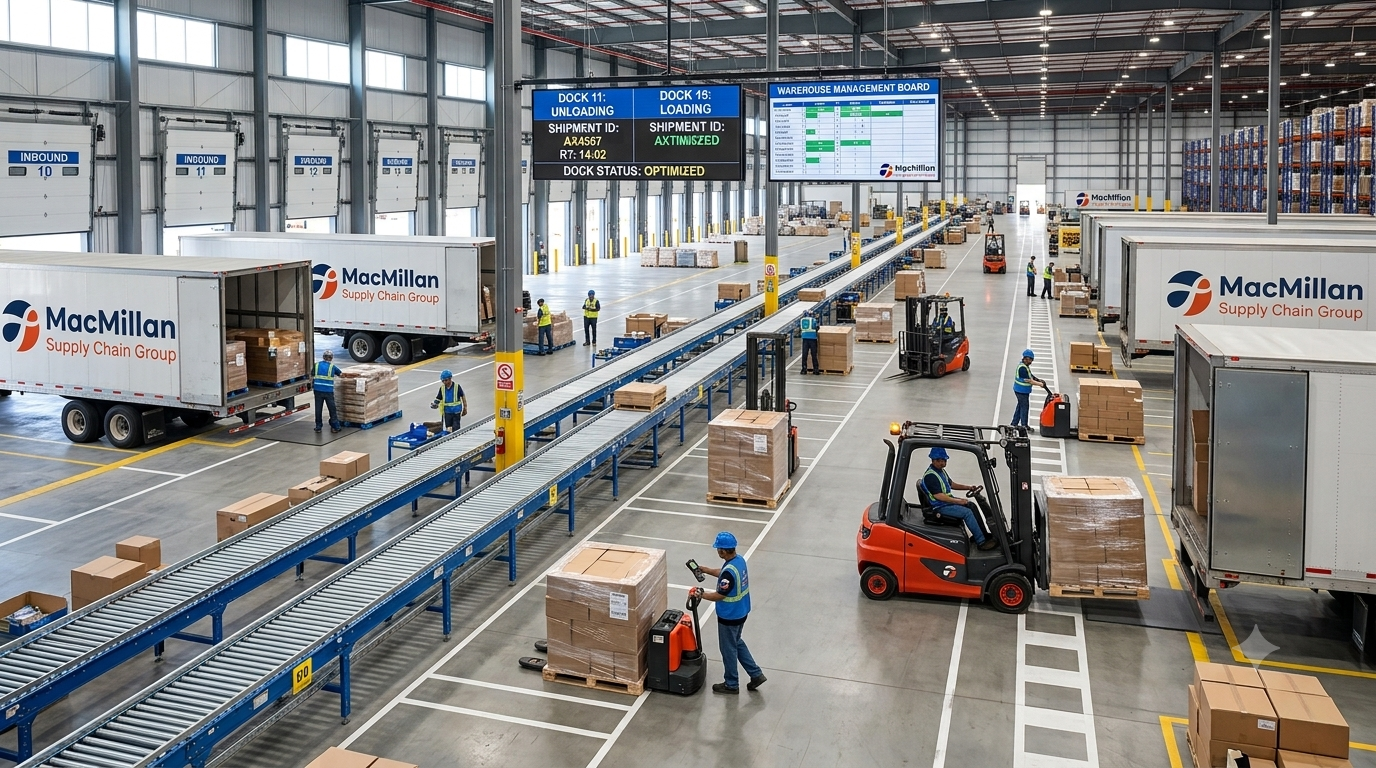
Cross-docking involves moving goods from inbound to outbound docks with no or minimal intermediate storage, a practice known as ‘just-in-time’ shipping. This logistics strategy streamlines operations by eliminating the need for warehousing, thus reducing associated costs. Predominantly utilized in eCommerce, retail distribution, and manufacturing warehouses, cross-docking is effective in managing backorders and improving delivery times. It enables products to reach end-users faster by seamlessly bypassing complex inventory processes typical of traditional warehousing.
MacMillan Supply Chain leverages state-of-the-art warehouse management systems to implement cross-docking solutions that are customized to meet your business needs. These systems ensure real-time tracking of goods, enhance inventory management, and facilitate efficient labeling and sorting processes, further driving operational efficiency. By strategically utilizing cross-docking, businesses can not only optimize their supply chains but also improve delivery metrics and customer satisfaction.
Understanding the various cross-docking methods can help businesses choose the most suitable strategy for their needs. The primary types include:
MacMillan Supply Chain helps businesses implement the most suitable cross-docking method tailored to their operational needs, ensuring optimized processes and substantial cost savings.
Cross-docking provides several key benefits that contribute to enhanced supply chain efficiency:
MacMillan Supply Chain’s expert cross-docking solutions allow businesses to capitalize on these benefits, providing them with a competitive edge in logistics management.
While cross-docking offers numerous advantages, its successful implementation can pose certain challenges. Recognizing these common problems is the first step towards overcoming them:
– Comprehensive Planning and Strategy: We offer in-depth analysis and planning to design cross-docking facilities that align with your business objectives. Our experts ensure that the chosen method is financially viable and operationally efficient.
– Cutting-Edge Technology: Our advanced warehouse management systems facilitate seamless coordination and communication among all players in the supply chain, ensuring timely and accurate processing of shipments.
– Quality Assurance Protocols: We implement stringent quality control measures, utilizing automation and real-time data tracking to ensure every product reaches its destination in perfect condition.
– Customized Solutions: Recognizing that one size does not fit all, we provide tailored cross-docking solutions that adapt to the unique needs of your products and operational constraints.
For businesses aspiring to adopt cross-docking, understanding the potential pitfalls and implementing effective solutions is crucial. Here’s how you can streamline the process with MacMillan Supply Chain:
– Conduct a Feasibility Study: Before committing, assess your current logistics operations and product types to determine if cross-docking is suitable. Our team assists in conducting a thorough analysis to ensure feasibility and alignment with your business goals.
– Invest in Technology: Equip your facility with robust, automated systems for inventory management and real-time data tracking. By doing so, you drastically reduce the risk of errors and enhance operational transparency.
– Foster Strong Communication: Ensure all partners and stakeholders in your supply chain are engaged and communicate effectively. This helps streamline processes and prevent potential delays.
– Focus On Quality: Implement strict quality assurance protocols and regular audits to maintain high standards and address any issues promptly.
Partner with MacMillan Supply Chain to tailor innovative cross-docking solutions that elevate your logistics operations. Embrace efficiency and improved delivery times—contact us today to discuss how we can enhance your supply chain strategy.
Cross-docking is a logistics strategy where inbound goods are transferred directly to outbound transportation with minimal storing time, enhancing supply chain efficiency by streamlining order fulfillment.
Cross-docking minimizes or eliminates storage by transferring products directly from inbound shipments to outbound transportation. In contrast, traditional warehousing stores inventory for days, weeks, or even months before distribution. This approach helps businesses reduce storage costs, speed up order fulfillment, and improve supply chain efficiency.
Cross-docking offers several advantages, including lower warehousing costs, reduced inventory holding, faster delivery times, and improved inventory accuracy. It also minimizes product handling, lowers the risk of damage, and enhances overall supply chain efficiency, making it an ideal solution for businesses focused on speed and cost savings.
Cross-docking offers several advantages, including lower warehousing costs, reduced inventory holding, faster delivery times, and improved inventory accuracy. It also minimizes product handling, lowers the risk of damage, and enhances overall supply chain efficiency, making it an ideal solution for businesses focused on speed and cost savings.
Industries that rely on fast inventory movement benefit the most from cross-docking. These include retail, e-commerce, grocery and food distribution, pharmaceuticals, automotive, consumer goods, and manufacturing. Cross-docking helps these industries reduce delivery times while improving operational efficiency and lowering logistics costs.
MacMillan Supply Chain provides customized cross-docking solutions designed to streamline your logistics operations. Their experienced team helps reduce storage costs, improve inventory flow, accelerate order fulfillment, and optimize transportation efficiency. By leveraging advanced supply chain technology and industry expertise, MacMillan ensures your products move quickly and accurately from suppliers to customers.